
Central Java Appointed as Pilot Project for Sustainable Procurement
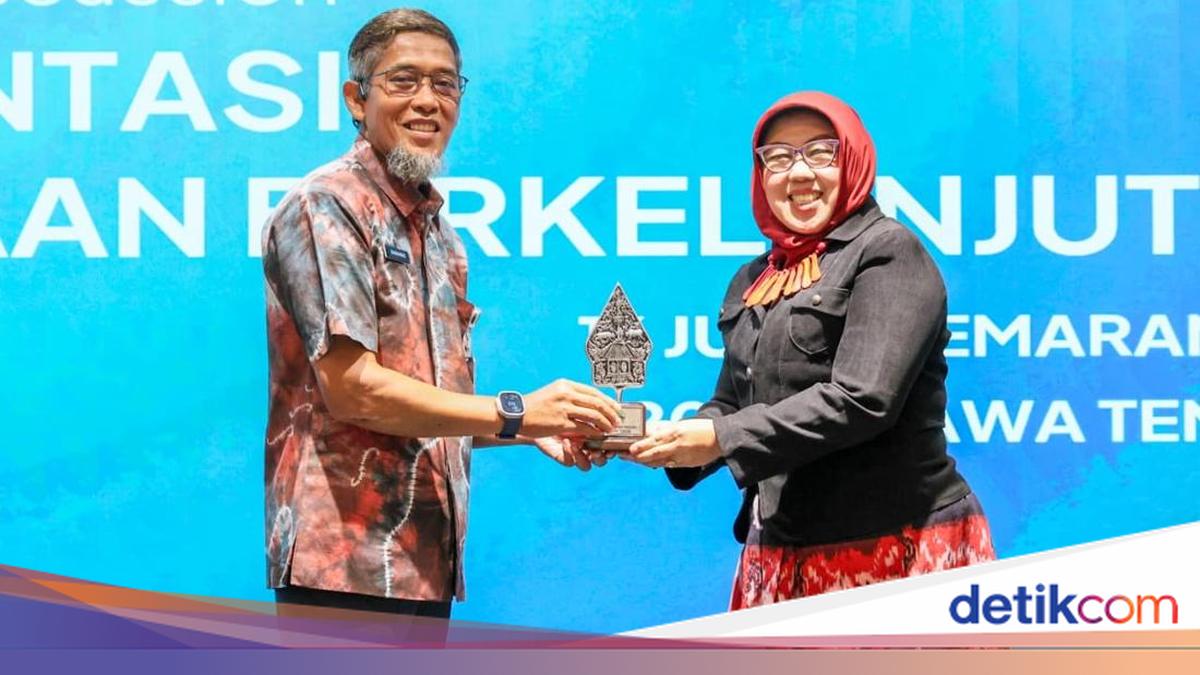
The appointment is considered a strategic step towards encouraging more environmentally friendly government procurement practices for goods and services, whilst also serving as an example for other regions in Indonesia.
The Regional Secretary (Sekda) of Central Java Province, Sumarno, welcomed the designation of Central Java as LKPP’s pilot project for sustainable procurement. The programme is seen as a momentum to strengthen the role of MSMEs whilst encouraging the use of environmentally friendly products in government procurement.
“We express our gratitude to LKPP for appointing Central Java to pilot sustainable procurement,” said Sumarno, Regional Secretary of Central Java Province, in a written statement on Thursday (16/7/2026).
Sumarno explained that the concept of sustainable procurement is no longer solely oriented towards the quality and price of goods, but also takes into account economic and environmental impacts. From an economic perspective, government procurement must provide greater space for local businesses, particularly micro, small, and medium enterprises (MSMEs), to participate as providers of goods and services.
“Procurement must involve everyone. How to drive the local economy, how to encourage MSMEs to get involved. We are grateful because in Central Java the majority of economic actors are MSMEs,” he explained.
Beyond the economic aspect, sustainable procurement is also directed towards supporting environmental conservation through the use of environmentally friendly goods and services.
“Regarding the procurement of environmentally friendly goods, this is part of our efforts to maintain sustainability, both from the economic and environmental sides going forward,” he added.
Sumarno also reminded all providers of goods and services in Central Java to uphold the principles of transparency and accountability in every procurement process. Providers who have been awarded work were also asked to maintain the quality of their work in accordance with the specifications set by the government.
“Once you have been appointed as a provider of goods and services, please carry it out to the best of your ability. Maintain the quality so that it matches the specifications that have been determined,” he said.
Sumarno hopes that providers will begin adapting to the concept of sustainable procurement, whether through the supply of environmentally friendly products or business practices that support sustainable development.
“Provider colleagues must also start entering into this sustainable procurement. How can they get involved in the procurement of goods and services that pay attention to sustainability, both from the economic and environmental sides,” Sumarno concluded.
Dwi Rahayu Setyowati, Director of Development and International Cooperation at LKPP, said Central Java was chosen because of its large procurement value and its strong commitment to applying the principles of sustainable procurement.
According to her, Central Java is one of the provinces with high procurement spending and holds a strategic position in driving the transformation of the government procurement system towards greater sustainability.
“The hope is that the Central Java Provincial Government can become an example for other regional governments in applying sustainable procurement to the procurement of goods and services,” said Dwi Rahayu Setyowati, Director of Development and International Cooperation at LKPP.
Dwi added that the swift response of the Central Java Provincial Government when asked to become a pilot project demonstrates a strong commitment to jointly developing a sustainability-oriented procurement system.
She explained that current procurement practices in Central Java have already been moving towards the principles of green procurement, not only oriented towards meeting current needs but also considering environmental impacts in every procurement process.
Some of these efforts include selecting products or equipment with lower emissions, as well as paying attention to environmental conservation aspects in the procurement of government goods and services.
“These good practices have actually already begun to be implemented in the Central Java Provincial Government, so going forward there is no need to start from scratch to implement sustainable procurement,” explained Dwi Rahayu.
Going forward, what is needed is strengthening human resource capacity and improving the understanding of all stakeholders. In addition, policy support from the Central Java Provincial Government is also needed so that the implementation of sustainable procurement becomes increasingly optimal.
This year, LKPP designated five agencies as pilot projects for sustainable procurement. Three of them are ministries, namely the Ministry of Industry, the Ministry of Religious Affairs, and the Ministry of Public Works. Meanwhile, the two regional governments selected are the Central Java Provincial Government and the West Java Provincial Government.