
Central Java and East Kalimantan Forge Cooperation, Economic Potential Reaches Rp 20.2 T
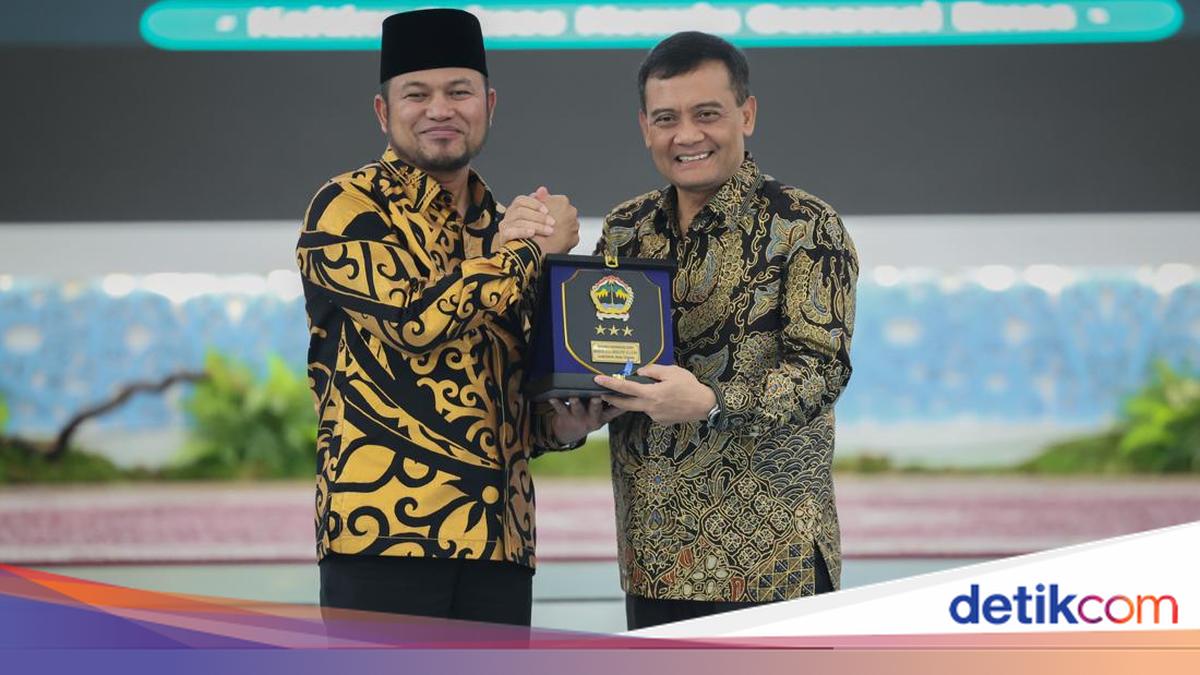
The economic potential encompasses trade, agriculture, industry, financial services, the creative economy, and support for projects in the Nusantara Capital City (IKN). The cooperation was formalised with the signing of a cooperation document at Odah Etam, the East Kalimantan Governor’s Office Complex in Samarinda, on Thursday (6/8).
The joint agreement was signed by Central Java Governor Ahmad Luthfi and East Kalimantan Governor Rudy Mas’ud. Technical cooperation documents were subsequently signed by respective heads of Regional Apparatus Organisations (OPD), Regional-Owned Enterprises (BUMD), associations, and regents/mayors.
Luthfi expressed hope that the cooperation agreement would be realised immediately, enabling regional development efforts to continue despite fiscal constraints and global geopolitical challenges.
Meanwhile, Rudy Mas’ud stated that this cooperation represents a mutually beneficial and complementary collaboration between Central Java and East Kalimantan. He noted that East Kalimantan possesses natural resources while Central Java has processing industries, MSMEs, and other capabilities.
"This is an extraordinary breakthrough and hopefully can be emulated by other provinces in Indonesia, so that we are not dependent on the state budget or central transfer funds to the regions," he said in a written statement on Thursday (6/8/2026).
An example of this complementarity is the supply of rice, with nearly 10,000 tonnes of rice supplied to East Kalimantan from Central Java. Conversely, industries in Central Java require a supply of 1.5 million tonnes of coal, excluding power plant needs, as well as crude palm oil (CPO) which is also shipped to Central Java.
"East Kalimantan’s population is only around 4.2 million, while Central Java’s is up to 38 million. Our coal and CPO production is abundant. So we complement each other. The essence is that this is a very extraordinary collaboration," he said.
It is understood that the economic potential reaching Rp 20.2 trillion is an aggregation of various forms of potential cooperation, meaning it does not entirely represent cash transactions or new investments at a single point in time.
In the food sector, the cooperation opens potential commodity trade from Central Java to East Kalimantan, including approximately 778 tonnes of eggs, 873 tonnes of chicken meat, 321.6 tonnes of shallots, and 6,119 tonnes of rice, with a potential transaction value of around Rp 237.75 billion. The cooperation also covers the development of the livestock and animal health sector, with a potential value of approximately Rp 2.1 trillion per year.
In the industrial and trade sector, there is a potential cooperation value of around Rp 36 billion per year. In the marine and fisheries sector, cooperation is also directed at strengthening trade and supply chains with a value of approximately Rp 2.238 billion per year.
Tourism and creative economy cooperation also holds good potential, with estimated direct transactions of around Rp 21 billion per year and a multiplier effect of approximately Rp 36 billion per year.
From the BUMD perspective, one of the cooperations with the largest business activity potential is the synergy between Bank Jateng and Bank Kaltimtara, with a potential of around Rp 15 trillion per year. Additionally, there is cooperation between Jamkrida Jateng and Jamkrida Kaltim through a co-guarantee scheme for projects in IKN. The total projected value of supported projects reaches approximately Rp 1.34 trillion, with projected guarantee service fees of around Rp 3.452 billion per year.