
Central Java and Bangkalan showcase flagship innovations at IGA 2026
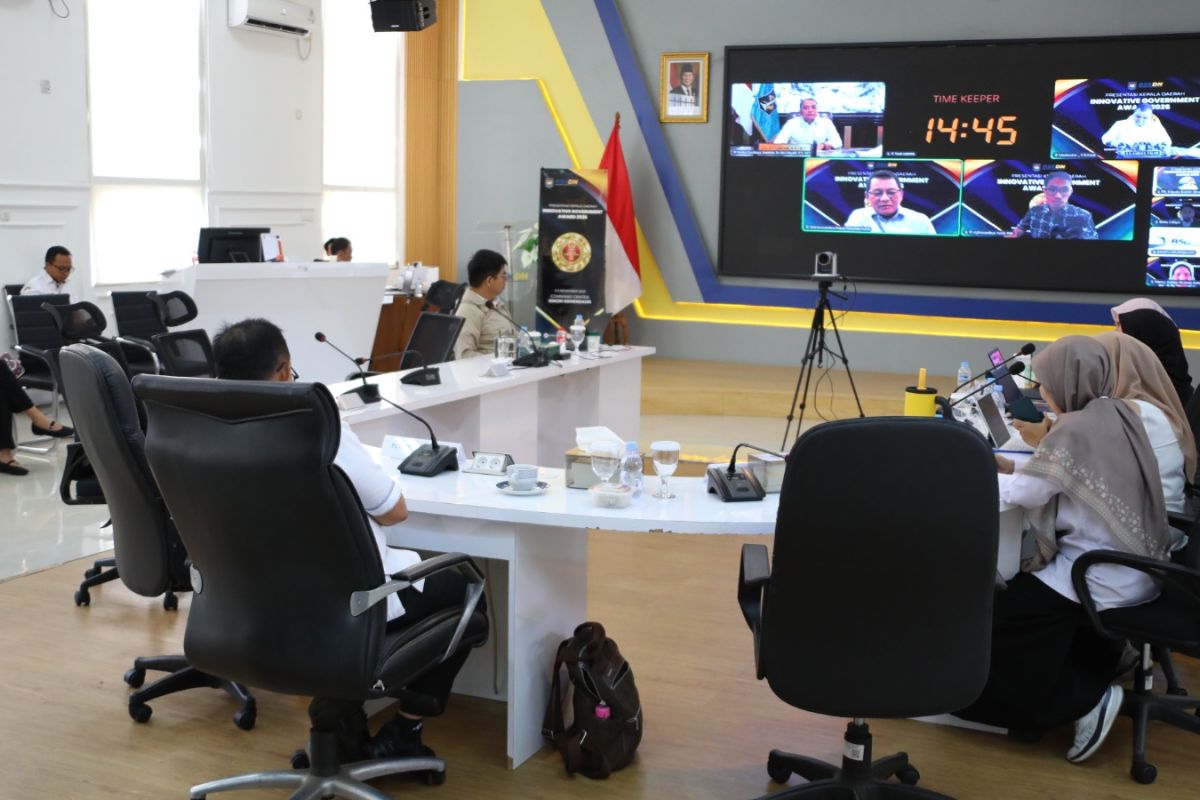
Jakarta (ANTARA) – Central Java Governor Ahmad Luthfi and Bangkalan Regent Lukman Hakim presented flagship innovations in employment, healthcare and agriculture during the assessment for the 2026 Innovative Government Award (IGA).
In a statement received in Jakarta on Wednesday, Ahmad Luthfi said innovations must deliver added value, tangible benefits and sustainability to improve the quality of bureaucracy and public services.
“An innovation is not merely a creative breakthrough; it must have added value, provide benefits and be sustainable. Without added value, sustainability and benefits for the bureaucracy and the public, it is useless,” Ahmad Luthfi said.
The local leaders’ presentations were held online on Wednesday by the Ministry of Home Affairs’ Domestic Policy Strategy Agency (BSKDN), using its Command Centre and video-conference room.
He said Central Java’s commitment to developing innovation was reinforced by Regional Regulation No. 3/2019 on the Implementation of Innovation in Central Java. The regulation covers implementation, monitoring, evaluation and the awarding of recognition for innovations.
Ayo Kerjo was developed to expand public access to job vacancy information and improve workers’ skills.
The platform brings together verified vacancies, job matching, training and job-seeker card services, all available around the clock.
Available opportunities also include overseas markets such as Japan, Germany and South Korea.
Ayo Kerjo has compiled hundreds of thousands of vacancies from hundreds of companies and reached hundreds of thousands of job seekers. It has also facilitated worker placements and provided various training programmes to improve job seekers’ skills.
The platform’s development involves companies, investors and relevant ministries to ensure workers’ skills increasingly match the needs of businesses and industry.
Meanwhile, Speling Melesat aims to bring specialist medical services closer to the public, particularly in rural areas with limited access to healthcare.
Under the programme, specialist doctors are sent directly to villages, so residents do not always have to travel to hospitals to receive specialist care.
As of 2 November 2026, Speling Melesat had been held 1,857 times, reaching 1,603 villages and urban wards and targeting 133,132 people.
The programme is also integrated with the Free Health Check (CKG), which had reached 20.84 million people by 31 October 2026 through all 883 community health centres in Central Java.
The CKG implementation rate stood at 54.19 per cent, exceeding the national target.
Ahmad Luthfi said the implementation of Speling Melesat had also coincided with improvements in several health indicators, including a 21.1 per cent decrease in maternal mortality and a 2.6 per cent increase in tuberculosis (TB) case detection.
In addition, mental health screening increased by 130.4 per cent, VIA screening by 4.6 per cent, and HPV DNA screening by 739.5 per cent.
The integration of CKG and active TB case-finding enables screening results to be followed up by specialist doctors according to patients’ needs.
Bangkalan Regent Lukman Hakim said the strengthening of the district’s innovation ecosystem was supported by regulations requiring every regional government agency (OPD) to produce at least two innovations.
Bangkalan administration also applies a consequence by delaying the payment of additional employee income (TPP) to agencies that fail to meet this commitment.
Lukman presented two flagship innovations from Bangkalan: Karna Pitaloka and Amphibi, or Ambulans Peduli Tretan Dhibi. Both were developed to address public needs in agriculture and healthcare.
Karna Pitaloka is an initiative to map rice-field plots and identify agricultural land using geospatial technology. It aims to improve the management of subsidised fertiliser so it reaches the right recipients, while supporting the protection of Sustainable Food Agricultural Land (LP2B).
By using technology, taking an inventory of productive land, empowering farmer groups and providing extension support, the local government is seeking to ensure that fertiliser is distributed according to farmers’ needs.
The innovation has also received recognition from state-owned fertiliser company PT Pupuk Indonesia. The Ministry of Agriculture has visited Bangkalan to observe its implementation as a reference for developing policy at national level.
Amphibi was developed to expand access to healthcare through free, 24-hour ambulance and patient-care services.
The service not only provides emergency patient transport but also supports medical treatment according to need, including for patients with heart disease.
“Amphibi has proved reliable, recording 393 beneficiaries in 2025 and 241 beneficiaries up to September 2026,” Lukman said.
The presentations by the two local leaders demonstrated how innovations based on public needs can be developed with regulatory support, technology and collaboration among various parties.