
Central Jakarta Mayor Urges Development to Align with Infrastructure Capacity
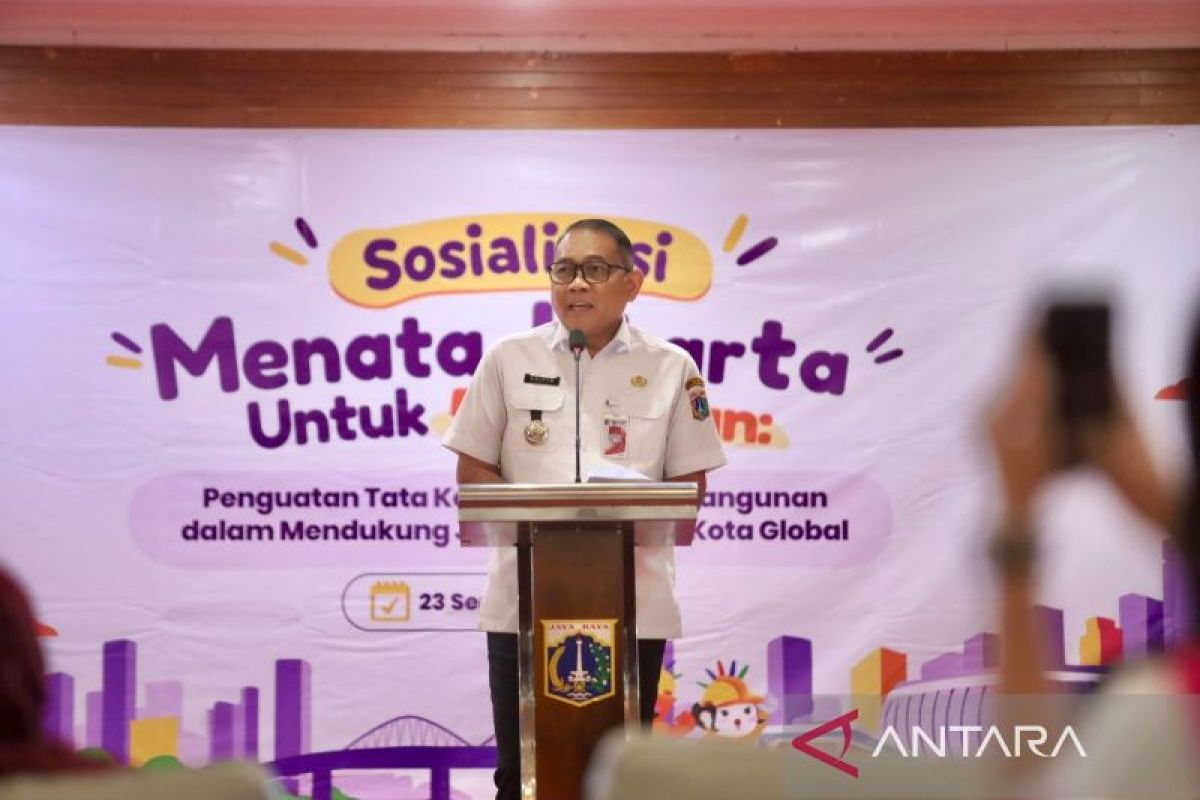
Jakarta (ANTARA) - The Mayor of Central Jakarta Administration, Arifin, has requested that development within the region be aligned with the capacity of infrastructure, transport, the environment, and the needs of residents to ensure that urban growth does not become a burden for future generations.
“Development, ultimately, must result in benefits that can be felt by the community. We want to ensure that today’s development does not become a burden, but rather a positive legacy,” Arifin said in Jakarta on Wednesday.
During a socialisation event titled “Organising Jakarta for 500 Years: Strengthening Spatial and Building Governance in Supporting Jakarta as a Global City”, Arifin stated that Central Jakarta holds a strategic position as a centre for government, trade, and services, as well as an area with high social and cultural value.
Therefore, the dynamics of development in the area require management that is not solely oriented towards economic growth.
He also emphasised the importance of maintaining established areas while directing new development to strengthen the region’s functions without eroding its historical value and identity.
“Established areas need to be maintained, while new developments must be directed to strengthen the overall function of the region,” Arifin said.
He further stressed the importance of managing government buildings as examples for other building managers. According to him, government buildings are regional assets whose quality, safety, and sustainability must be preserved.
“Controlling spatial utilisation plays a strategic role. Increasing building intensity, including through the Floor Area Ratio (KLB), needs to be managed by considering access to public transport and infrastructure capacity,” noted Vera.
She stated that Jakarta Governor Regulation Number 11 of 2026 regarding incentives and disincentives for increasing the Floor Area Ratio (KLB) serves as one of the instruments for regulating building intensity.
She assessed that increasing building intensity should not only be viewed through the addition of space, but also through the developer’s contribution to the area, including the provision of infrastructure, public facilities, green open spaces, and pedestrian connectivity.
In addition to spatial planning, Vera emphasised that the management of buildings must consider aspects of safety, health, comfort, accessibility, and feasibility, as well as the implementation of energy and water efficiency principles.
She revealed that regional-owned buildings must meet these standards and serve as models for good building management, including through regular maintenance, safety system inspections, and periodic recording.