
Central Information Commission Urges Media to Become Main Pillar of Public Transparency
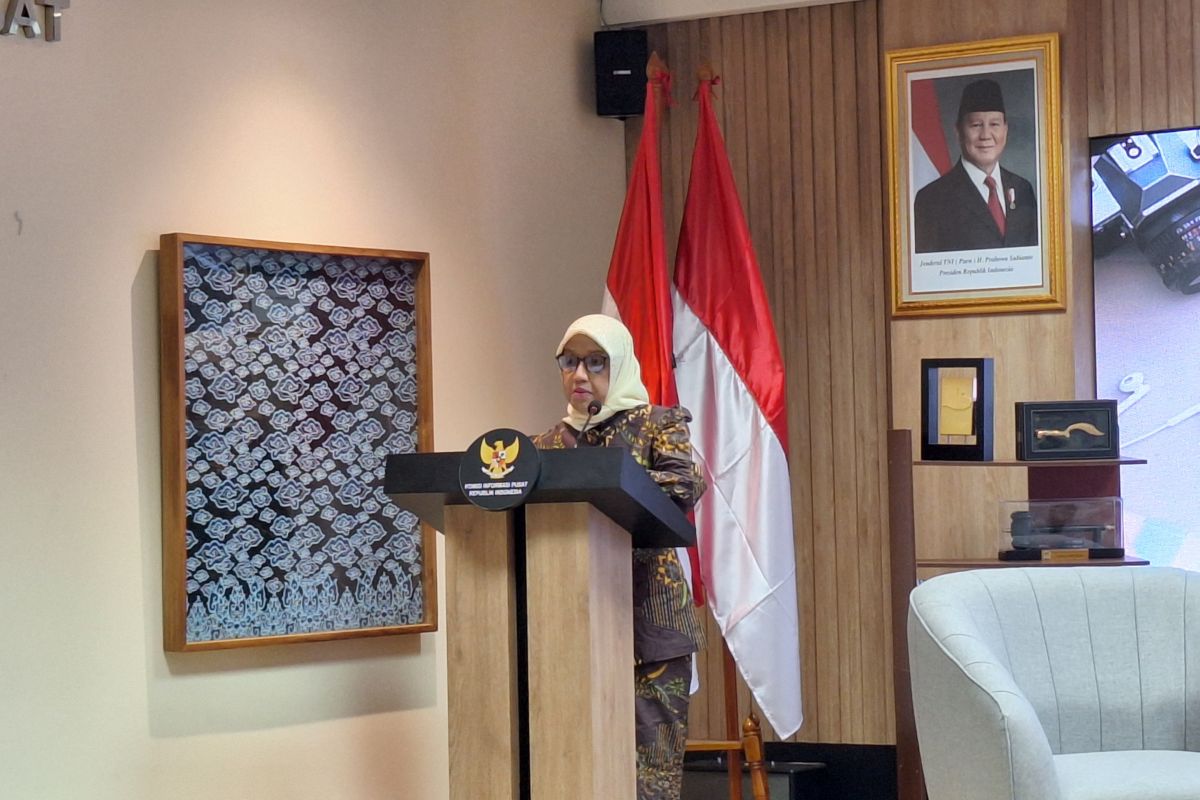
Commissioner for Socialisation, Education, and Public Communication at the Central Information Commission (KI Pusat), Samrotunnajah Ismail, has urged the media to bolster its role not only as a conveyor of information but also as a connector between the government and society, as well as an independent overseer in state administration. “(The media) as a conveyor of information while also emerging and strengthening aspects of accountability,” said Samrotunnajah in her statement in Jakarta on Saturday. She conveyed this during a Media Discussion titled “Strengthening the Role of Media as the Main Actor in Promoting Transparency, Accountability, and Public Rights to Information” at the Central Information Commission Auditorium. The event also forms part of efforts to strengthen synergy between state institutions and the press in promoting public information openness. Samrotunnajah stated that this role positions the media as a key actor in ensuring that public rights to information are fulfilled. “The role of the media as a conveyor of public information is crucial, so ultimately through the media, the public’s right to know about BGN activities, Koperasi Merah Putih activities, the Ministry of Defence’s budget activities, and so on, becomes known to the public,” she explained. The discussion featured speakers from the Central Information Commission, the Press Council, and the Indonesian Broadcasting Commission, attended by journalists from various media platforms. The forum serves as a dialogue space to strengthen mutual understanding of the media’s strategic role in the information openness ecosystem. Samrotunnajah also emphasised that public information openness is an important foundation for realising transparent, accountable, and participatory government governance. Law No. 14 of 2008 serves as a guarantee for society to obtain information that is correct, accurate, and not misleading. This view was reinforced by the Commissioner for Institutional Affairs at KIP, Handoko Agung Saputro, who highlighted the importance of strengthening institutional governance to support information openness. According to him, transparency cannot function optimally without solid collaboration among stakeholders. “Synergy between public bodies and the media is key to ensuring that the information conveyed is not only open but also of quality and accountable,” he said. Meanwhile, the Commissioner for Public Information Dispute Resolution, Syawaludin, underlined the media’s role in preventing potential information disputes. He assessed that complete and balanced information delivery by the media can serve as an effective bridge between public bodies and society. “The media can act as a public education channel while encouraging public bodies to be more responsive, thereby minimising information disputes from the outset,” he clarified. From the Press Council’s perspective, the Commissioner for Complaints and Press Ethics Enforcement, Muhammad Jazuli, emphasised that strengthening the media’s role must go hand in hand with commitment to journalistic ethics. According to him, public trust can only be maintained through integrity and professionalism. “The media must adhere to principles of accuracy, balance, and responsibility. That is where public trust is built and maintained,” he asserted. Meanwhile, the Central Indonesian Broadcasting Commission Commissioner, Evri Rizqi Monarshi, positioned the media as the fourth pillar of democracy with a strategic function in maintaining information balance. He reminded that amid increasingly complex disinformation flows, the media is demanded not only to be fast but also accurate and responsible. According to him, the media has four main roles: as a provider of public information, social control, discourse space, and a means of public education and literacy. Therefore, strengthening media literacy and multi-stakeholder collaboration is an important step in building a healthy information ecosystem. The discussion also addressed various challenges faced by the media in the digital era, from the proliferation of disinformation, pressures from political and economic interests, to the dilemma between speed and accuracy in reporting. Through this forum, the Central Information Commission encourages increased media capacity in understanding and implementing the Public Information Openness Law, while strengthening collaboration with regulatory institutions and civil society. The event is expected to produce strategic recommendations and joint commitments in strengthening the media’s role as the main actor in public information openness, not only as an information conveyor but also as a driver of transparency, guardian of accountability, and protector of public rights to information.