
Central Government Urged to Involve Regions in Success of President's 10 Directive Programmes
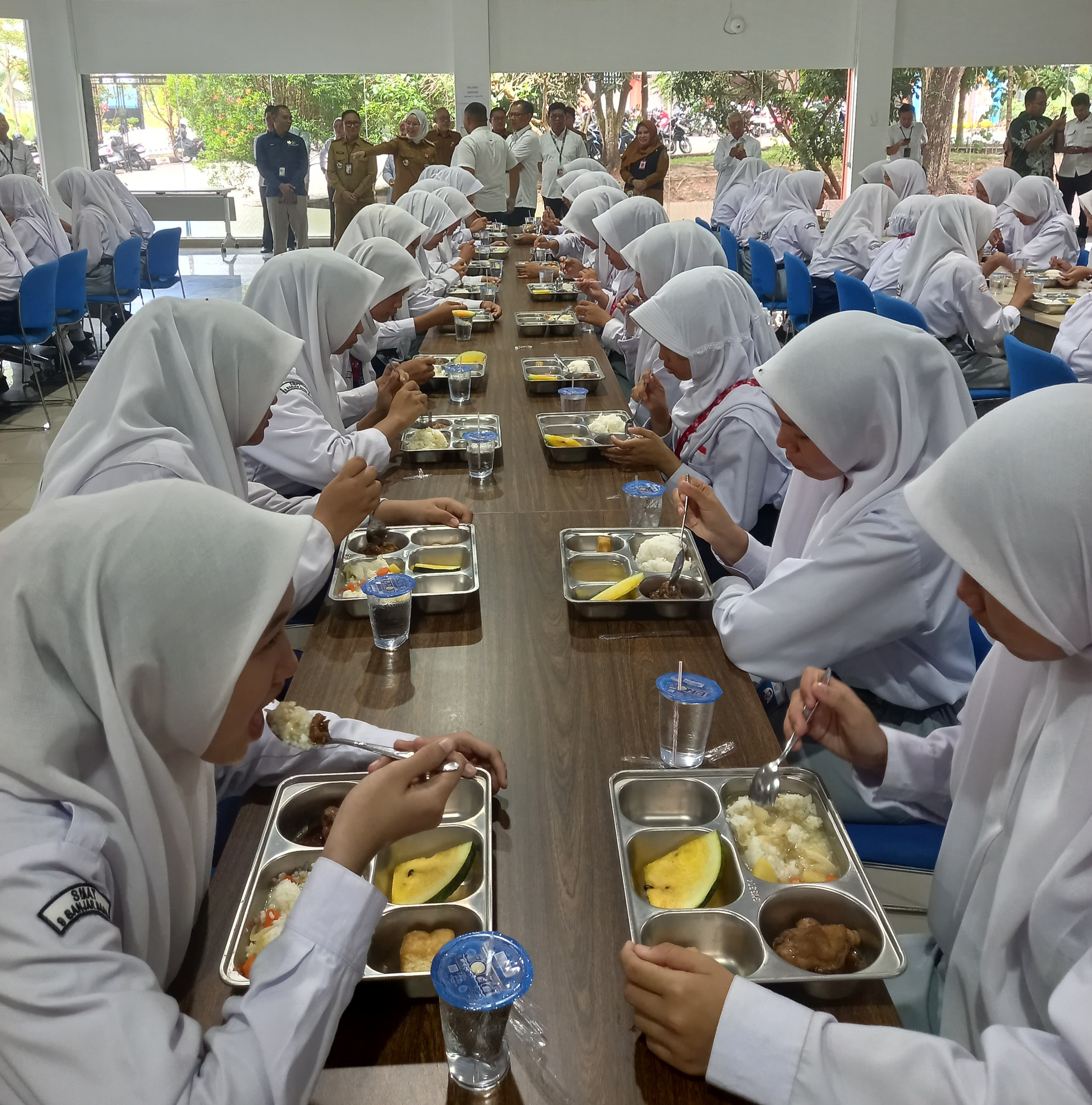
The central government has been urged to strengthen the involvement of regional administrations to ensure the success of President Prabowo Subianto’s 10 directive programmes, as many are acknowledged to be encountering obstacles in the field.
This was stated by the Chairman of the House of Representatives’ Commission II, Muhammad Rifqinizamy Karsayuda, while providing guidance at a Regional Coordination Meeting for Monitoring and Evaluation of the 10 Presidential Directive Programmes in Banjarbaru on Thursday (11/6). “The implementation of various presidential directive programmes is encountering many obstacles on the ground. Therefore, the central government should involve regional governments in order to make them a success,” Rifqi explained.
The 10 directive programmes of President Prabowo Subianto include Free Nutritious Meals (MBG), Free Health Checks, People’s Schools, and the Merah Putih Village Cooperatives, as well as the provision of 3 million houses and food self-sufficiency. “We are grateful that the government is now starting to listen to various community aspirations in the context of evaluating programme implementation,” he said.
Rifqi cited the MBG and Merah Putih Village Cooperatives programmes as examples, noting that their high costs and burden on the state budget (APBN) could be addressed by seeking solutions involving funding sources outside the APBN. “Regional governments and local entrepreneurs must be involved, so that these programmes can run more effectively without relying on the APBN,” he stated.
In his presentation, the Nasdem Party politician also acknowledged the fiscal difficulties faced by regional governments due to the central government’s budget refocusing policy. The fiscal independence of the majority of regional governments is low, with many still relying on transfer funds to the regions (TKD).
“South Kalimantan Province, for example, has low fiscal independence, with locally generated revenue (PAD) at only 49 percent. Similarly, regencies and cities average only 30-35 percent. Regional governments currently need budget relaxation policies,” he said.
The Regional Coordination Meeting for Monitoring and Evaluation of the 10 Presidential Directive Programmes, organised by the Centre for Domestic Strategy Policy (BSKDN) of the Ministry of Home Affairs, was attended by 10 provinces including Riau, Lampung, all provinces in Kalimantan, Sulawesi, and Gorontalo.
Plh Regional Secretary of South Kalimantan Province, Subhan Noor Yaumil, affirmed his party’s support and readiness to make the 10 directive programmes a success. One of these is the food and energy self-sufficiency programme, in which South Kalimantan is considered to have been quite successful. This food and energy self-sufficiency is also linked to the designation of South Kalimantan as the gateway to the Nusantara Capital City (IKN).