
Central Government Cuts Regional Transfers, Threatening Education and Public Health
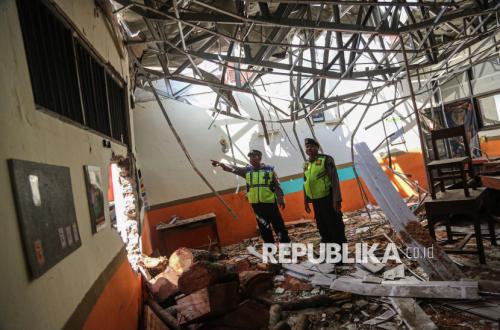
Former Director General of Regional Autonomy at the Ministry of Home Affairs, Djohermansyah Djohan, has sounded the alarm over cuts to regional transfer funds (TKD) by the central government. Many regional programmes that directly affect the public will be disrupted by the efficiency measures, he said. “Over the past two years, the main complaint from the regions has been about finances. TKD, which has been the main source of financing for regional government, has declined,” Djohermansyah told Republika on Wednesday (19/8/2026).
Referring to the financial note speech delivered by President Prabowo Subianto several days earlier, central government transfers to the regions, the main source of regional government financing, stand at Rp 735 trillion. That figure appears higher than the 2026 TKD of Rp 696 trillion. However, it remains below the 2025 amount. The 2025 TKD had already been cut by Rp 50.5 trillion from a total of Rp 864 trillion. In the 2026 period, under Finance Minister Purbaya Yudhi Sadewa, the central government made an even larger TKD cut of Rp 226 trillion from around Rp 900 trillion.
“For 2027, based on the financial note delivered by the president, TKD is around Rp 735 trillion. That figure is indeed higher than 2026, but still below 2025,” Djohermansyah said. Djohermansyah, who is also a professor at the Institute of Home Affairs Governance (IPDN), said the downward trend in TKD is not an ordinary situation. According to him, it indicates unresolved fiscal problems related to regional revenue and expenditure. The impact, he said, could spread widely. Most noticeably, it will end in a deadlock over payments for regional officials.
“Regions will face difficulties paying salaries and employee needs, including PPPK,” Djohermansyah said. He added that the problem will also spread to development processes in the regions. “Delaying the construction of roads and bridges, repairing hospitals, and even education costs,” he said. In the socio-political reality of the regions, the situation could lead to the neglect of regional heads’ campaign promises. “The simplest question is: how can these regional heads fulfil their promises to the people if the money to run their governments is increasingly being pulled back to the centre,” he said.
Djohermansyah said the Unitary State of the Republic of Indonesia has 546 autonomous regions. Not all of them, he said, have strong locally generated revenue (PAD). Only a few regions have a solid economic base and therefore large PAD. Most regions still rely on central transfers to run their governments. Therefore, Djohermansyah said, the decline in TKD due to central cuts cannot be taken lightly. It is not just about figures in the state budget. “It directly touches the ability of regional governments to run their administrations and to serve their people,” Djohermansyah said. The central government must be fair.