
Central Government Aims for Food and Water Self-Sufficiency through PM-AAS
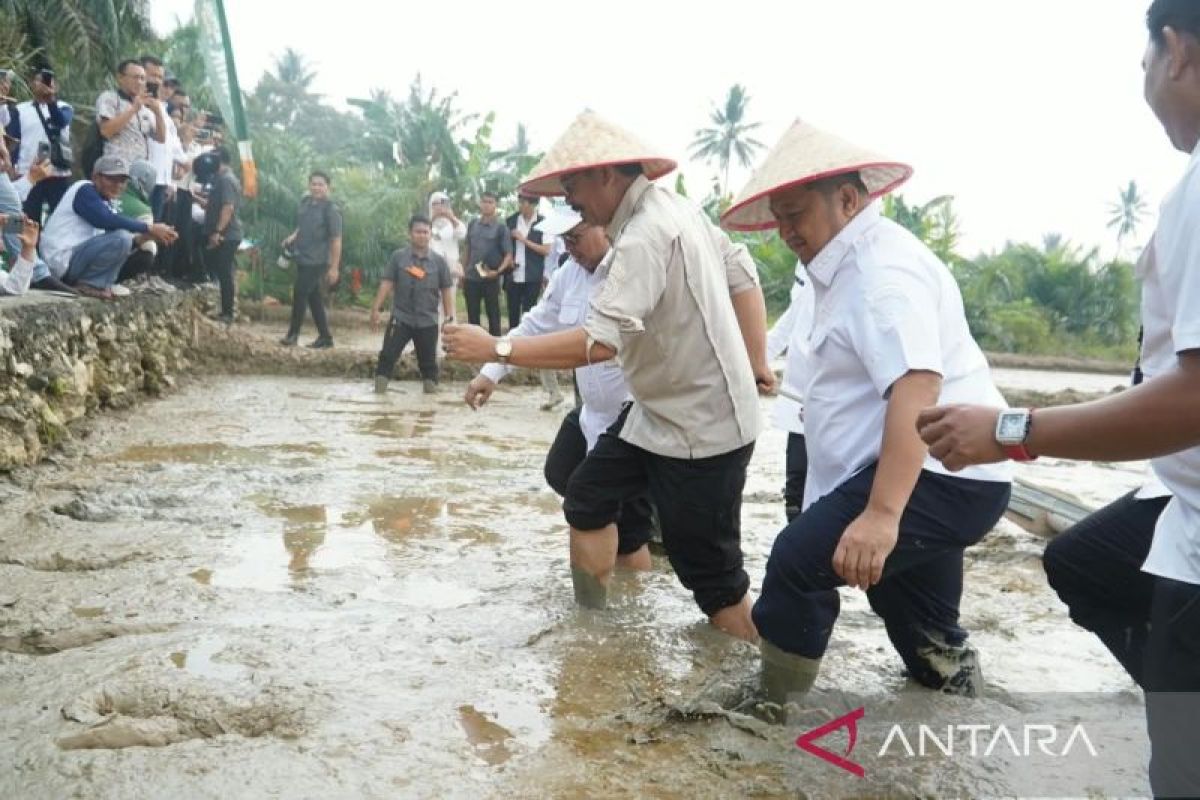
The central government is working towards achieving food and water self-sufficiency through the implementation of the Advanced Agriculture System (PM-AAS). Developed by the Ministry of Agriculture, this system combines the direct seeding (tabela) method with the ‘jajar legowo’ (interspaced) planting pattern.
“PM-AAS is part of the government’s efforts to realise food and water self-sufficiency,” stated Liferdi Lukman, Director of Agricultural Irrigation at the Ministry of Agriculture, when discussing the implementation of PM-AAS in the agricultural lands of Penajam Paser Utara Regency, East Kalimantan, on Wednesday.
“The programme is carried out through the expansion of planting areas alongside intensification to increase productivity,” added Liferdi Lukman, who also serves as the Acting Official for Sustainable National Food Self-Sufficiency for East Kalimantan Province.
PM-AAS encompasses the use of technology, superior seed varieties, water management, and farmer assistance, with a productivity target of up to 10 tonnes per hectare.
The target implementation in East Kalimantan Province covers approximately 7,125 hectares, with Penajam Paser Utara Regency designated as the largest target area at 3,546 hectares, making it a vital player in increasing food production within the province.
Penajam Paser Utara Regency serves as the locomotive for PM-AAS implementation, Liferdi Lukman noted, and therefore requires irrigation support as water availability is a primary factor in achieving maximum agricultural productivity.
Ahmad Subhan, Head of the East Kalimantan Centre for the Application of Agricultural Modernisation (BBPMP), added that the PM-AAS rice planting movement marks the initial milestone for maximising rice production in the province.
Data shows that the implementation of PM-AAS is capable of significantly increasing yields; based on previous harvest measurements, average production was around 4.5 tonnes per hectare, but has now reached an average of approximately seven tonnes per hectare.
“The productivity target of up to 10 tonnes per hectare requires the optimal provision of fertiliser and plant nutrients,” said Ahmad Subhan.
The implementation of modern agriculture, which began with a joint rice planting movement with the Sidodadi and Sido Muncul Farmer Groups in Bangun Mulya Village, Waru District, is a crucial step in increasing local rice productivity, according to the Regent of Penajam Paser Utara, Mudyat Noor.
The Regent expressed hope that the implementation of PM-AAS could increase production and farmer welfare, ensuring that agriculture becomes a sustainable source of income that can attract the interest of the younger generation.
Source: jawawa.id (https://jawawa.id/newsitem/central-government-aims-for-food-and-water-self-sufficiency-through-pm-aas-1790763702)
Originally published by Antara (Indonesian) (https://www.antaranews.com/berita/5764824/pemerintah-pusat-wujudkan-swasembada-pangan-dan-air-melalui-pm-aas), translated from Indonesian