
Central Bangka to Develop Upland Rice in Every Subdistrict
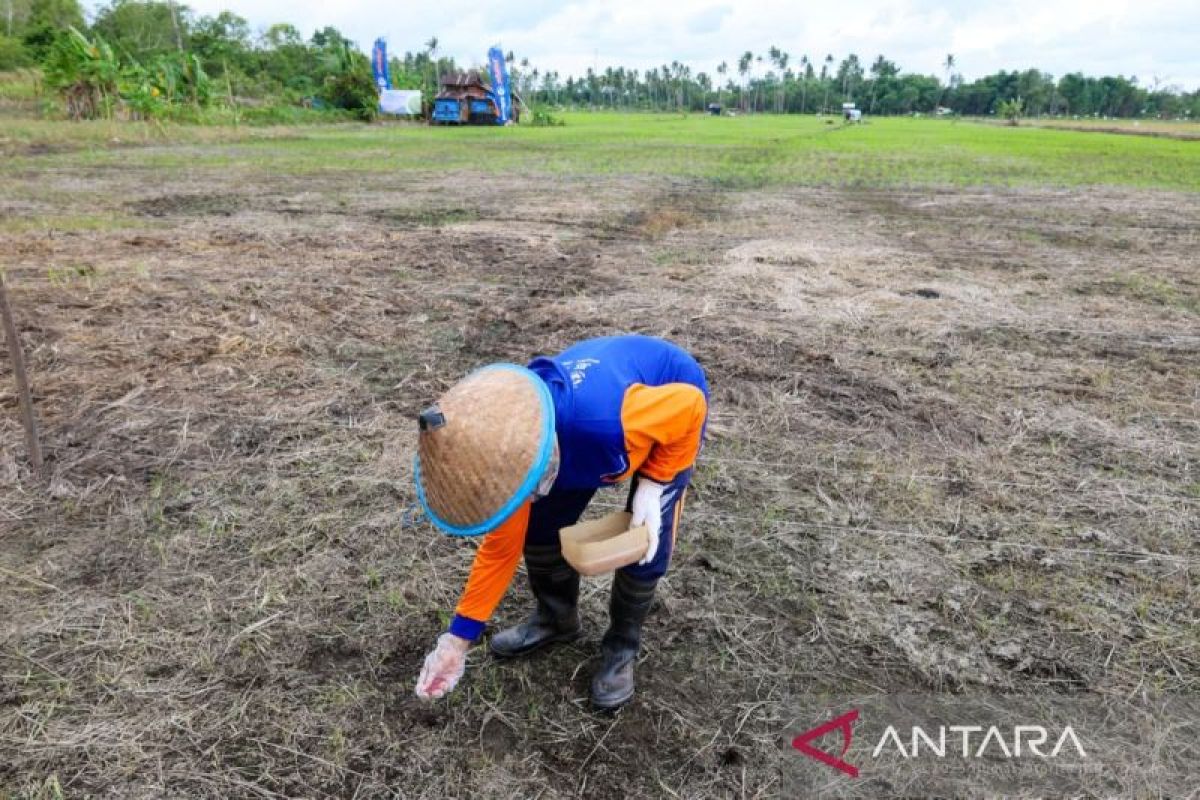
The Central Bangka Regency Government in the Bangka Belitung Islands Province is continuing to develop upland rice (padi gogo) as a commodity in every subdistrict in an effort to strengthen regional food security.
Head of the Central Bangka Agriculture and Food Security Agency Dian Akbarini stated in Koba on Tuesday that upland rice is a food crop suitable for cultivation on dry land because it is rain-fed and does not require irrigation.
“Characteristically, upland rice is a food commodity that grows well on dry land,” Dian said.
She explained that upland rice has long been a staple commodity for the community, especially for shifting cultivators. However, as traditional shifting cultivation practices have declined due to a transition to the plantation sector, the local government is now encouraging its redevelopment.
“Shifting cultivators have begun to decrease because many have switched to the oil palm plantation sector, so this condition needs to be addressed by encouraging farmers to continue cultivating upland rice,” she said.
The Central Bangka Agriculture and Food Security Agency (DPKP) is targeting upland rice planting on 118 hectares spread across six subdistricts in the region. Currently, planting has commenced on 69 hectares located in Sungaiselan Subdistrict.
“The total will eventually be 118 hectares spread across all subdistricts,” she said.
The upland rice development programme has received support from the central government in the form of seed, pesticide, and herbicide assistance. Aid received so far includes 34 tonnes of upland rice seeds.
“Assistance from the relevant ministry has already arrived, namely 34 tonnes of upland rice seeds along with pesticides and herbicides,” she said.
According to Dian, the assistance is being utilised to improve the quality and productivity of upland rice in Central Bangka, a region characterised by limited water resources. She emphasised that all subdistricts in Central Bangka have the potential for upland rice development due to geographical conditions suited to dry land.
“Through this programme, we want to ensure that non-productive lands can be optimally utilised to support regional food security,” she said.
In addition to strengthening food availability, the development of upland rice is also expected to increase farmers’ incomes and encourage local food diversification. The local Agriculture and Food Security Agency is also continuously providing technical assistance to farmers from the planting stage through to harvest to ensure production results meet targets.