
Central and Regional Synergy Essential to Address Illegal Railway Crossings
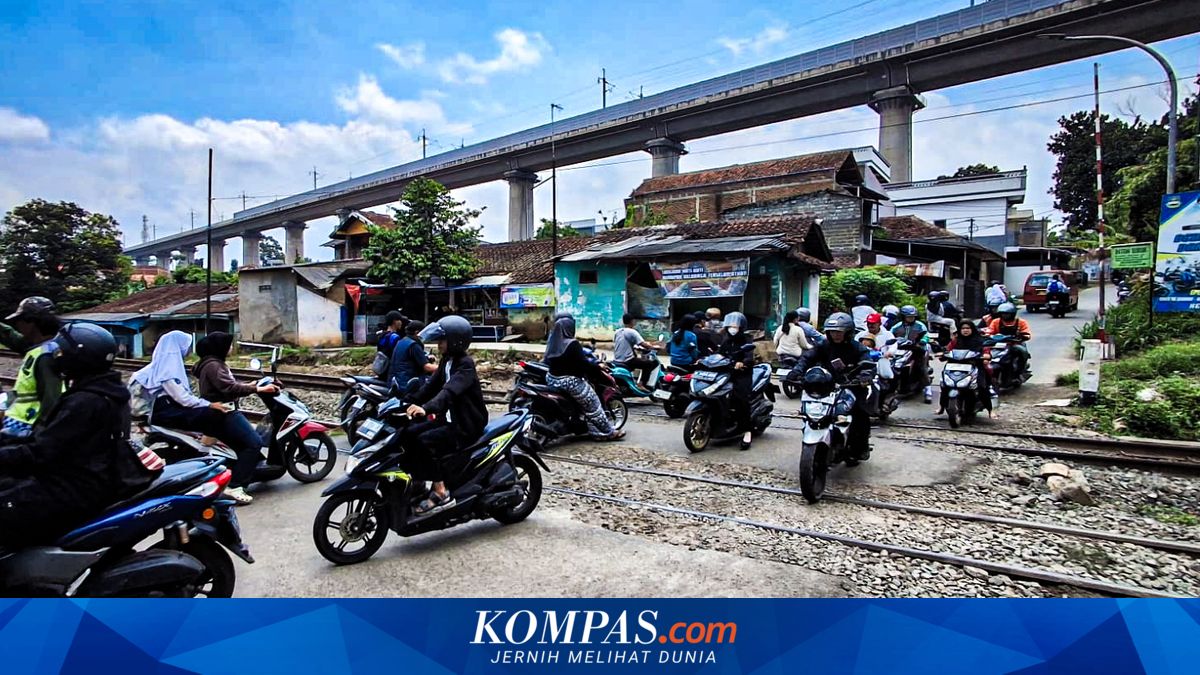
Transportation expert Djoko Setjowarno has emphasised that collaboration between the central government and local governments is essential to address the issue of illegal crossings, particularly in the DKI Jakarta region. He stressed that the division of responsibilities must be clear so that safety measures along railway lines can be implemented optimally. “If it is on a national road, it falls under the responsibility of the central government through the Ministry of Public Works. If it is in the local government area, it becomes the authority of the respective provincial, regency, or city government,” Djoko stated, as quoted from Antara (3/1/2026). Data from PT Kereta Api Indonesia (Persero) shows there are 432 level crossings in the operational area of Daop 1 Jakarta, stretching from Banten to Cikampek. Of this number, 138 points are categorised as unguarded crossings—a condition deemed highly risky to public safety. “In principle, illegal crossings must be closed. There is no compromise for those 138 points,” he asserted. The arrangement of level crossings is part of broader efforts to strengthen railway safety in various regions. Therefore, Djoko hopes that the allocation of funds for transportation safety will not be cut. He believes that commitments to improve safety will be in vain without adequate budgetary support. “Public safety is a shared responsibility, not merely a fiscal burden on the regions. Support from the national budget for training costs and certainty of non-permanent employee status for crossing guards is key to safeguarding lives along railway lines,” he explained. With firm steps, budgetary support, and strong coordination, safety issues at level crossings can be minimised, allowing the public to carry out activities more safely.