
Census Officers Struggle to Reach Housing Estates, BPS Provides Online Links for Data Entry
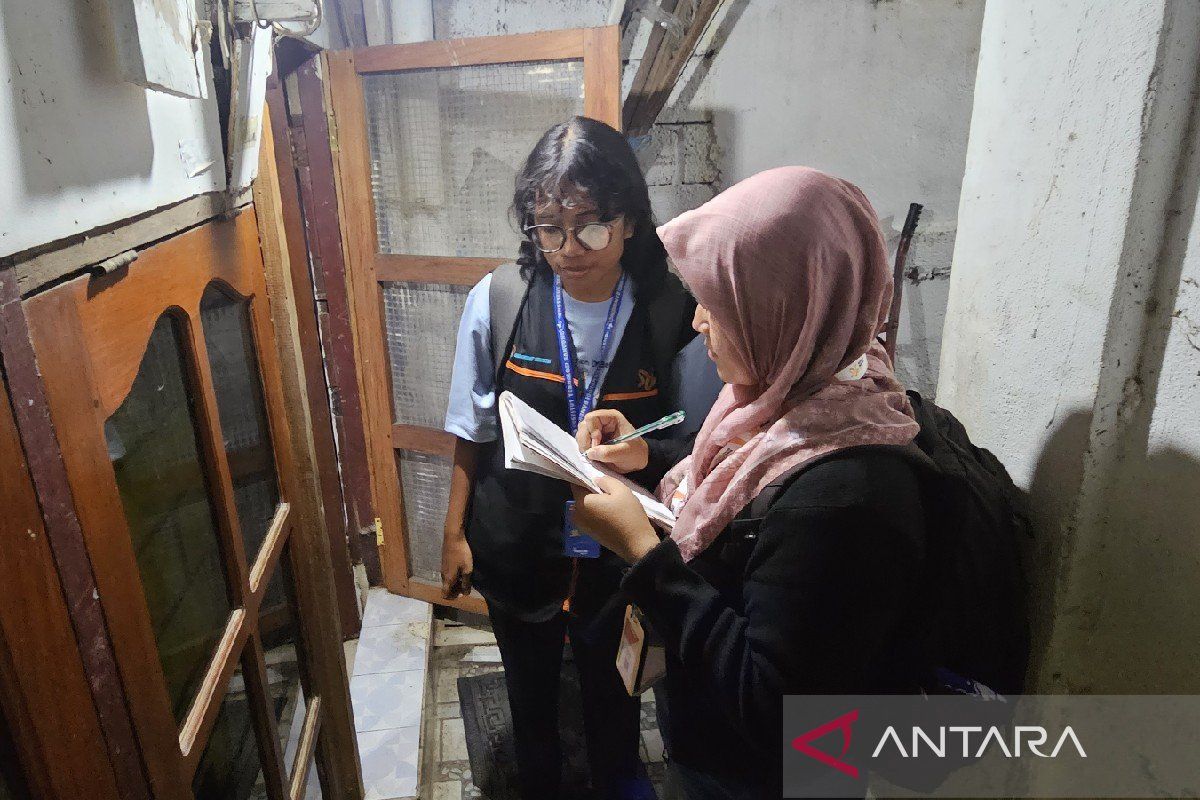
Jakarta (ANTARA) - The West Jakarta Central Bureau of Statistics (BPS) has implemented the use of links for data entry because several Economic Census officers are finding it difficult to reach respondents in luxury housing estates and apartment complexes.
Speaking to ANTARA in Jakarta on Friday, the Head of BPS West Jakarta, Muhammad Noval, stated that in addition to officers struggling to conduct door-to-door interviews, there are still respondents in these clusters who have not completed the census variables.
“For elite residential areas and apartments, we are providing convenience. If officers cannot conduct door-to-door interviews, respondents are provided with a link to fill in the data independently,” said Noval.
Noval noted that there are several key census variables that respondents in both clusters frequently leave unanswered.
“There are still items that remain unfilled because respondents are reluctant to provide information regarding income, expenditure, and assets,” Noval said.
With the duration of the Economic Census extended until 15 September 2026, the data entry links have been distributed.
“For elite housing and apartments, the names are already listed; we are just waiting for the completion of the entries. There are approximately 11,000 households in the elite housing and apartment sectors for which we are currently working to complete the data,” said Noval.
In addition to the luxury housing and apartment clusters, Noval mentioned that census officers are also facing difficulties with medium-to-large enterprise clusters.
“There are about 7,000 large companies for which we are also working to complete the data. On average, the items left unfilled by companies are three main areas: income, expenditure, and assets,” he revealed.
He emphasised that the Economic Census, which commenced on 15 June 2026, aims to map information regarding the economic conditions and potential of both companies and households.
The government, according to Noval, also wishes to obtain information regarding the business structure and the dominant business sectors engaged in by the community.
“Is the dominant sector trade, transport, or the provision of food and beverages? Furthermore, what is the percentage share or role of each of these sectors?” he asked.
This will allow the government to obtain an economic overview of a specific region and compare it with other areas.
Noval added that his office has a total of 1,648 Economic Census officers, consisting of 1,461 Field Data Collection Officers (PPL) and 187 Field Verification Officers (PML).
He ensured the security of the public data collected during the data collection process.
Data protection is guaranteed through Law Number 16 of 1997 concerning Statistics as well as other applicable regulations.