
Cement Industry Accelerates Decarbonisation Through Solar Energy
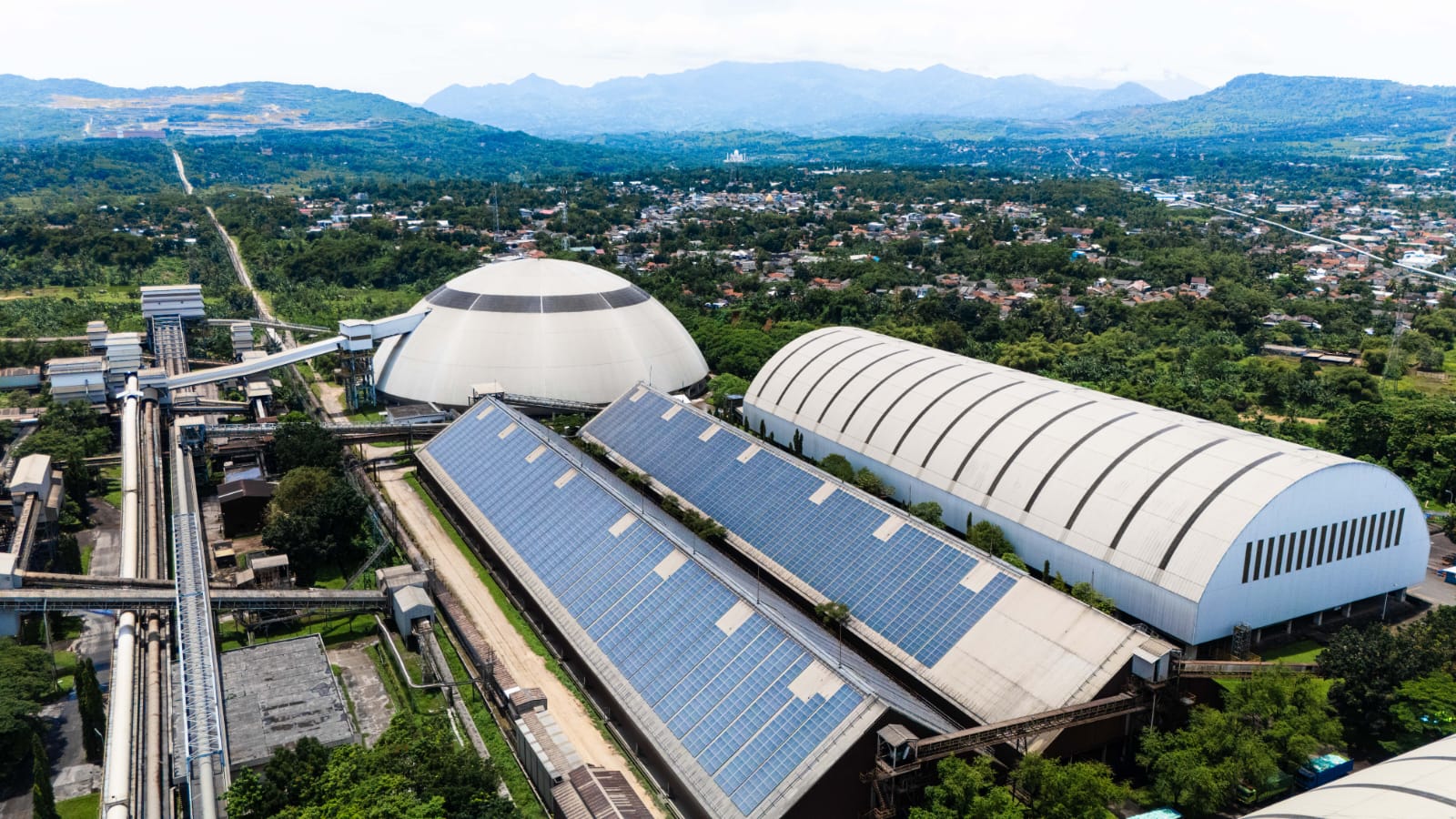
The national cement industry is accelerating decarbonisation efforts as demands to reduce emissions in heavy industry grow. Large-scale renewable energy use is now becoming part of companies’ long-term operational strategies, rather than merely an additional sustainability initiative. PT Indocement Tunggal Prakarsa Tbk is among the companies bolstering this agenda by constructing a 71.9MW solar power plant (PLTS) across three main factory complexes in Citeureup, Cirebon, and Tarjun. This capacity is currently the largest in Indonesia’s cement sector. The solar installation is projected to generate over 108 million kWh of clean energy annually and reduce carbon emissions by more than 85,000 tonnes of CO₂ per year. The environmental impact is equivalent to planting 1.4 million trees each year. For Indocement, the project is part of a gradual decarbonisation roadmap developed over recent years. The company has previously implemented various emission-reduction initiatives, including alternative fuels like refuse-derived fuel (RDF), optimisation of alternative raw materials, low-carbon energy roadmaps, and eco-friendly cement product innovations. As part of the global Heidelberg Materials group, Indocement is integrating international sustainability standards into its Indonesian operations to ensure the industry’s transformation remains globally relevant. Director Holger Mørch stated that the cement industry currently has little choice but to transition to lower-emission operational systems. ‘The construction of the largest solar plant in this sector is proof that decarbonisation can be achieved concretely, at scale, measurably, and integrated with industrial operational needs,’ he said in a statement. For this project, Indocement partnered with SUN Energy as a renewable energy solutions provider. SUN Energy’s Director of Power, Jefferson Kuesar, said industrial energy transitions are increasingly aligned with maintaining company productivity. ‘This collaboration with Indocement demonstrates that energy transitions can proceed without disrupting productivity, and actually enhance industrial competitiveness,’ he added. The project also reflects a shift in industrial approaches, where sustainability agendas are now embedded as core components of long-term business and operational strategies. (E-4)