
Cemara Asri Waste Bank Transforms Rubbish into Economically Valuable Products
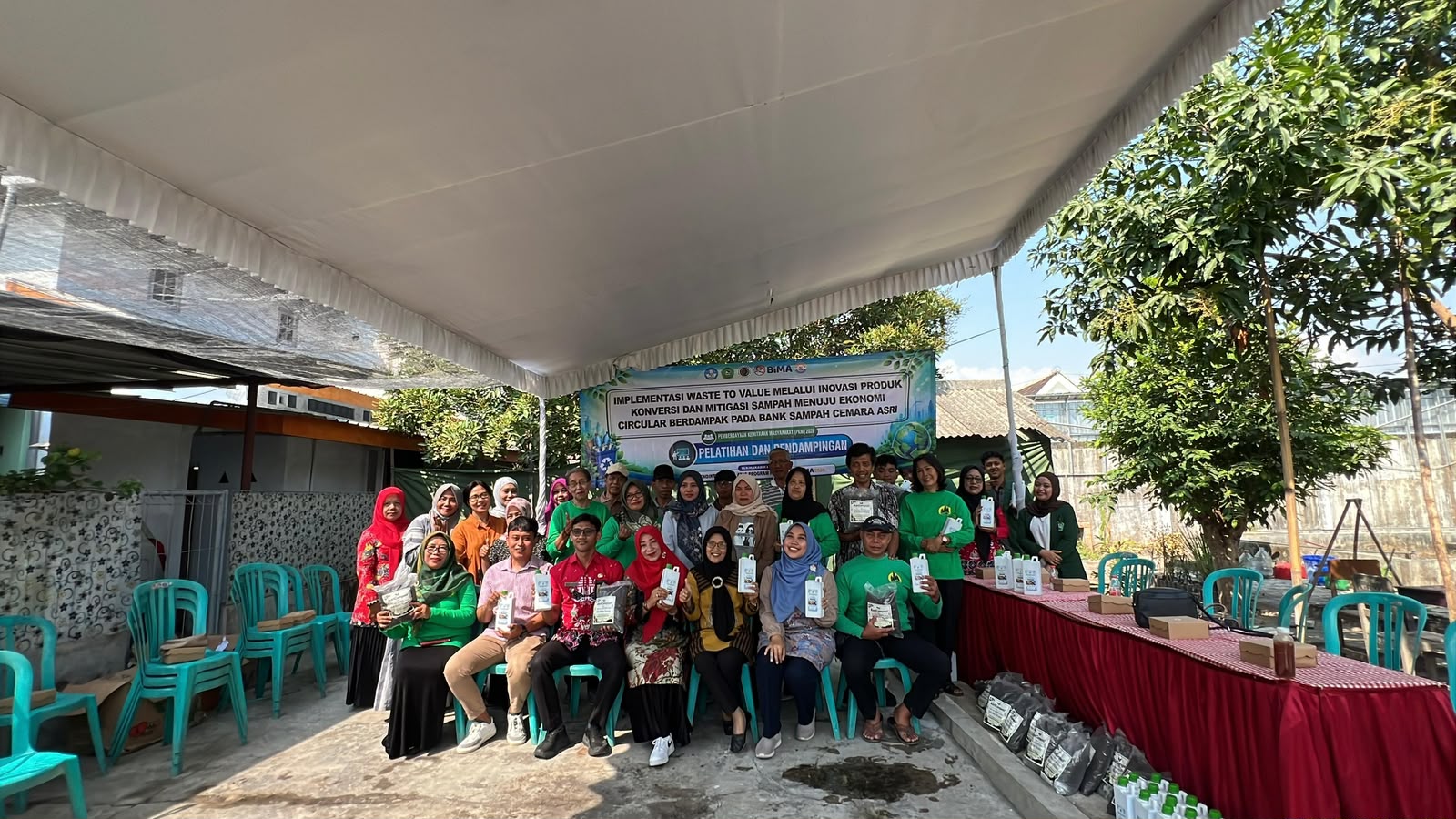
A team from the Faculty of Agriculture and Animal Husbandry at Universitas Islam Blitar (UNISBA) is assisting the Cemara Asri Waste Bank in Gedog Sub-district, Sananwetan District, Blitar City, in processing waste into economically valuable products.
The assistance, provided through the Community Service Programme (PkM) under the Community Partnership Empowerment scheme, took place on 6 August 2026. The programme carried the theme of implementing waste-to-value through innovative conversion products and waste mitigation to promote a community-based circular economy.
The implementing team consisted of Tri Endrawati as chair, with Palupi Puspitorini and Eko Wahyu Budiman as members. They provided training while introducing appropriate technology in the form of a plastic bottle shredding machine and a composter.
Team leader Tri Endrawati said the programme was not merely about providing equipment, but also about encouraging a shift in the community’s perspective on waste.
“We want to encourage the Cemara Asri Waste Bank to no longer see waste merely as something to be collected and sold, but as a raw material that can be processed into valuable products,” said Tri.
With the shredding machine, plastic bottles that were previously only collected and sold can now be processed into smaller flakes. The shredded material is easier to store and can be used as raw material for the recycling process.
Meanwhile, organic waste such as plant residues is processed using the composter into solid compost and liquid organic fertiliser (POC). These products can be used for plants and developed as products with economic value.
SKILLS IMPROVEMENT
Team member Palupi Puspitorini said the use of technology must be accompanied by improved skills among group members so that it can operate sustainably.
“Technology will have an impact if the community is able to operate, maintain and develop it. Therefore, our activities do not stop at handing over the shredding machine and composter, but continue with training and mentoring,” she said.
According to Palupi, these skills are needed so that waste bank members can operate the equipment, maintain the quality of production output, and develop the business potential of waste processing.
Another team member, Eko Wahyu Budiman, said organic waste has the potential to be returned to the biological cycle through the composting process.
“Through the composter, organic materials can be returned to the biological cycle and produce compost and POC. These products can be used for plants and developed as products with economic value,” he said.
The head of Gedog Sub-district appreciated the programme that brought together higher education institutions and the community in waste management. According to him, the Cemara Asri Waste Bank has the potential to grow from merely a waste collection point into a productive waste processing group.
“We strongly support activities that provide knowledge, skills and technology to the community. We hope this assistance can continue to have an impact on environmental cleanliness while increasing the community’s economic activities in Gedog Sub-district,” he said.
The head of the Cemara Asri Waste Bank also welcomed the assistance. He said the training provided new knowledge for members in processing waste into products with greater value.
“We are greatly helped by this training and mentoring. Previously we mostly collected and sold waste, whereas now we have gained knowledge to process waste into more valuable products,” he said.
The programme is part of efforts to promote a circular economy at the community level. Plastic waste is processed so that it can be reused as raw material, while organic waste is processed into compost and POC.
The UNISBA team hopes the Cemara Asri Waste Bank can continue to utilise the technology independently. With sustainable management, waste is expected not only to be reduced from the environment, but also to become a source of economic value for the community.
The PkM programme received funding support from the Ministry of Higher Education, Science and Technology, as well as institutional support from UNISBA and the Gedog Sub-district Government.
Source: jawawa.id (https://jawawa.id/newsitem/cemara-asri-waste-bank-transforms-rubbish-into-economically-valuable-products-1786726350)
Originally published by Media Indonesia (https://mediaindonesia.com/nusantara/922032/bank-sampah-cemara-asri-ubah-limbah-jadi-produk-bernilai-ekonomi), translated from Indonesian