
Cell therapy development deemed to require a safe ecosystem
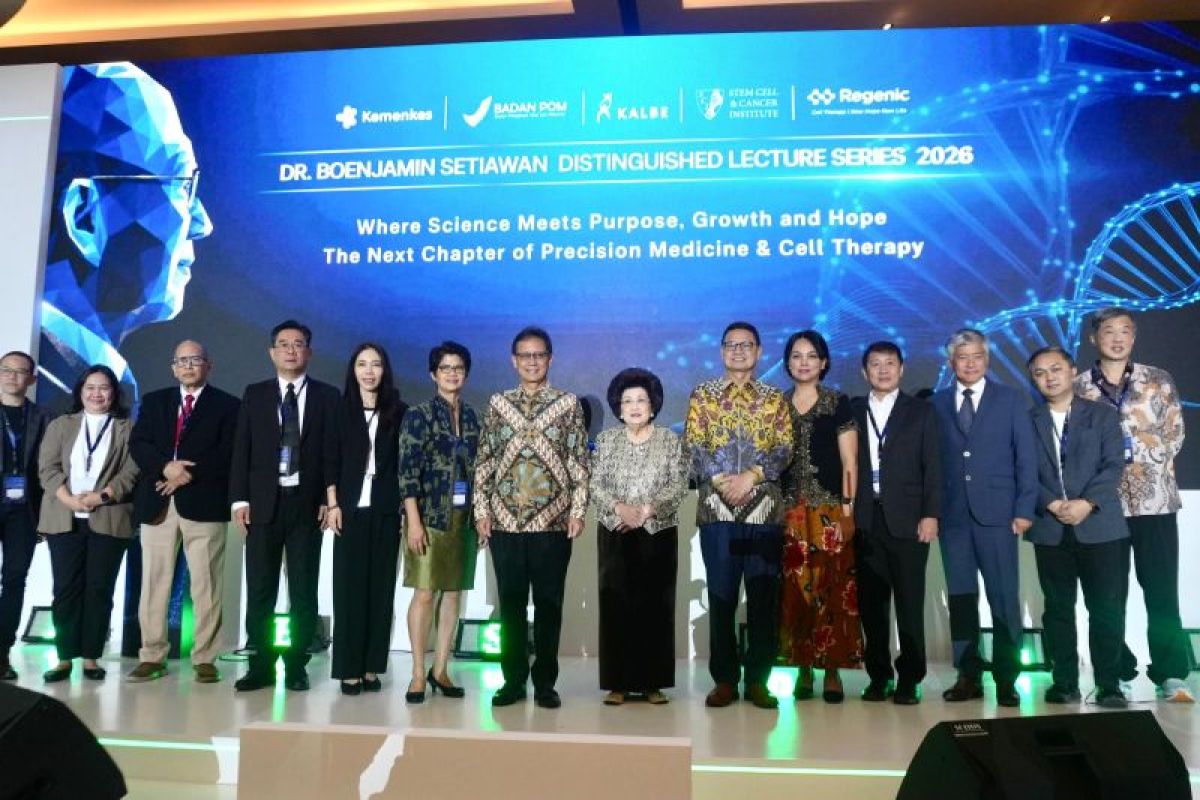
The President Director of PT Bifarma Adiluhung-Regenic Stem Cell, Dr Sandy Qlintang, M.Biomed., has said that the development of cell therapy and precision medicine must be accompanied by ecosystem readiness so that innovation can be applied safely and sustainably.
“Technological progress needs to go hand in hand with clinical evidence, governance, and ecosystem readiness so that innovation can be applied safely, effectively, and provide benefits for the Indonesian people,” Sandy said in a press statement from Kalbe received on Saturday.
In this regard, PT Kalbe Farma Tbk (Kalbe) held the Dr. Boenjamin Setiawan Distinguished Lecture Series (DBSDLS) 2026 with the theme “Where Science Meets Purpose, Growth and Hope: The Next Chapter of Precision Medicine & Cell Therapy” at The St. Regis Jakarta.
The scientific forum, which brought together more than 200 doctors, researchers, academics, government representatives, and health stakeholders, discussed the latest developments in precision medicine, immune cell therapy, and gene editing, while strengthening collaboration between academics, clinicians, regulators, and industry to encourage the application of research-based therapeutic innovation in Indonesia.
The development of cell and gene therapy globally is also moving increasingly fast. Over the past decade, nearly 50 cell and gene therapies have received approval from the U.S. Food and Drug Administration (FDA).
Gene editing technologies such as CRISPR (Clustered Regularly Interspaced Short Palindromic Repeats)/Cas9 have also progressed from basic research to technologies used in therapies that have received regulatory approval.
Globally, cancer is projected to become an even greater burden. The World Health Organization (WHO), in its Global Status Report on Cancer 2026, estimates that the number of new cancer cases worldwide could reach nearly 35 million per year by 2050.
This situation further underscores the importance of strengthening prevention, early detection, diagnosis, and the development of more effective therapeutic approaches tailored to the characteristics of each patient (personalised medicine).
This approach opens up opportunities to understand the biological and genetic characteristics of disease more deeply so that prevention, diagnosis, and treatment choices can become more precise and personal.
The Head of the Food and Drug Authority (BPOM), Prof. Dr Taruna Ikrar, M.Biomed., Ph.D, said that Indonesia is proactively welcoming a new chapter of precision medicine and cell therapy (ATMP) through a new regulatory framework.
“BPOM ensures that this regulatory acceleration remains grounded in the principle of no compromise on safety, quality, and efficacy aspects in order to protect the health of all Indonesian people,” Taruna said.
Collaboration between academics, clinicians, government, regulators, industry, and healthcare facilities is expected to help accelerate the transformation of scientific innovation into safe, high-quality health solutions that provide real benefits for Indonesian patients.