
CELIOS Suspects Political Intervention Behind Perry Warjiyo's Resignation
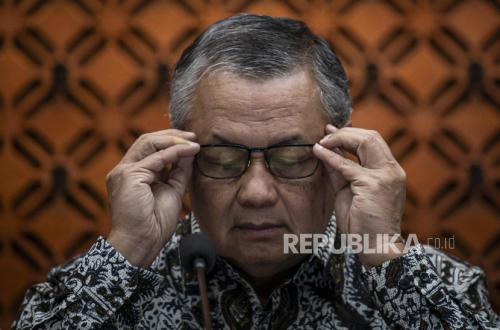
The resignation of Bank Indonesia (BI) Governor Perry Warjiyo has sparked diverse reactions. Executive Director of the Center of Economic and Law Studies (CELIOS) Bhima Yudhistira Adhinegara suspects there were indications of political intervention behind the resignation.
“The resignation of BI Governor Perry Warjiyo is deeply regrettable, a severe blow to the monetary sector. His term was not due to end until May 2028. It appears there was political pressure leading to Perry’s resignation, and this has been palpable since the rupiah weakened in late 2025,” Bhima said in Jakarta on Monday (27/7/2026).
Bhima stated that fiscal issues, such as the widening state budget deficit, the Free Nutritious Meals programme, and the Merah Putih Village/Sub-district Cooperatives, which he considers to have problematic planning, have raised concerns among investors. He noted that weakening tax revenues and aggressively increasing government debt have further added to Indonesia’s risk profile.
“The negative debt rating outlooks from Moody’s and Fitch are also implications of fiscal governance. Yet, BI is being blamed for failing to maintain exchange rate stability and investor confidence,” Bhima said.
For Bhima, the fiscal authority’s intervention in monetary policy has become excessive and is no longer merely a matter of synergy. He added that the situation has been exacerbated by the ratification of the revised Financial Sector Development and Strengthening Law (P2SK) and the Indonesian International Financial Centre Law (PFII).
He cited the Patriot Bond immunity clause in the P2SK Law, which he believes weakens BI’s authority to regulate foreign exchange traffic and supervise cross-border transactions. Under the PFII Law, Bhima continued, there are special zones where financial supervisory authority is separated. “Although it appears the OJK is affected, BI’s authority is also diminished,” Bhima added.
Bhima also highlighted the weakening of BI’s independence behind Perry’s resignation. According to him, efforts to restore investor confidence will not be easy, especially if the direction of monetary policy is perceived to be under executive control.
“As long as the problem of political pressure on BI does not stop, Perry’s internal replacement will not last long. The effect on the rupiah exchange rate will be under pressure due to signals of monetary instability, and the market is awaiting a definitive replacement for the BI Governor, not just a temporary official,” Bhima said.