
Celios: Strengthening soybean reserves key to reducing import dependency
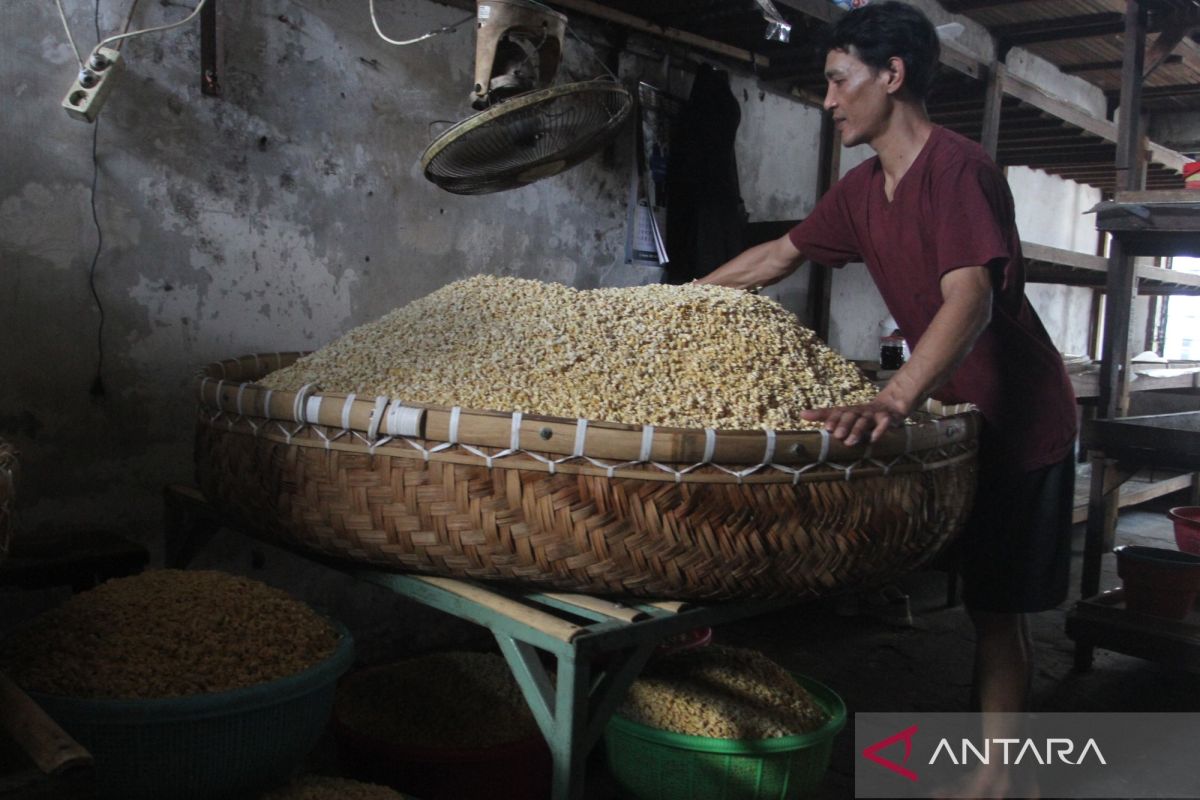
Jakarta (ANTARA) - A researcher from the Center of Economic and Law Studies (Celios), Galau Muhammad, has stated that strengthening the national soybean buffer stock is crucial to reducing import dependency and maintaining long-term domestic food supply stability. He noted that the government’s subsidy policy of Rp2,000 per kilogram for 250,000 tonnes of soybeans can assist tofu and tempeh producers in the short term. “The subsidy provided by the government is actually a temporary response to give a little breathing room,” Galau said in Jakarta on Friday. According to him, this policy must be followed by strengthening the national production and supply sector, as Indonesia still faces high soybean import dependency, making it vulnerable to exchange rate fluctuations and rising import costs. He mentioned that Indonesia’s soybean imports reach approximately 2.7 million tonnes, with around 88 percent originating from the United States, while the national import dependency ratio stands at about 79 percent of domestic needs. “So this shows our greater dependency on imported soybean commodities,” he stated. Galau believes the government needs to pursue a long-term solution by starting to build a national soybean buffer stock to maintain supply stability amid global price volatility or rupiah exchange rate pressures. “I think building a national soybean supply buffer stock is something that must be done starting today,” he said. Additionally, he urged increasing domestic soybean productivity through expanding planting areas and providing targeted incentives for farmers. He also emphasised the importance of improving soybean trade governance and distribution to make the supply chain more efficient and support the sustainability of tofu and tempeh artisan businesses. “So the benchmark cannot only be price stabilisation over the next few months, because that becomes a pragmatic solution. What we want to address is the need over the next five to ten years, how we can reduce our commodity import dependency,” he remarked. Galau assessed that strengthening institutions and artisan associations also needs to be encouraged so that business actors have a better bargaining position in supporting more equitable raw material procurement. He cautioned that high import dependency makes rising import costs and exchange rate fluctuations likely to be passed on to end consumers and small business operators. “This will further pressure tofu and tempeh artisan businesses,” he revealed. The Indonesian Tofu and Tempeh Producers Cooperative (Kopti) in Cianjur Regency, West Java, also recorded an increase in imported soybean prices in early June due to rupiah exchange rate pressures against the US dollar and geopolitical dynamics. Meanwhile, based on data from the Ministry of Trade’s Market and Basic Needs Monitoring System (SP2KP), the price of imported soybeans on Thursday (11/6) was recorded at Rp13,722 per kilogram, up 0.12 percent from the previous day’s Rp13,705 per kg. On the other hand, the Head of the National Food Agency (Bapanas) who also serves as Minister of Agriculture, Andi Amran Sulaiman, affirmed that importers’ business licences can be revoked if they unilaterally raise imported soybean prices amid government efforts to maintain price stability for tofu and tempeh raw materials. On the production side, the government is also continuously pushing to strengthen domestic food production to reduce dependency on strategic commodity imports, including soybeans. Commission IV of the Indonesian House of Representatives (DPR RI) on 10 June 2026 supported strengthening the Ministry of Agriculture’s 2027 budget through an indicative ceiling of Rp23.23 trillion and a proposed additional budget of Rp22.43 trillion to accelerate the national food self-sufficiency and food security programme. The additional budget is directed, among other things, towards increasing strategic commodity production, developing seed sources, strengthening agricultural extension and training, plantation downstreaming, and developing food zones to boost domestic production including soybeans and garlic.