
Celios: Monitoring planting area is key to maintaining rice production until year-end
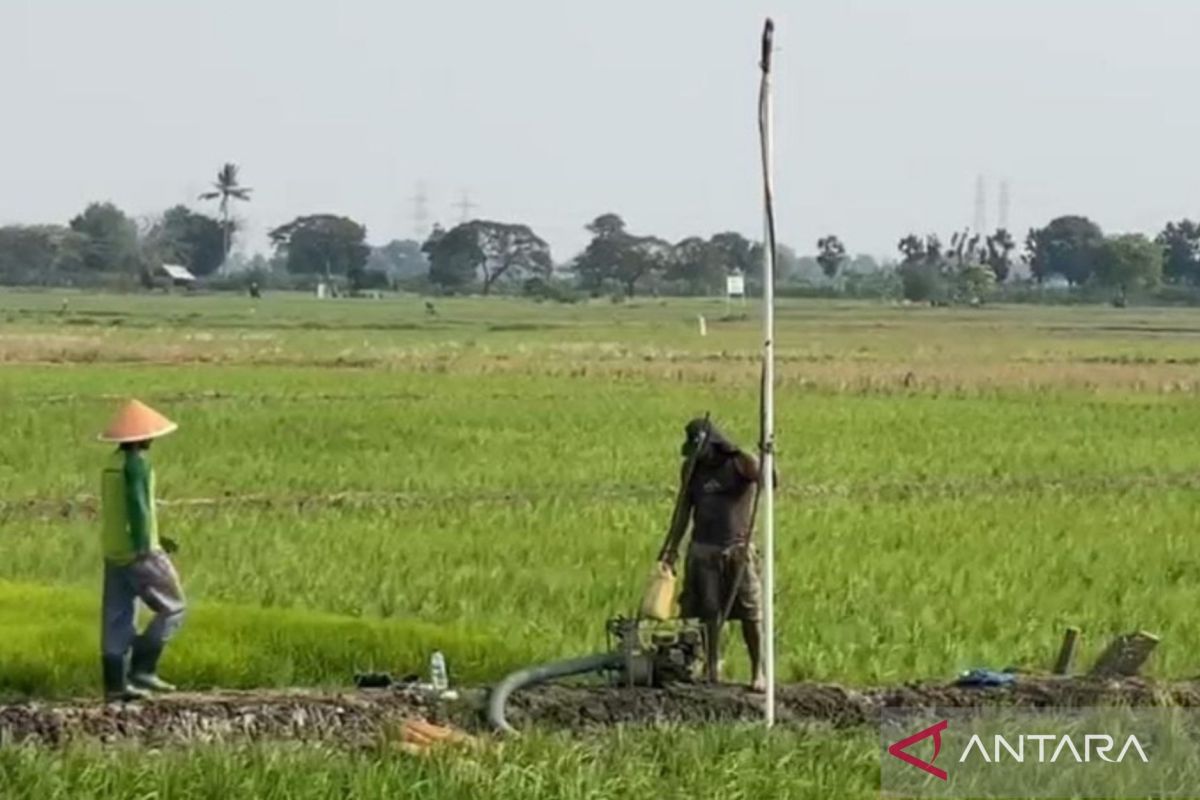
Jakarta (ANTARA) - Isnawati Hidayah, a researcher at the Centre of Economic and Law Studies (Celios), believes that monitoring planting areas is one of the keys to maintaining rice production until the end of 2026 amidst dry conditions.
According to Isnawati, planting areas need to be monitored alongside water availability, as current declines are not yet directly reflected in production figures but could affect harvest areas three to four months later.
“The risk we need to anticipate is actually the effect of the planting area, because the impact is not immediately visible in current production figures,” Isnawati told ANTARA in Jakarta on Monday.
She explained that drought can affect both growing crops and planting activities. Crops lacking water have the potential to experience decreased productivity, while reduced planting activities can affect the harvest area in the following period.
“Crops experiencing water shortages now may suffer a decline in productivity, while the reduction in planting activities during the peak of the dry season will affect the harvest area perhaps in about three or four months,” she said.
Therefore, according to Isnawati, developments in planting areas need to be continuously observed until the end of the year, considering that the impact of current dry conditions may only become apparent during the next harvest period.
Statistics Indonesia (BPS) estimates that the potential rice harvest area for August–October 2026 could reach 3.07 million hectares, a decrease of 1.29 per cent compared to the same period the previous year.
During the same period, potential rice production is estimated to reach 16.18 million tonnes of dry milled grain (GKG), down 0.92 per cent, while rice production is projected at 9.33 million tonnes, or a year-on-year decrease of 0.90 per cent.
Isnawati stated that monitoring needs to be strengthened in rice production centres experiencing drought pressure, including East Java, Central Java, West Java, and West Nusa Tenggara (NTB).
“The government certainly needs to pay attention to regions that are major rice production centres and areas where drought pressure may be quite severe,” she said.
In addition to planting areas, she noted that indicators needing monitoring include water availability, irrigation network conditions, potential harvest area, crop failure (puso), productivity, and production.
She assessed that a decrease in water discharge, followed by a reduction in planting areas compared to normal patterns or the previous year, could serve as an early warning of production pressure several months later.
“If water discharge decreases and the planting area begins to shrink compared to normal patterns or the previous year, this is an early warning that production pressure may emerge in the coming months,” remarked Isnawati.
The Meteorology, Climatology, and Geophysics Agency (BMKG) recorded the El Niño-Southern Oscillation (ENSO) index for the June–August 2026 average at 2.2, indicating a very strong El Niño.
On the other hand, the government projects national rice production in 2026 to reach 34.77 million tonnes, higher than the requirement of 31.10 million tonnes, resulting in a potential surplus of approximately 3.67 million tonnes.
Perum Bulog also noted that the government rice reserve (CBP) reached approximately 5.25 million tonnes as of 9 August 2026, distributed across Bulog warehouses throughout Indonesia.
Source: jawawa.id (https://jawawa.id/newsitem/celios-monitoring-planting-area-is-key-to-maintaining-rice-production-until-year-end-1789394849)
Originally published by Antara (Indonesian) (https://www.antaranews.com/berita/5740696/celios-luas-tanam-kunci-jaga-produksi-padi-hingga-akhir-tahun), translated from Indonesian