
Celios: Industrial layoff risks must be anticipated due to rupiah weakness
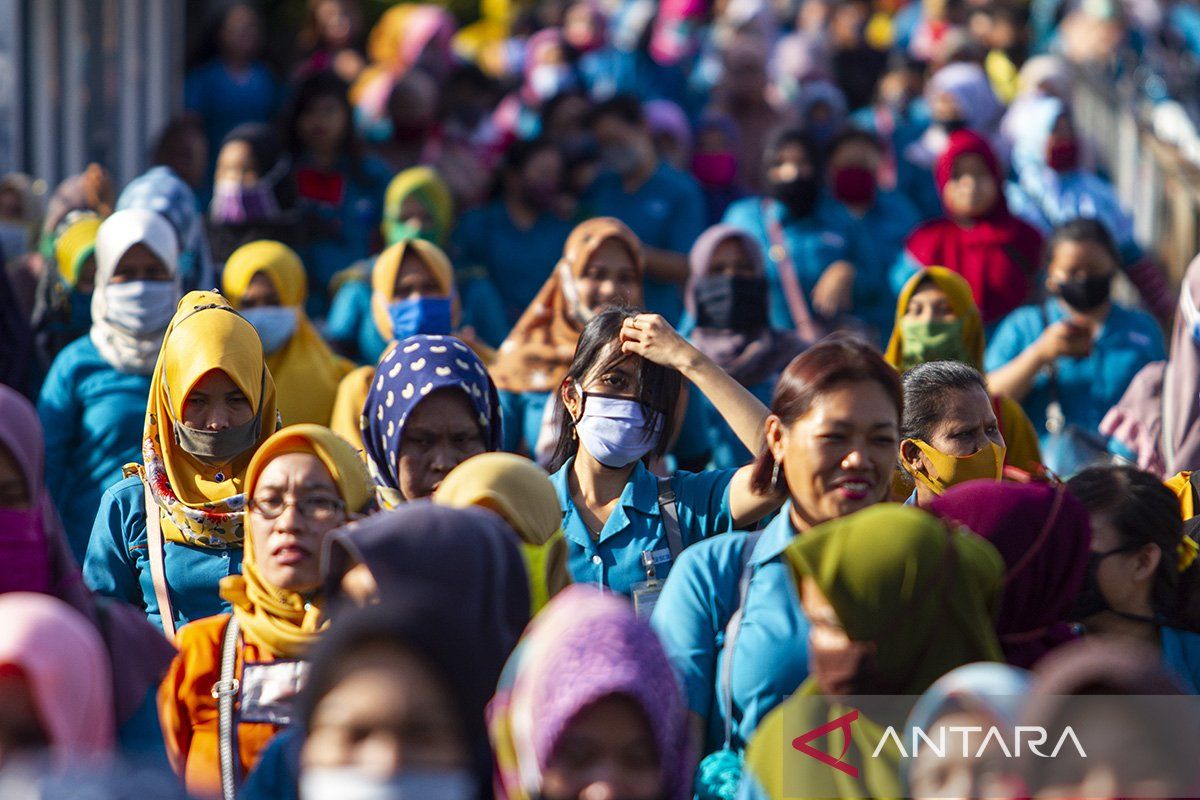
The Centre of Economic and Law Studies (Celios) believes that the risk of layoffs in the industrial sector, caused by the depreciation of the rupiah against the US dollar, must be anticipated through various strategic government policies. On Monday morning, the rupiah exchange rate weakened by 33 points or 0.19 per cent to Rp17,630 per US dollar, compared to the previous close of Rp17,597 per US dollar.
“I believe that moving forward, the risk of layoffs, particularly for labour in manufacturing industries, must be immediately anticipated and mitigated with various policies,” said Celios Executive Director Bhima Yudhistira Adhinegara when contacted in Jakarta on Monday.
Bhima assessed that the effect of the rupiah’s weakness will impact the import of raw materials, including electronics, the automotive industry, and even the agricultural and pharmaceutical sectors. He continued that this situation is prompting businesses and industries to undergo downsizing, such as reducing product sizes or decreasing production capacity and volume.
“The goal is to avoid excessive price shocks for consumers in order to maintain margins. However, the question is how long this can last, because if the rupiah continues to weaken persistently, many business players will also struggle to adjust prices,” Bhima stated.
The most concerning form of efficiency, he added, is when production capacity begins to decline due to production cost pressures, leading to labour being sacrificed as an operational cost. Therefore, anticipatory measures are vital to prevent layoffs in labour-intensive sectors, including manufacturing. “There is a fear that the formal sector will shrink further, leading to new unemployed persons or workers moving into the informal sector, which is often of lower quality,” Bhima said.
He further advised that industrial players should conduct stress tests to determine at what exchange rate they can still remain resilient, ensuring they are prepared for worst-case scenarios. Meanwhile, Celios Director of Digital Economy, Nailul Huda, suggested that the government could focus on efforts to strengthen the rupiah and consider reallocating budgets from high-cost programmes to protect public purchasing power. “Strengthening the rupiah must be a priority. The monetary sector must carefully consider the BI-rate increase, while the fiscal sector should reallocate budgets to save public purchasing power. These two policies are highly feasible at this time,” said Huda.