
Celios highlights need for better tax governance in digital sector, including OTT
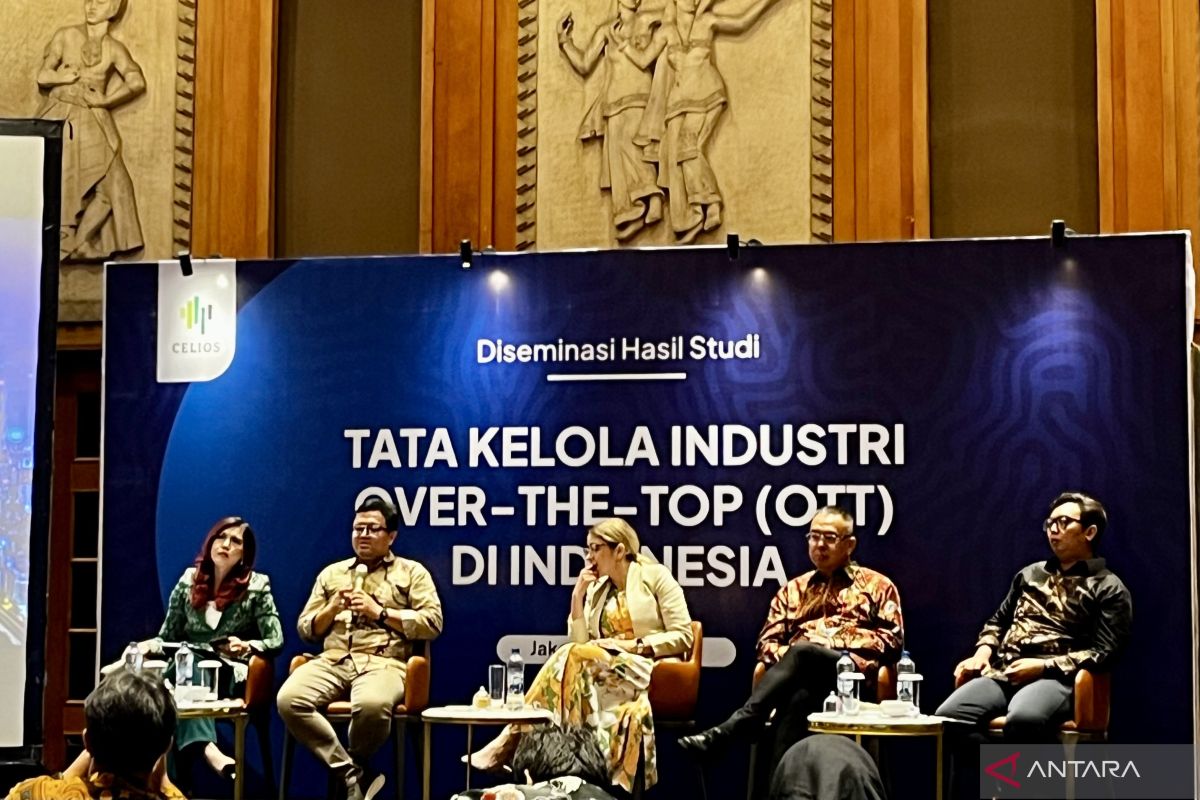
Jakarta (ANTARA) - The Centre of Economic and Law Studies (Celios) has highlighted the importance of more measurable tax governance within the digital sector, including the over-the-top (OTT) streaming platform industry in Indonesia. During the dissemination of the study results titled “Governance of the Over-The-Top (OTT) Industry in Indonesia” held in Jakarta on Tuesday, Celios Economic Director Nailul Huda noted that the digital tax coefficient in the country is currently only 0.27.
“It is still very low compared to other sectors, such as telecommunications or the banking sector,” said Huda. He assessed that the current role of OTTs, which are dominated by global technology companies, often only exists on the service demand side rather than the side of digital infrastructure supply.
“OTT companies, as users of telecommunications industry services, are expected to support the provision of national digital infrastructure, which still faces disparities, by collaborating with the telecommunications industry,” Huda stated. According to him, such efforts could support the development of a national digital industry with the potential to reach all regions of Indonesia, thereby driving the domestic creative industry more evenly.
“This is similar to what is being encouraged by the European Union, where there must be a fair share between telecommunications companies and big tech companies, involving creative industry players including local musicians and filmmakers,” he added.
Huda also emphasised the importance of a legal basis so that the state can tax global platforms even without a physical presence in Indonesia. “We have a precedent in the Job Creation Law regarding the clause on ‘significant economic presence’. Therefore, even if they do not have a physical office in Indonesia, if they have significant activity in Indonesia, we have the right to apply taxes, including corporate income tax,” Huda explained.
He further added that discussions regarding digital sector taxation should not stop at state revenue alone. “We hope for fiscal justice when global OTT companies generate significant and sustainable revenue, but domestic industry players, including the creative economy, do not receive an optimal fair share. This condition must be regulated by the government to ensure equitable development and increase the industry’s contribution to the state,” he concluded.