
Celios: Forest Fire Mitigation Crucial to Prevent Economic Losses
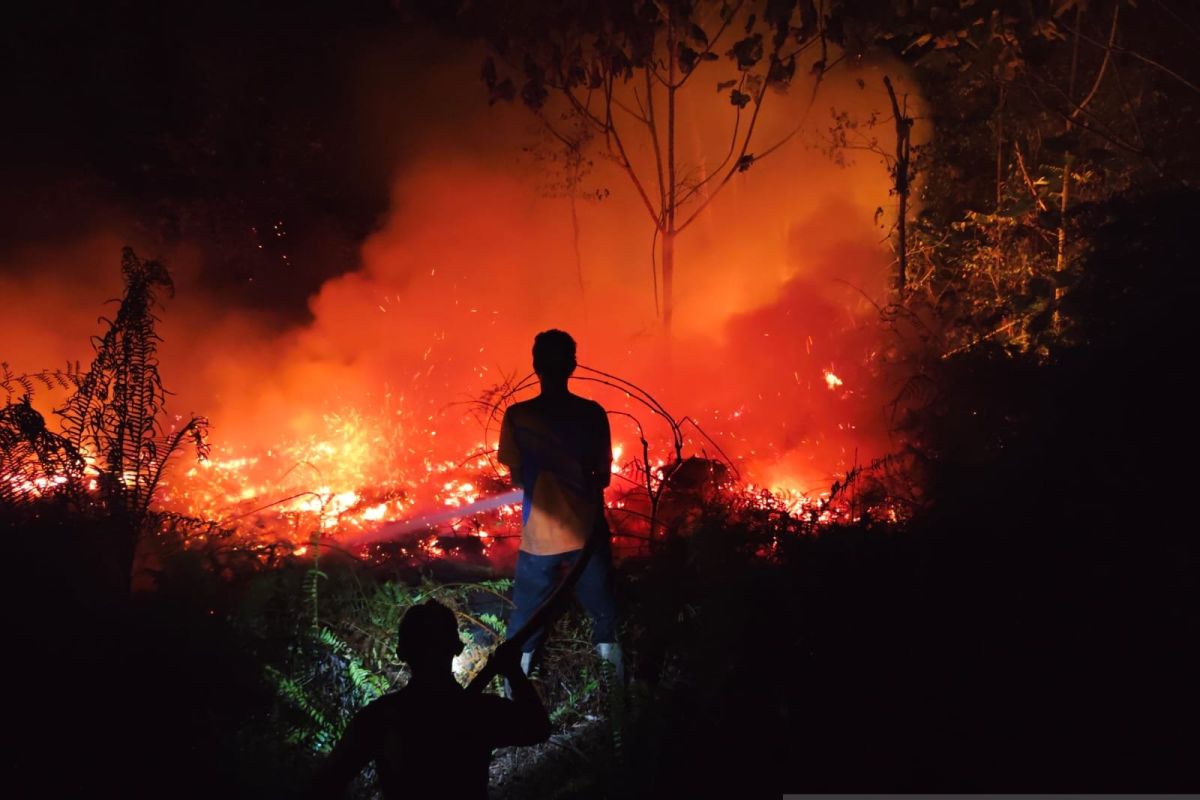
Forest and land fires (karhutla) are not merely an anomaly caused by the Super El-Niño weather pattern, but are also driven by corporate activities, where the vulnerability of peatlands due to extractive industries serves as a primary trigger, while prolonged drought is merely a precondition, stated Bhima Yudhistira, Executive Director of the Centre of Economic and Law Studies (Celios).
Speaking in Jakarta on Wednesday, Bhima noted that the changing patterns of forest fires, which are now reaching areas outside traditional epicentres, require the government to adjust its prevention strategies. He argued that current prevention efforts have focused too heavily on the moratorium of permits in the peatlands of Sumatra and Kalimantan, whereas data for 2026 indicates that the threat has spread to the peatlands of South Papua.
Bhima urged the government to immediately declare a National Disaster Status for forest fires in 2026. He also called for a comprehensive evaluation of business permits, particularly in palm oil plantations and mining, including activities designated as National Strategic Projects (PSN). Such an audit, he noted, must be followed by law enforcement and the public disclosure of evaluation results.
Furthermore, the government needs to strengthen the protection of affected communities by providing safe evacuation centres and medical support for vulnerable groups. “The safety of the people is the priority,” he said.
Bhima also assessed that ecosystem recovery must be an integral part of the fire management strategy. He encouraged the formation of an integrated ecosystem recovery team that can integrate restoration efforts with evaluations of business activities that cause fires.
This push is driven by the significant potential economic impact of forest fires reported by Celios, with estimated total economic and health costs from January to August 2026 reaching between Rp39.29 trillion and Rp123.1 trillion.
Celios Economic Director, Nailul Huda, stated that these loss figures demonstrate that forest fire prevention is not just an environmental agenda, but also a vital part of maintaining national economic resilience. “The figure of Rp123.1 trillion is equivalent to 49.1 per cent of the projected Regional Gross Domestic Product (PDRB) of Central Kalimantan for 2026,” Huda explained.
In their calculations, economic losses from the loss of physical assets and economic activities—such as trade, agriculture, accommodation, and food and beverage sectors due to smoke and production disruptions—amount to Rp29.54 trillion, or approximately 0.23 per cent of the national GDP.
Regionally, West Kalimantan recorded the largest nominal impact at Rp5.7 trillion, followed by West Papua at Rp4.3 trillion and East Nusa Tenggara at Rp2.8 trillion. This data shows that strengthening forest fire mitigation must be implemented nationally as the risk areas expand.
Celios also estimates that forest fires could potentially reduce regional net tax revenue by approximately Rp269.86 billion in 2026. This condition indicates that the economic impact of forest fires can spread to other regions through inter-sectoral links, including the timber, pulp and paper, and furniture industries.
From a health perspective, Celios estimates that in a scenario where citizens are diagnosed with Acute Respiratory Infections (ISPA), 1.78 million people could be affected, with total health costs around Rp9.75 trillion.
“If we include individuals experiencing ISPA symptoms who do not receive medical examination, the number could potentially reach 17.4 million people, with total health costs of around Rp93.56 trillion, equivalent to 67.6 per cent of the total health function budget in the 2026 State Budget (APBN),” said Huda.
Given the massive potential economic, fiscal, and health costs, CELIOS is pushing for strengthened forest fire mitigation to reduce the state’s burden resulting from these impacts.