
Ceasefire with Israel: Hezbollah Must Withdraw Forces from Southern Lebanon
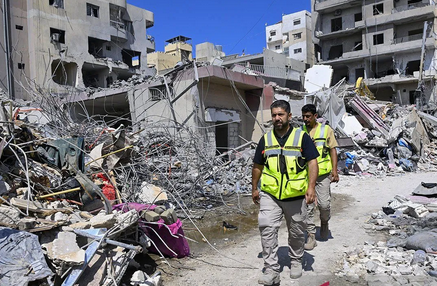
Israel and Lebanon have finally reached an agreement to implement a conditional ceasefire following intensive negotiations mediated by the United States in Washington on Wednesday (3/6) local time. However, the implementation of this agreement is hanging by a thread as mutual attacks continue in the border region. Based on the agreement document, the ceasefire will only take effect if there is a total cessation of attacks by Hezbollah. Other main conditions include the withdrawal of all personnel and military infrastructure belonging to the Iranian-backed group from southern Lebanon. As part of the transition, both parties agreed to establish several pilot zones in southern Lebanon, where the Lebanese Armed Forces (LAF) will assume full security control without the involvement of non-state armed groups. Although the peace announcement was released, the situation on the ground indicated otherwise. Hours after the deal was announced, air raid warning sirens sounded again in northern Israel. The Israeli military reported intercepting one unmanned aerial vehicle and two projectiles launched from Lebanese territory. Meanwhile, Israeli airstrikes in the Al-Hawsh area near the city of Tyre reportedly killed at least 10 people, including Syrian and Palestinian civilians. Hezbollah argued that its rocket attacks on the town of Al-Qantara and an Israeli command position in Chqif Castle were a response to violations committed by the Israeli military. US President Donald Trump expressed his ambition to separate the Lebanese conflict from tensions involving Iran, a vision strongly opposed by Tehran. Iranian Foreign Minister Abbas Araghchi warned that any attack on Beirut could trigger a wider full-scale war. The humanitarian crisis is also deepening. Lebanese health authorities have recorded at least 130 health workers and emergency personnel killed since the conflict reignited last March. The latest incident involved an assault on an ambulance that killed paramedics from the Risala Scouts Association and the Islamic Health Committee. Senior Hezbollah official Mahmud Qomati stressed that his party would not accept a partial agreement. With positions still deadlocked, a follow-up meeting on 22 June will be a crucial test of whether the Washington deal becomes a real peace or merely a repeat of the failed 17 April ceasefire.