
Ceasefire Shattered! US and Iran Exchange Strikes, Trump Issues Threat
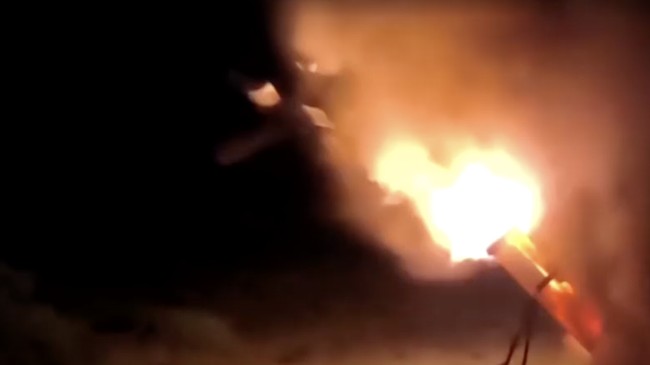
Peace negotiations between the United States and Iran have reportedly stalled after the US military launched retaliatory airstrikes against several Iranian military targets. The combat air operation was triggered by Tehran’s brazen move to once again attack commercial vessels in the strategic energy corridor of the Strait of Hormuz.
US Central Command fighter jets struck 10 military targets in and around the Strait of Hormuz on Sunday. The airstrikes targeted military surveillance infrastructure, communication systems, air defence sites, drone storage facilities, and Iranian minelaying vessel capabilities.
Washington’s aggressive move came after the Panama-flagged commercial tanker M/T Kiku, carrying over two million barrels of crude oil, was hit by an Iranian drone strike while transiting the strait on Saturday. CentCom also detected that Iran had fired upon the Singapore-flagged cargo ship Ever Lovely off the coast of Oman on Thursday, though the vessel was able to continue its voyage.
In response to the US aerial bombardment of its coastal facilities, Iran immediately launched retaliatory ballistic missile and drone strikes against several US military bases in Kuwait and Bahrain on Sunday evening. The Kuwaiti armed forces confirmed their air defences were busy repelling enemy missiles, while Bahrain’s Ministry of Foreign Affairs strongly condemned this dangerous aggression.
"What Tehran has done is not a fleeting act, nor an isolated incident, but a deliberate approach and a systematic pattern of repeated aggression," Bahraini authorities denounced in an official release.
The exchange of strikes immediately sparked a harsh reaction from neighbouring Gulf states, with the United Arab Emirates and Qatar jointly condemning Iran’s attack as a fatal violation of territorial sovereignty and international law. Saudi Arabia also strongly condemned Iran’s aggression against security and international freedom of navigation in the Strait of Hormuz.
The bloody escalation provoked the ire of US President Donald Trump, who once again threatened to raze the Islamic Republic if the peace draft continues to be violated. Via his Truth Social account, Trump asserted that US aircraft had bombed Iran’s missile bases because they violated the ceasefire agreement again.
"There may come a point where we can no longer be reasonable, and will be forced to finish the job militarily that we started very successfully. If that happens, the Islamic Republic of Iran will be no more!" Trump threatened.
The harsh statement adds to a long list of extreme threats from Trump, who has repeatedly expressed a desire to send Iran back to the "stone age". In April, Trump threatened that "all civilisation will die tonight" while raising the spectre of nuclear war, and he followed up in May by warning that time was running out for Iran and there would be nothing left of them.
The military disaster erupted exactly one week after Trump and Iranian President Masoud Pezeshkian signed a memorandum of understanding aimed at drafting a permanent peace agreement following months of open warfare. Under the 60-day ceasefire framework, both sides were supposed to exercise restraint, but they now accuse each other of violating the agreement first, including when the US military struck Iran on Friday over alleged trivial violations.
A Pakistani diplomatic source involved in the mediation process revealed that although negotiations are currently frozen due to the exchange of attacks, both delegations are maintaining their representatives in Switzerland. The envoys’ presence aims to quickly resume roundtable discussions once they receive the green light from their respective governments, though the source did not specify which side first decided to pause the negotiations.
Meanwhile, a senior official in the Trump administration denied reports that peace talks had been unilaterally cancelled. The White House official asserted that the draft of behind-the-scenes technical communications is still proceeding according to the planned schedule.
"Nothing has been cancelled. Technical talks on the implementation of the memorandum of understanding remain on track for the coming days as planned," the senior US official stressed.
Axios even reported that the US and Iran had actually agreed to halt the exchange of strikes at sea and planned to hold a direct meeting this weekend. Amid this political uncertainty, CentCom confirmed that the flow of commercial tanker traffic in the Strait of Hormuz is still ongoing as more tankers successfully exit, easing supply concerns.
The situation caused the world Brent crude oil price for the August contract to close down 4.34% to US$71.99 per barrel on Friday. Meanwhile, US West Texas Intermediate crude for the August contract also fell 3.74% to US$69.23 per barrel, marking the first time the WTI price closed below the US$70 level since 27 February, exactly one day before the Iran war erupted.