
CCTV Monitoring Krakatoa Eruptions Damaged, Here is the Situation on the Ground
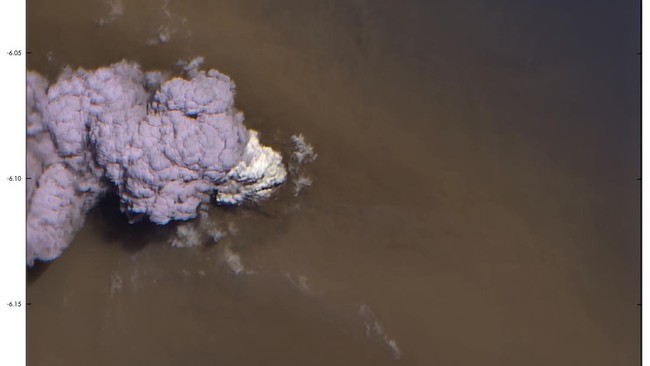
The Ministry of Energy and Mineral Resources (ESDM) has revealed that damage to equipment located near the crater of Anak Krakatau may reduce visual observation coverage from certain points, including CCTV cameras. Nevertheless, the Head of the Geological Agency of the Ministry of ESDM, Lana Saria, ensured that this does not halt the monitoring of Anak Krakataus’s volcanic activity.
“Monitoring conducted by the Centre for Volcanology and Geological Disaster Mitigation (PVMBG) of the Geological Agency, Ministry of ESDM, is carried out using multiple parameters and does not rely solely on a single CCTV or a single instrument,” she stated during a virtual press conference on Sunday (6/9/2026).
She explained that the primary parameters still in use include seismic networks, visual observations from safe locations, deformation and gas emissions, satellite imagery, and field information.
According to her, instrument redundancy is vital because equipment placed near active volcanoes always faces risks from flying volcanic material, ash exposure, extreme weather, and communication disruptions.
“For this reason, the PVMBG of the Geological Agency, Ministry of ESDM, also conducts evaluations of data quality and continuity,” she added.
Lana emphasised that repairs or equipment replacements will be carried out considering the level of activity and the safety of personnel. “As long as activity is high, personnel will not be sent into danger zones merely to repair the system,” she said.
Tsunami Potential Deemed Low
Furthermore, Lana explained that not every eruption of Anak Krakatau will trigger a tsunami. The Sunda Strait tsunami that occurred on 22 December 2018 was related to the collapse of a large volume of the volcano’s body into the deep sea, rather than being solely caused by the eruption column.
She emphasised that the morphology of Anak Krakatau is currently different compared to before the 2018 event. A large part of the volcano’s body on a certain side collapsed in 2018, and has since undergone growth and morphological changes due to subsequent eruptive activity.
Based on the latest morphological mapping, the basic shape of the volcano’s body and the main crater does not show significant or clear changes compared to previous mapping.
“Based on evaluation results to date, the growth of the Anak Krakatau body, which reformed after the 22 December 2018 eruption, is still relatively small and does not have the potential to undergo a collapse on a scale that could trigger a tsunami,” she said.
“Nevertheless, developments in activity and morphological changes continue to be monitored intensively,” she concluded.
Source: jawawa.id (https://jawawa.id/newsitem/cctv-monitoring-krakatoa-eruptions-damaged-here-is-the-situation-on-the-ground-1788670420)
Originally published by CNBC Indonesia (https://www.cnbcindonesia.com/news/20260906103848-4-765432/cctv-pantau-letusan-krakatau-rusak-begini-kondisi-di-lapangan), translated from Indonesian