
Causes of Virgo Transport 8 Accident Cannot Be Concluded from a Single Aspect
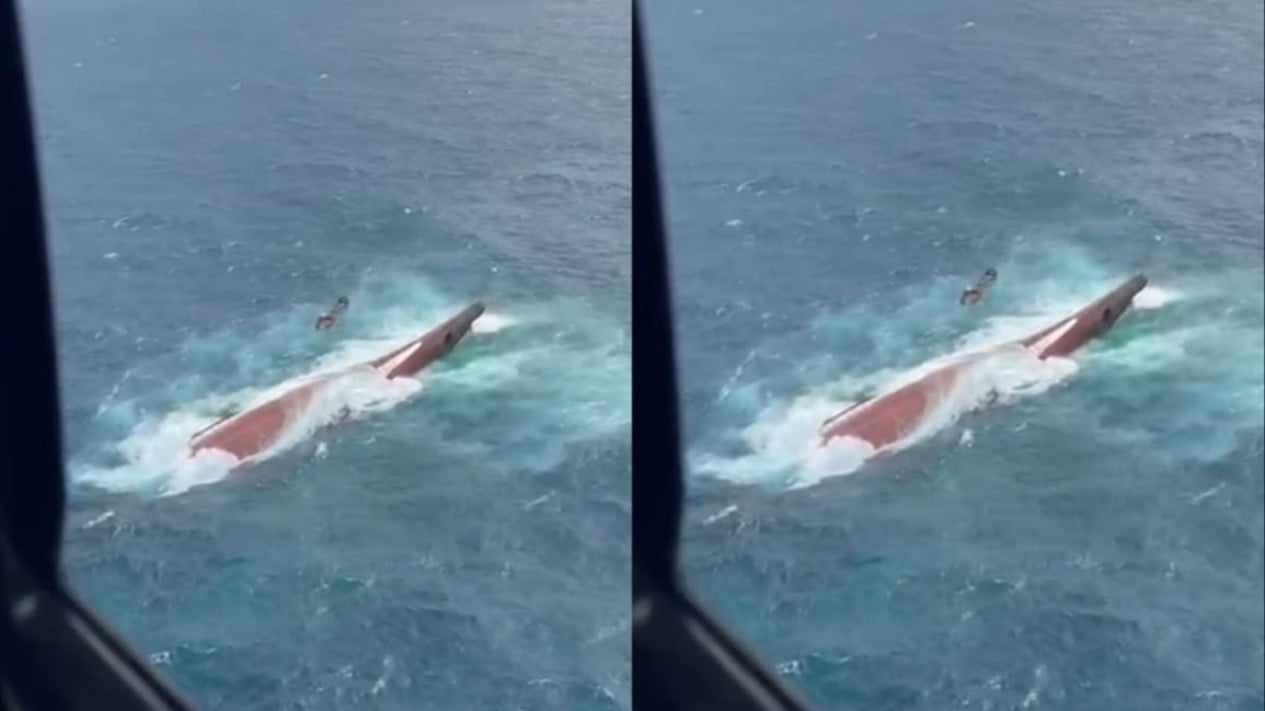
The cause of the KM Virgo Transport 8 accident is believed to require proof through a thorough and technical study. Conclusions regarding ship modifications, historical transit records in the country of origin, and water depth are considered insufficient as standalone bases for determining the cause of the accident.
Rakhmatika Ardianto, an alumnus of Naval Architecture from the Sepuluh Nopember Institute of Technology (ITS), a maritime transport practitioner, and Vice Chairman of the MTI Maritime Transport Forum, believes that the cause of the accident must be viewed from various aspects before a conclusion is reached.
According to Rakhmatika, ship modifications are subject to a mechanism of approval and supervision. He referred to PM Number 54 of 2021 concerning the Approval of Ship Design Drawings, Implementation, and Supervision of Ship Construction and Work.
“Ship owners are not permitted to alter construction at will. There are design drawings, technical calculations, an approval process, and work supervision conducted by the Directorate of Shipping and Seamanship of the Directorate General of Sea Transportation, as well as the Indonesian Classification Bureau (BKI),” he stated, as quoted on Sunday, 20 September 2026.
“Once the work is completed, a recalculation of the ship’s stability is performed through an inclining test by BKI,” he added.
Rakhmatika noted that changes to the design or function of a ship are common in the shipping industry, provided they undergo technical processes and meet safety and classification requirements.
He cited several ships that have undergone design and functional changes during their operational lifespan.
“A number of ships currently in operation have undergone changes in design or function during their service. For example, the Doulos Phos, built in 1914 in the United States as the SS Medina, was initially a cargo ship, then transitioned to a pilgrim and passenger ship named SS Roma, subsequently became the cruise ship MS Franca, operated as the floating library MV Doulos from 1977–2009, and was finally revitalised as the Doulos Phos The Ship Hotel in Bintan from 2019 to the present,” said Rakhmatika.
“Meanwhile, in the Philippines, the MV St. Thomas Aquinas, which was previously the Japanese ferry Sumiyoshi, was converted into a multi-deck passenger ship with a capacity for thousands of people. This demonstrates that changes in ship design or function are common in the shipping industry, as long as they are carried out through technical processes and meet safety and classification requirements,” he concluded.