
Causes of Ride-Hailing Crisis in Jakarta Ahead of Eid: Avoid These Peak Hours
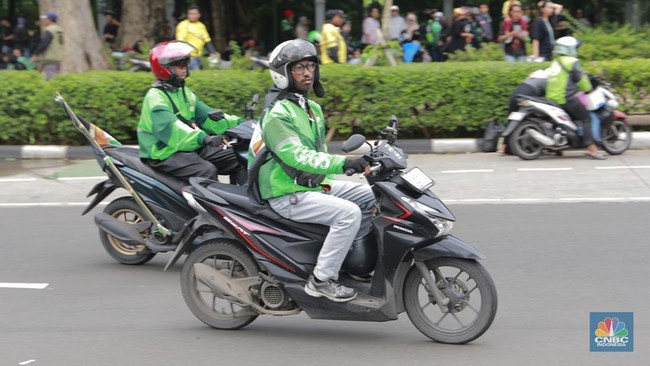
In recent days, many users of ride-hailing services have complained about difficulty finding drivers for their transportation needs. Social media has been flooded with accounts from residents claiming their activities have been disrupted by the “ojol crisis” phenomenon.
Gojek and Grab, the primary ride-hailing service providers, have disclosed the reasons behind the difficulties in ordering their services.
Drivers Already Returning Home
Bambang Adi Wirawan, Head of Driver Operations at Gojek, stated that several factors have caused driver availability to become constrained during the month of Ramadan. One key factor is that some driver partners, particularly in major cities, have chosen to return home (mudik) and spend time with their families ahead of the end of Ramadan.
“Beyond these factors, external circumstances such as heavy rain causing flooding at several locations and resulting in increased traffic congestion also affect driver availability. Consequently, customer orders during this period often require additional time to be accepted by driver partners,” explained Bambang in a written statement received by CNBC Indonesia on Thursday (12 March 2026).
The recent weather patterns involving heavy rainfall and flooding at various locations were also highlighted by Tyas Widyastuti, Director of Mobility, Food, and Logistics at Grab Indonesia.
Surge in Demand and Heavy Rain
She stated that at certain times and in specific areas, users experience longer waiting times than usual. This occurs because of a substantial surge in service demand.
“At the same time, driver partner availability is also influenced by several factors, including extreme rainy weather conditions that have caused flooding on various road networks, as well as higher-than-normal traffic congestion,” said Tyas in an official statement received by CNBC Indonesia.
Tyas stated that Grab will continue to monitor developments in this situation periodically and make necessary operational adjustments so that services for users, merchants, and driver partners can resume operating more optimally, particularly as the Ramadan and Eid al-Fitr period approaches, when service demand typically increases,” said Tyas in an official statement received by CNBC Indonesia on Thursday (12 March 2026).
Peak Hours
Additionally, Bambang noted that there has been a change in booking patterns at the end of Ramadan ahead of Eid al-Fitr. There is a surge in demand concentrated during specific hours.
The busy hours throughout the end of Ramadan begin at 15:30 WIB and peak between 16:00 and 18:00 WIB. This period particularly occurs in the central business district of Jakarta.
Regarding this phenomenon, Bambang urged users to allocate additional time for the booking process and travel planning. Meanwhile, for drivers, Gojek will implement several schemes as a way of appreciating those who continue to serve the public during Eid.
“On the driver partner side, we will implement special tariff schemes that apply during the Eid al-Fitr holiday period to increase revenue opportunities for partners. There are also incentives or bonus income payments for driver partners who have completed a certain number of orders. It is important for us to implement this measure to appreciate driver partners who choose to continue serving the public during the Eid al-Fitr holiday period,” he explained.