
Causes of Flash Floods in Nepal and Tibet: Expert Explanations
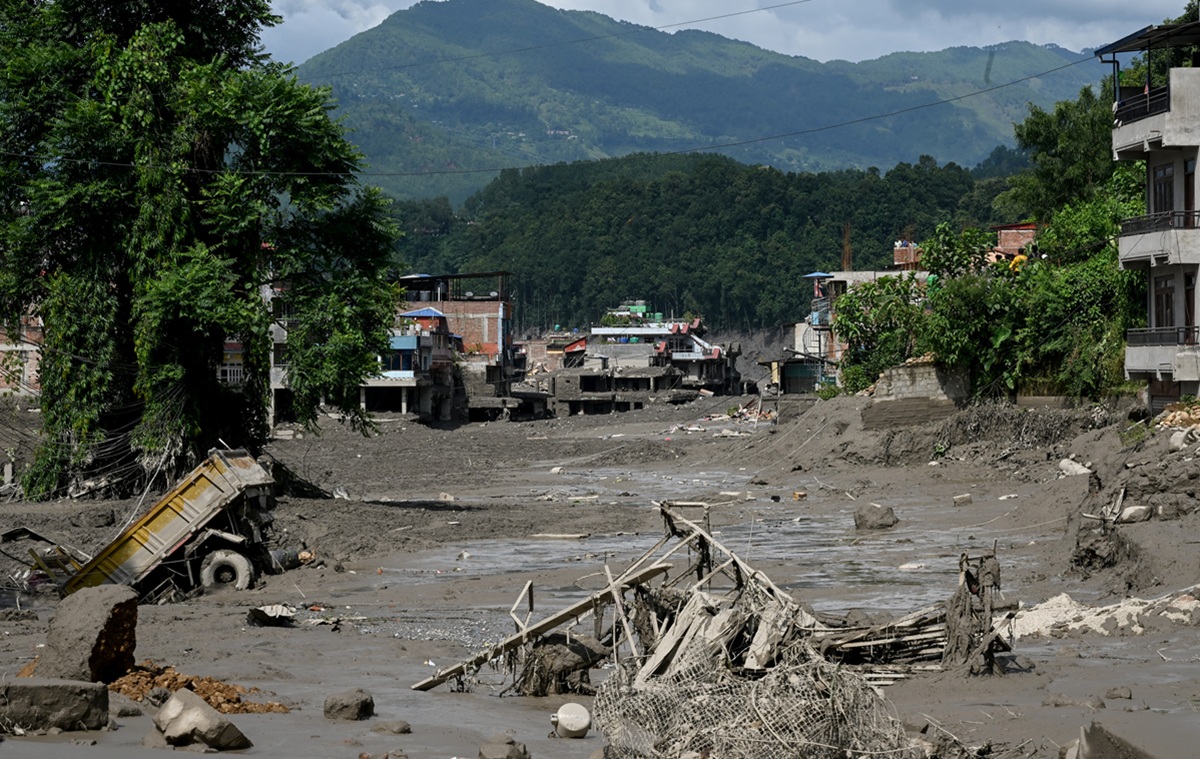
Flash floods and landslides on the border of Nepal and Tibet killed at least 160 people and left hundreds more missing on Wednesday (26/8) local time. Experts assess that the extreme topography of the Himalayan Mountains increases the risk of such deadly disasters.
The United States Geological Survey (USGS) recorded that seismic waves previously reported as a magnitude 4.4 earthquake were actually triggered by a landslide. Initial assessment results from the International Centre for Integrated Mountain Development (ICIMOD) reinforce this suspicion.
“We believe an ice-rock avalanche occurred in Nepal, blocking the Lhende River and causing a cascading flood,” said ICIMOD remote sensing analyst Sarthak Shrestha, as quoted from AFP.
Hydrologist from the University of Texas San Antonio, Hatim Sharif, highlighted the absence of rainfall before the disaster occurred. According to him, this condition defeated almost all flood early warning systems. Sharif said the high-velocity flow of mud and water resembling liquid concrete is extremely difficult to avoid. “Running will not help,” said Sharif.
Sharif assessed that the best course of action when a disaster occurs is to climb hillsides at least six metres high. He also suggested installing river water level gauges as a long-term solution to provide warnings 20 to 30 minutes in advance.
Researcher from the University of Reading in England, Dorothy Heinrich, explained that narrow river gorges in mountainous areas accelerate water accumulation if a blockage occurs. “Whatever blocks it, whether a snow avalanche or a landslide, will cause a very large accumulation of water, then create these very rapid floods,” said Heinrich.
Head of Climate and Environmental Risks at ICIMOD, Qianggong Zhang, warned of the potential for subsequent flooding due to blockages still occurring downstream.
Meanwhile, Heinrich emphasised that climate change trends in the Himalayas are indeed increasing disaster risk, although a direct link to this event still requires further study. “We know what climate change trends in the Himalayas look like. There is high confidence of more heatwaves, glacier retreat, permafrost reduction, the kinds of things that can trigger landslides and glacial lake outburst floods,” said Heinrich.
Source: jawawa.id (https://jawawa.id/newsitem/causes-of-flash-floods-in-nepal-and-tibet-expert-explanations-1787791821)
Originally published by Media Indonesia (https://mediaindonesia.com/internasional/926403/penyebab-banjir-bandang-nepal-dan-tibet-ini-penjelasan-para-ahli), translated from Indonesian