
Cause of Six Near-Misses Between Aircraft in One Month at Airport Revealed
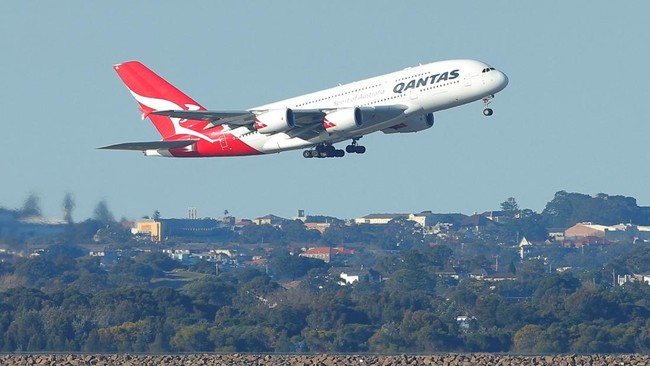
New updates have emerged regarding the near-collision of two Qantas aircraft at Sydney Airport, Australia, last July. Serious issues regarding fatigue and a shortage of air traffic controllers (ATC) at the flight terminal have been uncovered.
Internal documents and conversation recordings reviewed by Reuters on Friday (4/9/2026) show that five out of the ten air traffic controllers on duty during the incident were categorised as being at high risk of fatigue.
Specifically, the incident occurred on 27 July 2026, when a landing Qantas turboprop aircraft nearly collided with a Boeing 737 from the same airline, despite the Boeing 737 having previously been cleared to cross the runway.
Of the ten officers on duty, five received an ‘H’ code, signifying high fatigue risk, under Australia’s fatigue management system. One officer was categorised as medium risk, one as low risk, while the remaining three were not categorised as being at risk of fatigue.
A shift manager even described the staff’s condition at the time as being “a bit mad,” according to internal communications with an air traffic management director. “We have about five people with high fatigue levels this morning. It is a bit mad,” the manager stated in the recording.
“Thankfully they did not collide, but the distance was very close and everyone here is quite shaken,” the manager continued.
Six Near-Misses in One Month
The incident on 27 July was one of six near-misses at Sydney Airport within approximately one month. This series of incidents has drawn scrutiny towards the working conditions of air traffic controllers, amidst global concerns regarding ATC personnel shortages and their impact on aviation safety.
The Australian Transport Safety Bureau (ATSB) is currently investigating all six incidents to determine if there are shared safety issues or underlying causes. Airservices Australia, the government body that employs air traffic controllers in the country, has declined to comment on the incidents as the investigation is ongoing.
Does Not Necessarily Mean Controllers are Truly Fatigued
Australia’s fatigue management system does not directly measure whether an officer is experiencing actual fatigue. Instead, the system uses automated assessments of several factors, including workload and rosters, to estimate fatigue risk levels.
Based on these risk levels, shift managers or air traffic management directors can implement mitigation measures, such as providing longer rest periods, limiting the volume of traffic handled by an officer, or ending shifts early.
However, several air traffic controllers told Reuters that officers can still work even when they are at a high fatigue risk level. One Melbourne-based controller stated they had never even seen an air traffic controller removed from a roster due to being deemed too fatigued to work.
Scott Nugent, President of Civil Air—the union representing approximately 85% of Australian air traffic controllers—stated that the number of shifts with high fatigue risk has increased in recent years. According to him, this reflects decreasing rest periods and longer working hours.
“However, staff shortages mean people are working more overtime, having fewer days off, working under greater pressure, and fatigue levels are increasing,” said Nugent.
Airservices Australia also acknowledged that in the six weeks leading up to 28 August, Sydney experienced unusual levels of short-term absenteeism. This situation has significantly impacted the company’s ability to fill all operational shifts.
Working 10 Consecutive Days
The labour shortage is making the fatigue issue increasingly severe. Under Airservices Australia’s employment agreements, air traffic controllers can work up to 10 consecutive shifts, including additional duties and emergencies, with a maximum limit of 80 hours during that period.
By comparison, air traffic controllers in Canada can work up to eight consecutive days, while in the United States, the limit is six days. Three Australian controllers and Civil Air told Reuters that working 10 consecutive days before receiving a single day off is not unusual.
Pressure from overtime is also reportedly increasing. Several officers stated they frequently receive calls and messages to take on additional shifts because their absence adds pressure to colleagues who are already short-staffed.
This issue is not unique to Australia. Air traffic controller shortages are also a problem in several other countries, including the United States and Canada.
In the US, according to a report by the National Academies of Sciences, spending on air traffic controller overtime surged by more than 300% between 2013 and 2024, reaching approximately US$200 million in 2025. This situation demonstrates how labour shortages in the air traffic control sector can become a safety concern, particularly when officers must face high workloads and long hours.
Source: jawawa.id (https://jawawa.id/newsitem/cause-of-six-near-misses-between-aircraft-in-one-month-at-airport-revealed-1788519325)
Originally published by CNBC Indonesia (https://www.cnbcindonesia.com/news/20260904150809-4-765015/terungkap-penyebab-6-pesawat-nyaris-tabrakan-dalam-1-bulan-di-bandara), translated from Indonesian