
Caught Up in Gibran’s Degree Controversy, Can Current KPU Members Stand for Re-election?
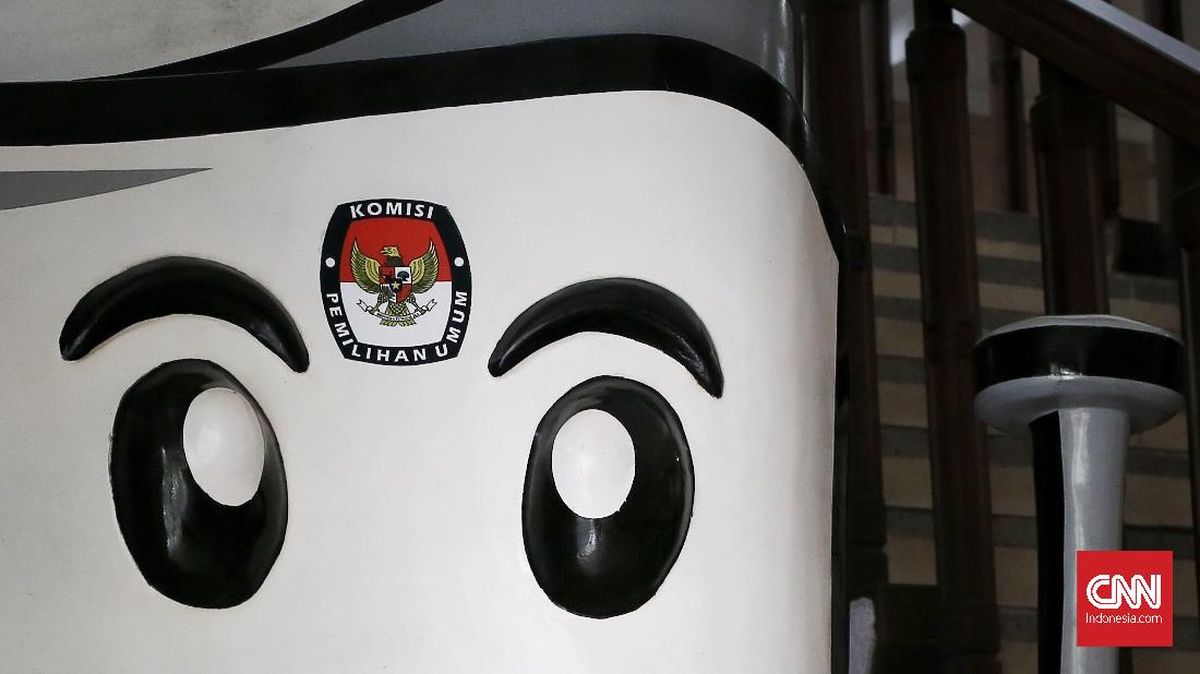
The selection process for commissioners of the General Elections Commission (KPU) is set to be held again. This has raised the question of whether current KPU members implicated in the controversy over the validity of Vice-President Gibran Rakabuming Raka’s educational qualifications for the 2024 presidential election can stand for selection again.
KPU commissioners have recently been reported to the Election Organisers’ Ethics Council (DKPP) in connection with the Constitutional Court’s (MK) ruling on a challenge to Gibran’s eligibility as a vice-presidential candidate in the 2024 election.
Responding to the issue, Ahmad Irawan, a member of Commission II of the House of Representatives (DPR), said there is no regulation prohibiting KPU members who have previously received an ethics sanction from applying to become commissioners again.
“From the regulatory perspective, we have not yet made rules concerning citizens or former election organisers who have been subject to ethics sanctions. That is something we are also examining,” Irawan said by telephone on Friday (23 October).
He acknowledged that the absence of such rules constitutes a legal vacuum. A DKPP ruling does not bind those assessing candidates for commissioner positions, including in cases where a candidate has committed an ethics violation.
“There is indeed a legal vacuum, or the law has not yet addressed what I mentioned,” Irawan said.
“There is no provision stating that a DKPP ruling is binding on the President or the DPR when deciding whether to approve or reject someone for the KPU, the Election Supervisory Agency (Bawaslu), or bodies at lower levels,” he added.
Irawan therefore said that if a commissioner found by the DKPP to have committed a violation applies again, the matter will be left to the President’s assessment through the Selection Committee (Pansel).
“Of course, everything has to be assessed. The DPR will make its assessment later, but initially the authority rests with the President through the selection committee,” Irawan said.
He said the committee would consider candidates’ competence and integrity. The DPR would also assess the seriousness of any ethics violation committed by a KPU commissioner.
“We should leave it entirely to each state institution with the authority to assess, examine and decide on the issues in question,” Irawan said.
“For example, someone may have received an ethics sanction for a minor violation, while another may have received one for a moderate or serious violation,” he added.
Irawan said the ethics rules for KPU commissioners are being discussed by a working committee (Panja) of Commission II.
“We are examining the mechanisms for enforcing the code of ethics in the working committee. We are also studying how the next ethics council should be structured, the procedures for enforcing the code, the statute of limitations, and the implications of an ethics ruling for an individual,” he said.
The DKPP previously received five complaints relating to Constitutional Court Decision No. 01-PHPU.PRES-XXIV/2026 as of Wednesday (14 October). The court case concerned a challenge to Gibran Rakabuming Raka’s eligibility as a vice-presidential candidate in the 2024 presidential election. The complainants reported the KPU chair and commissioners.
The first two complaints were filed on 8 and 9 October 2026. The first was submitted by Azhar Sidiq S and Muhamad Afghan Ababil of the Indonesian Law Students Association (Permahi), and was given receipt number 038/01-08/SET-02/X/2026. The complaint filed on 9 October came from Sri Afrianis and Dudy Agung Trisna of the Dewi Keadilan Foundation, and was assigned receipt number 039/01-08/SET-02/X/2026.
Two further complaints were received on 13 October. One, filed by lawyers Novi Manaban and Paman Nurlette, was registered under receipt number 041/02-12/SET-02/X/2026; the other, submitted by Ibnu Jandi, was assigned receipt number 044/02-13/SET-02/X/2026.
The final complaint, registered on 14 October under receipt number 045/01-14/SET-02/X/2026, was submitted by several organisations and individuals, including Brahma Aryana, secretary-general of KIPP; Ansufri Sambo, acting chairman of Partai Ummat; Muhammad Sadiq, acting secretary-general of Partai Ummat; lawyer Denny Indrayana; and Moeryono Aladin and Soenarko of FPP TNI.
Under the DKPP’s procedural rules, complaints undergo administrative and substantive verification.
Administrative verification is a formal examination to check whether a complaint or report submitted to the DKPP meets the required conditions and is complete.
Substantive verification examines the evidence and its relevance to the substance of the complaint, including whether it indicates a suspected ethics violation and whether the case is suitable for a hearing.
If a complaint is deemed to meet the requirements (MS) during administrative verification, it is assigned a registration number and proceeds to substantive verification.
If it is deemed not yet to meet the requirements (BMS) or not to meet them (TMS), the DKPP must notify the complainant in writing within five working days of the verification.
Source: jawawa.id (https://jawawa.id/newsitem/caught-up-in-gibrans-degree-controversy-can-current-kpu-members-stand-for-re-election-1792853499)
Originally published by CNN Indonesia (https://www.cnnindonesia.com/nasional/20261023192906-32-1419047/terseret-ijazah-gibran-anggota-kpu-saat-ini-bisa-ikut-seleksi-lagi), translated from Indonesian