
CATL Launches World's First Sodium-Based BESS, Pushing Commercialisation of Sodium Energy Storage
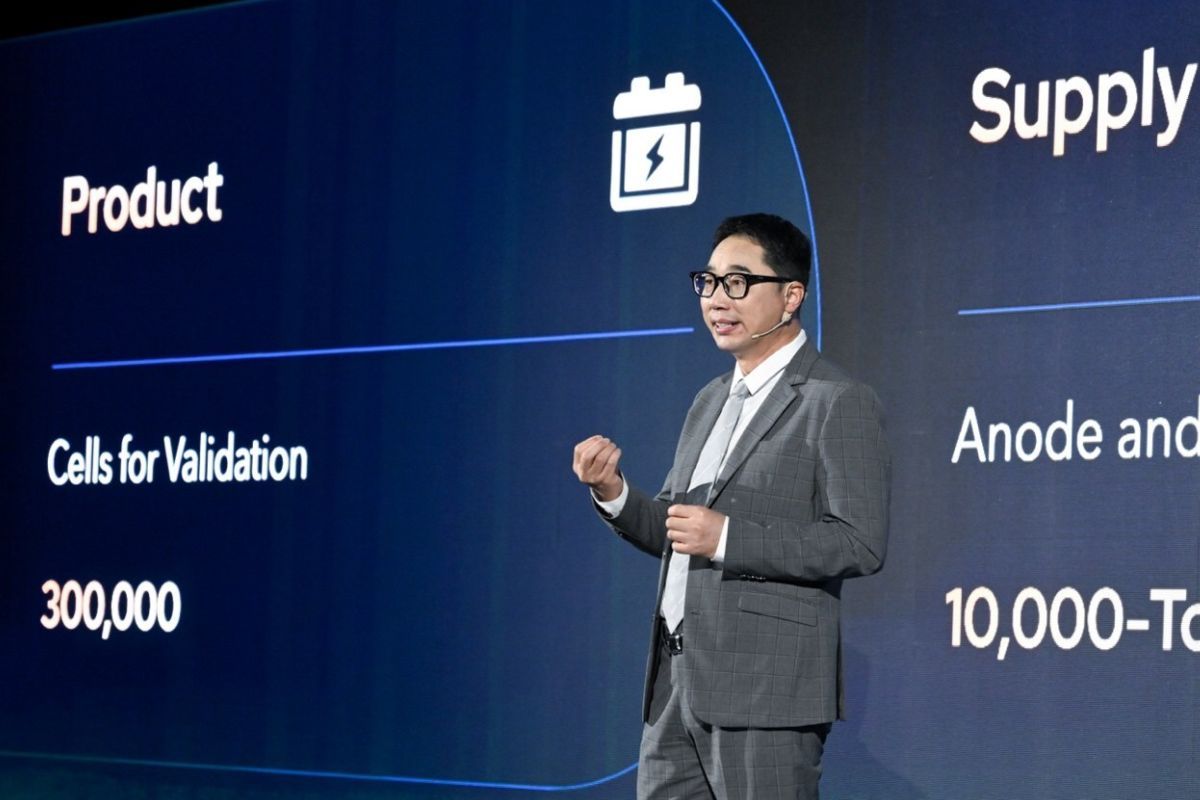
CATL officially launched the TENER Sodium Battery Energy Storage System in Munich, Germany, on 22 June 2026. For the first time globally, this sodium-ion-based energy storage solution has been tested under real operational conditions. Consequently, TENER Sodium is ready for commercialisation in terms of technology, production capacity, and supply chain. CATL estimates total shipments of this product will reach 1 GWh by the end of 2026, with global deliveries commencing in June 2027.
"CATL is committed to promoting energy independence worldwide and providing long-term added value for customers. To achieve this goal, we are developing new battery chemistries that utilise abundant resources available across various continents. This technology supports the energy needs of eight billion people worldwide with a longer service life and better safety levels," said William Wu, Director of CATL’s Energy Storage Technology Center, during the product launch. "We believe that sodium and lithium will become the two main foundations of future energy storage systems."
TENER Sodium: A Reliable Solution Amidst Energy Dynamics
As the share of renewable energy increases and electricity demand surges due to the development of artificial intelligence, energy storage systems are shifting from mere supporting devices to core infrastructure in the global energy system. However, most of these devices still rely on lithium batteries, which face constraints due to concentrated supply and volatile prices, thereby increasing supply chain risks. In contrast, sodium supply is far more abundant—over 1,000 times that of lithium—and readily available in many parts of the world. Moreover, its performance remains stable in extreme temperatures, it is safer, and it has the potential to be more cost-effective. These advantages are driving a technological transition in energy storage systems.
"The energy storage industry is no longer racing to increase production capacity. Long-term benefits now determine success in this industry," said Amanda Xu, CTO of ESS and President of ESS Europe at CATL, during her presentation. "Readiness is the key factor that provides certainty." This mission underpins the development of TENER Sodium.
Powered by CATL’s latest sodium-ion technology, TENER Sodium offers an installed capacity of over 30 MWh in a modular architecture. This approach provides three main benefits for customers. Firstly, project implementation becomes more streamlined. Each module weighs approximately 42 tonnes and only 34 units are required to build a 1 GWh energy storage facility. Secondly, configuration flexibility is optimised. The system separates energy and power blocks, supporting storage durations of 1, 2, 4, 6, and up to 8 hours according to project needs. Thirdly, maintenance costs are reduced because faulty modules can be isolated and replaced independently. This approach increases system availability at the station level, reduces operational expenditure, and optimises asset utilisation.
In addition to offering convenience through its modular architecture, CATL has also developed a station-level platform specifically designed for sodium-ion-based energy storage systems.
Voltage Regulator: To address the wider voltage range of sodium-ion batteries, CATL developed a special bidirectional DC voltage regulation system. This system automatically boosts the voltage when it is low, ensuring the power conversion system operates optimally across the entire operational range. This technology improves the system’s round-trip efficiency by nearly 2%. In a 1 GWh energy storage facility, this improvement can generate millions of additional kilowatt-hours of electricity annually. The system is also compatible with various major PCS products worldwide and offers enhanced grid support capabilities.
BMS: CATL designed a dedicated battery management system for sodium-ion-based energy storage by leveraging the characteristic of a gradually declining voltage curve. This approach enables more accurate state of charge estimation. Additionally, the SOC tolerance for overcharge conditions in sodium-ion batteries is 20% higher compared to lithium-ion batteries. Thus, the BMS has an additional 20% operational safety margin, making it more flexible.
Ultra-Low Auxiliary Energy Consumption: A unique top-discharge airflow design eliminates the thermal island effect from the outset and reduces heat build-up in the system by nearly 30% compared to conventional solutions. When combined with a high-efficiency liquid cooling system, auxiliary power consumption can be reduced from the industry average of 2% to just 1%. In large-scale, long-duration energy storage projects, this efficiency improvement can potentially save millions of euros in operational costs.
Lower Noise Levels: TENER Sodium operates at a noise level of just 65 decibels, which is 10 decibels lower than conventional systems. This advantage also addresses community concerns around project sites, a common obstacle. With lower noise levels, energy storage facilities can be built closer to load centres, drastically reducing transmission and distribution costs. Furthermore, the TENER Sodium system is compatible with LFP battery systems and shares the same physical footprint. This platform can be used for both sodium-ion and lithium-ion batteries without needing to replace cabinets, redesign projects, or repeat certification processes.