
CATL Introduces Six Key Innovations, Driving New Energy Mobility with Multi-Chemistry System
Beijing (ANTARA/PRNewswire) - CATL launched six technological innovations at the “Super Technology Day” in Beijing. These innovations include the third-generation Shenxing Superfast Charging Battery, third-generation Qilin Battery, Qilin Condensed Battery, second-generation Freevoy Super Hybrid Battery, Naxtra Sodium-ion Battery, and an integrated solution encompassing supercharging and battery swapping. Through this series of innovations, CATL addresses mobility needs for various usage scenarios.
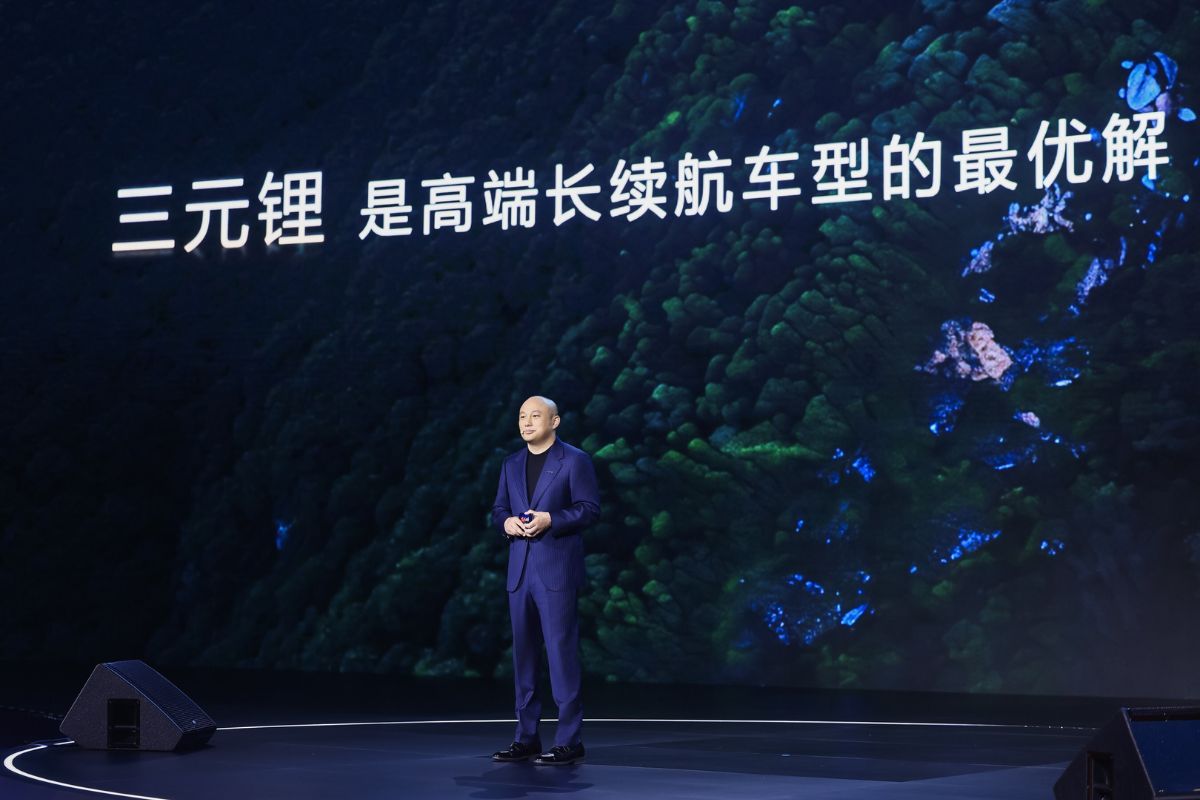
At the event, CATL’s Chief Scientist, Wu Kai, explained the advantages, limitations, and development directions of various battery chemistries. He assessed that LFP batteries have approached their theoretical energy density limits. Given these characteristics, LFP battery development is more effective if focused on extreme fast-charging capabilities to achieve optimal performance balance. On the other hand, NCM batteries remain superior in energy density and serve as the primary benchmark in global competition. Meanwhile, sodium-ion batteries hold great potential for use in extreme temperatures and energy storage systems. According to him, the battery industry needs to develop various battery chemistry systems in parallel to meet consumer needs, energy resilience, and sustainable development.
CATL’s Chairman & CEO, Robin Zeng, emphasised that industrial innovation must be grounded in a strong scientific approach. He stated that China’s technological competitiveness is not determined solely by speed and scale, but also by the quality of innovation, technological validation, and brand credibility.
Third-Generation Shenxing Superfast Charging Battery: Superfast Charging Features Without Sacrificing Battery Lifespan
From an electrochemistry perspective, the main challenge in increasing charging speed without reducing battery lifespan lies in temperature rise, not low current. Based on the Arrhenius principle, a 10°C temperature increase can double side reactions inside the battery and accelerate degradation.
To address this, the third-generation Shenxing Superfast Charging Battery optimises three key aspects: reducing heat generation during battery operation, improving thermal propagation management, and refining system control. As a result, after 1,000 charging cycles, the battery capacity remains above 90%.
In terms of performance, this battery achieves a 10C charging rate equivalent, with peaks up to 15C—the best in the industry. Charging from 10% to 35% is achieved in just 1 minute, 10% to 80% in 3 minutes and 44 seconds, and 10% to 98% in 6 minutes and 27 seconds. Even at -30°C, charging from 20% to 98% takes only about 9 minutes.
This technology is also integrated with the battery’s self-heating system and an integrated charging and battery swapping network, enabling superfast charging at low temperatures without relying on specific infrastructure.
Third-Generation Qilin Battery: Lighter, Stronger, More Efficient, Transforming EV Advantages
Previously, increasing the range of LFP-based EVs was generally achieved by adding battery capacity, which impacted weight increase.
The third-generation Qilin Battery introduces a different approach with an energy density of 280 Wh/kg and a range of up to 1,000 km, while supporting 10C superfast charging.
This battery delivers a peak power of up to 3 MW—double that of the previous generation used in racing competitions at the Nürburgring Circuit (1,330 kW).
The total weight of the third-generation Qilin Battery pack is only 625 kg, 255 kg lighter than comparable LFP systems, while saving up to 112 litres of space. This efficiency yields significant impacts:
Energy consumption per 100 km decreases by more than 6%, or about 0.78 kWh saved per 100 km. If applied to one million vehicles travelling 20,000 km per year, total electricity savings reach 156 million kWh, reducing CO₂ emissions by up to 78,500 tonnes.
Improved driving performance and safety, including 0.6 seconds faster acceleration from 0–100 km/h, 12% reduced overtaking risk, 8% higher speed in moose tests, 6.5% reduced body roll, 15–25% improved obstacle avoidance capability, and about 1.44 metres shorter braking distance.
EV durability also increases with chassis component lifespan extended by 40% and tyre lifespan by more than 30%, adding at least 10,000 km to component replacement intervals. Space savings of up to 112 litres also add at least 18 mm of headroom in the cabin.
From a driving safety perspective, this battery adopts the NP (No Thermal Propagation) standard with a “thermal and electrical separation” concept. Each battery cell is equipped with an independent sealed exhaust channel to prevent heat propagation, ensuring heat and electrical current are managed separately.
Qilin Condensed Battery: Aviation-Industry Standard Technology Applied to Passenger Cars for the First Time
The Qilin Condensed Battery introduces aviation-industry standard technology to passenger cars for the first time, achieving a cell energy density of 350 Wh/kg and volumetric density of 760 Wh/L—a new record for mass-produced batteries. With this technology, the range reaches up to 1,500 km for sedans and over 1,000 km for large SUVs. Nevertheless, the battery pack weight remains below 650 kg.
This battery uses high-nickel cathodes and low-expansion silicon-carbon anodes, increasing energy density by up to 50 Wh/kg. The casing components are made from aviation-grade titanium alloy—a first in the industry—reducing battery thickness by 60% and weight by 30%, while tripling unit strength and adding 20 Wh/kg to energy density.
This technology was developed from CATL’s electric aircraft programme. In this programme, the battery system with density