
CATL expands EV ecosystem and battery-swapping network
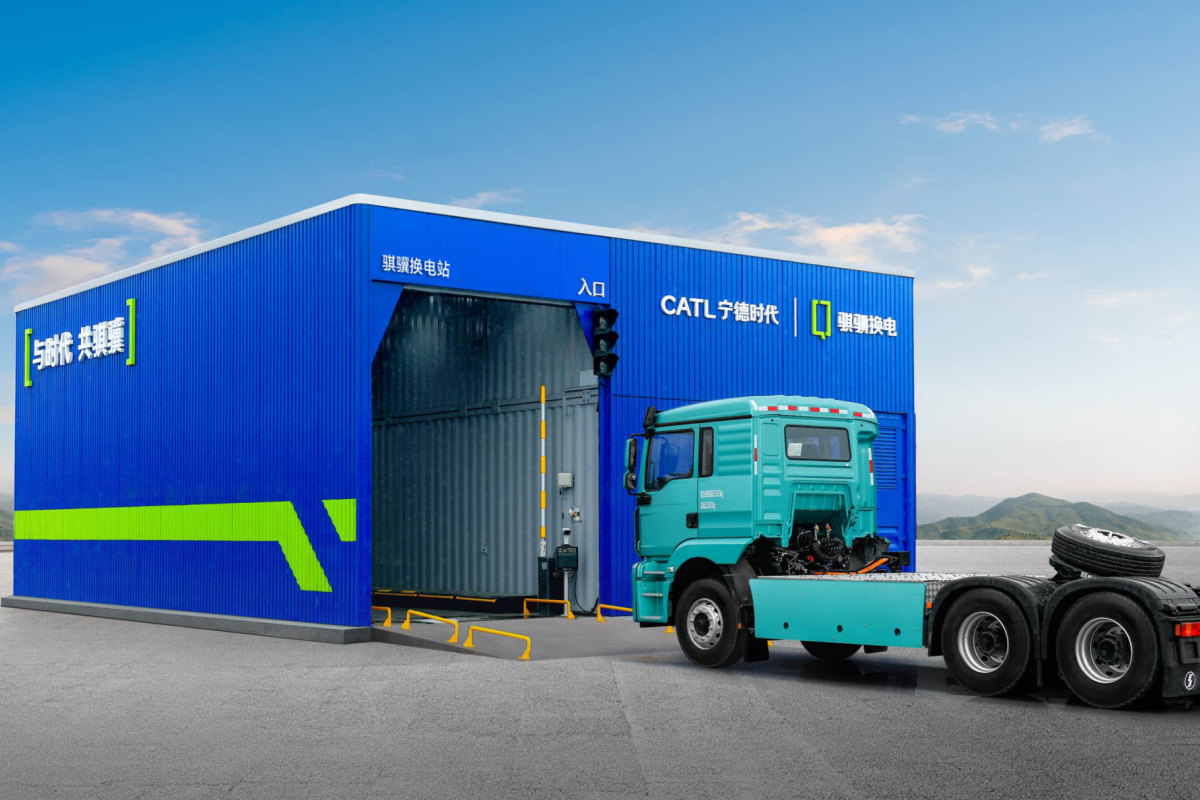
Jakarta (ANTARA) – Chinese battery manufacturer CATL is once again expanding its electric heavy-truck ecosystem through Dual-Electric Range Extender technology and the development of its Qiji battery-swapping network, aiming to improve the operating efficiency of commercial vehicles.
CarnewsChina reported on Tuesday (20 October), local time, that the technology combines a replaceable main battery with an additional battery to ensure power remains available while a vehicle is operating.
The “A+B” architecture uses a main battery with a capacity of 432 kWh or 513 kWh, installed beneath the vehicle, and a fixed 77 kWh battery as an additional energy source.
When the main battery’s charge falls to 5 per cent, the system can switch to the additional battery.
The development comes amid rising use of electric heavy trucks in China. Their penetration rate increased from 5.2 per cent in 2022 to 50.28 per cent in September 2026.
Globally, more than 430,000 electric heavy trucks are operating with CATL batteries, which the company says account for more than 70 per cent of the market.
To support this growth, CATL is expanding its Qiji battery-swapping network. Five major routes are currently in operation, with a cumulative operating distance of more than five million kilometres.
The company aims to build 900 battery-swapping stations by the end of 2026, rising to 2,000 stations in 2027.
The network uses two battery standards: 432 kWh for vehicles with a 3,800 mm wheelbase and 513 kWh for vehicles with a 4,200 mm wheelbase.
At the launch, CATL also signed agreements with 14 partners, including SF Express, ZTO Express and YTO Express, with initial orders totalling 13,000 units.
In addition to battery-swapping technology, CATL introduced four Tectrans II variants for different freight requirements.
The long-range variant has a capacity of 760 kWh, an 800-volt system and a range of more than 600 kilometres.