
Catholic Youth: Young people must be able to read regional development opportunities
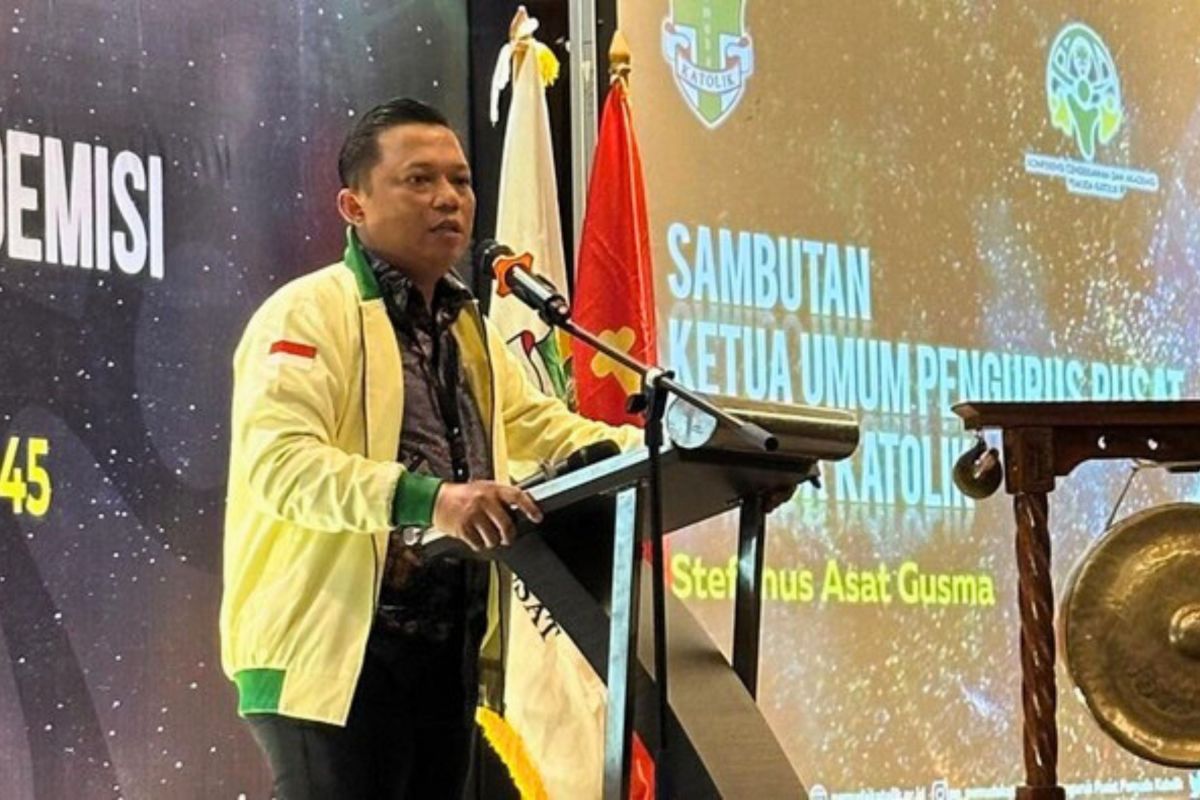
Jakarta (ANTARA) - The Central Board (PP) of Catholic Youth believes that young people must be able to identify development opportunities emerging in their respective regions, as areas are now becoming centres of new economic growth.
“Regions have great potential to grow through sectors such as tourism, the creative economy, SMEs, and green investment,” said the General Chairman of PP Catholic Youth, Stefanus Gusma, in a statement received in Jakarta on Thursday.
Therefore, he encourages young cadres to take strategic roles in regional development, particularly through the tourism, creative economy, SME, and green economy sectors.
He emphasised that Catholic Youth must be present as a strategic partner to the government in guiding inclusive and sustainable development.
Thus, Catholic Youth will prepare cadres to strengthen regional green economies through the implementation of Advanced Leadership Course (KKL) I in 2026, to be held from 14 to 17 May 2026 in Pangkalpinang, Bangka Belitung, with the Bangka Belitung Catholic Youth Regional Commissariat as the host.
After attending KKL I, Gusma hopes that the cadres will not stop at discussion spaces alone, but will directly engage in promoting regional economic potential, including strengthening local tourism sectors, promoting SME products, and building green economy-based innovations in their respective areas.
The cadres, he said, can also open collaboration opportunities with strategic government programmes such as the Red White Village Cooperative (KDMP)/Red White Fishermen Village (KNMP).
The event, themed Inclusive and Collaborative Leadership in Guiding Sustainable Regional Development and Economic Acceleration, will be attended by cadres from Catholic Youth Regional Commissariats (Komda) across Indonesia who have gone through a selection process, including the preparation of papers according to the KKL syllabus.
KKL I will use andragogy methods or adult learning through group discussions, simulations, case studies, socio-political mapping, role-playing, and the development of personal, group, and cohort-based action plans.
The Chairman of the Bangka Belitung Catholic Youth Regional Commissariat, Bernadus Reco, said that Bangka Belitung has great potential in developing a regional economy based on sustainable tourism.
“Bangka Belitung has great strengths through beach tourism, village tourism, local cuisine, creative economy, SMEs, and ecotourism development,” said Bernadus.
Therefore, he hopes that participants can directly see these potentials and bring new ideas to their respective regions.
In the forum, participants are expected to engage dynamically on various issues, including discussing economic diversification strategies such as strengthening flagship tourism destinations, economic collaboration opportunities with KDMP/KNMP, SME digitalisation, local product promotion, and green economy development based on environmental sustainability.
This leadership course will be attended by prominent figures and national speakers such as the Bishop of the Pangkalpinang Diocese, Mgr. Adrianus Sunarko, Deputy Head of the SOE Supervisory Board Aminuddin Ma’ruf, Governor of Bangka Belitung Hidayat Arsani, member of Commission I of the House of Representatives Rudianto Tjen, and Chairman of Commission XI of the House of Representatives Bambang Patijaya.
Also attending will be the Bangka Belitung Islands Regional Police Chief, Inspector General Pol. Viktor Theodorus Sihombing, state security expert Stanislaus Riyanta, Ombudsman RI member Robert Na Endi Jaweng, Executive Secretary of Kerawam KWI Romo Hans Jeharut, Moderator Priest of PP Catholic Youth Romo J. Hariyanto, Commissioner of the National Commission on Disabilities (KND) Kikin Tarigan, and Media Insight Analyst from Indicator Indonesia.
This agenda will also be accompanied by the signing of a Memorandum of Understanding (MoU) between Catholic Youth and the Indonesian Election Supervisory Agency (Bawaslu) as a form of strengthening strategic collaboration in democratic development and public leadership.