
Catastrophe Shakes Indonesia's Neighbour: Seabed Uplifts, 61 Killed Instantly
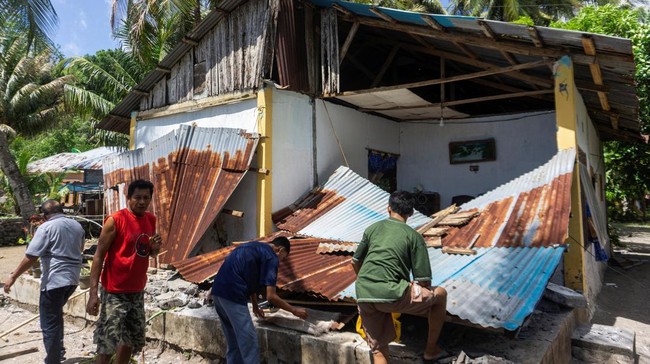
A 7.8 magnitude earthquake that struck Mindanao, Philippines, on Monday (8/6/2026), has not only claimed dozens of lives but also triggered significant changes to coastal conditions.
The Philippine government revealed that the earthquake lifted the seabed by approximately 2 metres, causing coral reefs and marine ecosystems that were previously submerged to emerge at the surface.
The Philippine Department of Environment stated that this phenomenon has had a serious impact on marine life.
To date, the earthquake has resulted in at least 61 deaths, while 40 others remain missing, according to updated data from the local disaster management agency.
Residents first reported the geological phenomenon, known as coastal uplift, two days after the earthquake occurred. This change has extended the coastline in several areas by up to approximately 200 metres.
The Philippine Institute of Volcanology and Seismology explained that the movement of the Cotabato Trench caused parts of the coastal areas in Sarangani and Davao Occidental provinces to be pushed upwards.
“The movement of the Cotabato Trench pushed up parts of the Sarangani and Davao Occidental coastlines, exposing the seabed that was previously below the water surface,” the agency wrote in a statement, as quoted by CNA on Tuesday (16/6/2026).
The agency added that the mapped uplift reached approximately 2 metres.
The Cotabato Trench is located about 50 kilometres from the southern coast of Mindanao and is known as one of the regions with high seismic activity. Last January, the area also experienced thousands of consecutive small earthquakes.
Teams deployed to the site found long stretches of coastline, coral reefs, and seagrass meadows that are now above sea level due to the seabed uplift.
An official speaking to AFP said they were not yet able to confirm the exact extent of the affected area in detail, as the survey process is still ongoing and covers a very large area.
Photos released by the regional office of the department show expanses of coral reefs exposed to the open air. Dead fish and various other marine organisms that could not survive after losing their aquatic habitat are visible.
Previously, residents reported changes in the seabed conditions due to concerns that the emerging odour originated from toxic gas caused by the decomposition of dead marine biota.
The Philippine Department of Environment stated that the resulting ecological impact is substantial.
“These exposed coral reefs and seagrass meadows are beginning to die along with the organisms living within them, such as reef fish, eels, and shellfish,” it explained.
Source: jawawa.id (https://jawawa.id/newsitem/catastrophe-shakes-indonesias-neighbour-seabed-uplifts-61-killed-instantly-1781581863)
Originally published by CNBC Indonesia (https://www.cnbcindonesia.com/tech/20260616083901-37-743106/petaka-guncang-tetangga-ri-dasar-laut-meledak-61-tewas-seketika), translated from Indonesian