
Cases That Turned the Former Gowa Regent’s Life Upside Down
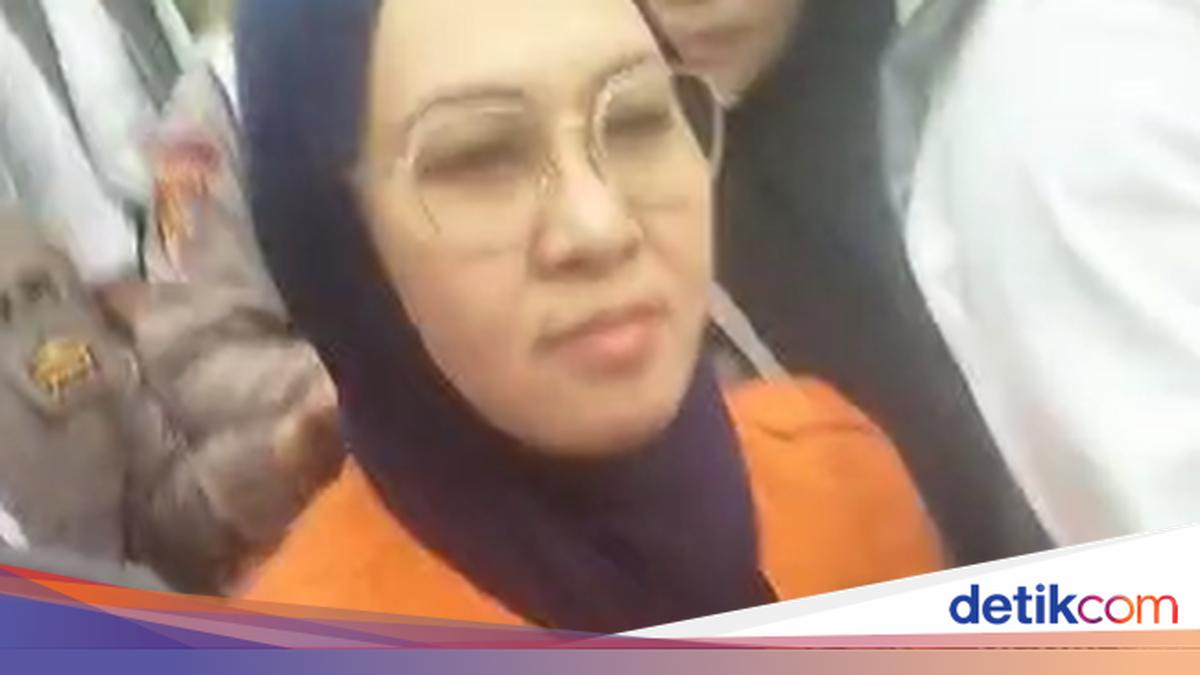
Sitti Husniah Talenrang’s life has been turned upside down. She was removed from her post as Gowa regent after becoming embroiled in several cases and is now being held by police over alleged corruption.
Husniah won the 2024 regional elections, becoming the first woman elected as Gowa regent. She was sworn in in February 2025.
Her administration, however, did not run smoothly. In July 2026, she faced an inquiry by Gowa’s Regional House of Representatives (DPRD) over several cases. This led to a motion to remove her from office, which was subsequently upheld by the Supreme Court.
The following is a list of the cases that turned Husniah’s life upside down, as set out in Supreme Court ruling No. 1 P/UP/2026:
- Alleged irregularities in the 2025 free school-uniform procurement programme
The Supreme Court said evidence submitted by Gowa’s DPRD, as the petitioner, indicated irregularities in the implementation of the 2025 free school-uniform procurement programme. It said Husniah had denied the allegations at a plenary meeting of the DPRD on 12 August 2026.
However, the court said the evidence presented by the DPRD indicated possible breaches of the principles of good, transparent and accountable governance. It found indications that Rp600 million had been transferred by a supplier to a personal bank account belonging to Muh Basri, also known as Basri Kajang, whom the ruling described as a person close to Husniah, the respondent.
“The Supreme Court is of the view that the petitioner’s arguments concerning alleged irregularities in the implementation of the 2025 free school-uniform procurement programme are legally sound and may be used as grounds for removing Dr Hj Sitti Husniah Talenrang, SE, MM, from her post as Gowa regent,” the court said.
- Alleged abuse of authority in ending Risqilah’s doctoral scholarship
The Supreme Court said Gowa’s DPRD argued that there had been an abuse of authority in ending the doctoral scholarship programme. However, it ruled that this could not be used as grounds for impeachment.
“The Supreme Court is of the view that the petitioner’s argument concerning an abuse of authority in ending the doctoral scholarship programme in the name of Ms Risqilah does not qualify as an issue on which the right of inquiry or the right to express an opinion may be based,” the court said.
- Conduct deemed improper
The Supreme Court said Gowa’s DPRD had argued that there were strong indications Husniah had engaged in improper conduct, affecting the integrity of her office and diminishing public trust. At a plenary meeting of the DPRD, Husniah said the matter concerned her private life and should be distinguished from scrutiny of her as regional head.
The Supreme Court then considered evidence and testimony given under oath during the investigation by the DPRD’s inquiry committee. It said the investigation established several facts:
There was a close and intensive relationship between the respondent and Muh Basri, also known as Basri Kajang, which went beyond a professional working relationship while the respondent was still legally married to H Muh Khaerul Aco;
The Gowa regent’s official residence was used repeatedly for group consumption of alcoholic drinks, on occasions involving the respondent;
Muh Basri, also known as Basri Kajang, who held no position in the regional government, used protocol services and official travel facilities provided for the respondent on several official trips funded from the regional budget.
The Supreme Court stressed that these three sets of facts had to be assessed as a whole and could not be separated from Husniah’s position as regional head. It said the conduct was connected to her office, the budget and regional resources, going beyond private life and having a public-office dimension.
“The conduct is relevant to assessing the public accountability of a regional head, both in legal terms and in terms of the standards of propriety attached to public office. Considering the established facts as a whole, including their connection to the use of official facilities and regional resources, as well as the integrity and dignity of the office of regional head, the Supreme Court is of the view that the respondent’s conduct meets the definition of improper conduct,” the court said.
The Supreme Court subsequently granted the motion to remove Husniah from her post as Gowa regent. The Ministry of Home Affairs then issued a decree formally dismissing her from the office.
- Alleged corruption in building approval permits
In addition to the cases that prompted her removal, Husniah is also facing an alleged corruption case being handled by the National Police’s Corruption Crime Eradication Corps (Kortas Tipikor). Police have named Husniah Talenrang a suspect over the alleged corrupt handling of building approval permits (PBG) during 2025–2026.
Brigadier General Robertus Yohanes De Deo, director of investigations at Kortas Tipikor, said the suspect designation followed a case review by investigators.
“After this series of investigative activities, the investigative team held a case review. At that meeting, it was agreed that Gowa Regent Ms HT would be named a suspect,” De Deo said at a press conference at National Police headquarters in South Jakarta on Friday, 25 September 2026.
De Deo said investigators had questioned 30 witnesses and four experts. Husniah was subsequently detained on 26 October 2026 as a suspect.
Source: jawawa.id (https://jawawa.id/newsitem/cases-that-turned-the-former-gowa-regents-life-upside-down-1793091265)
Originally published by detikcom (https://news.detik.com/berita/d-8726286/kasus-kasus-yang-bikin-hidup-mantan-bupati-gowa-berbalik-180-derajat), translated from Indonesian