
Caruban Station Serves 45,341 Passengers from January–April 2026, Signalling Rising Mobility in Madiun Regency
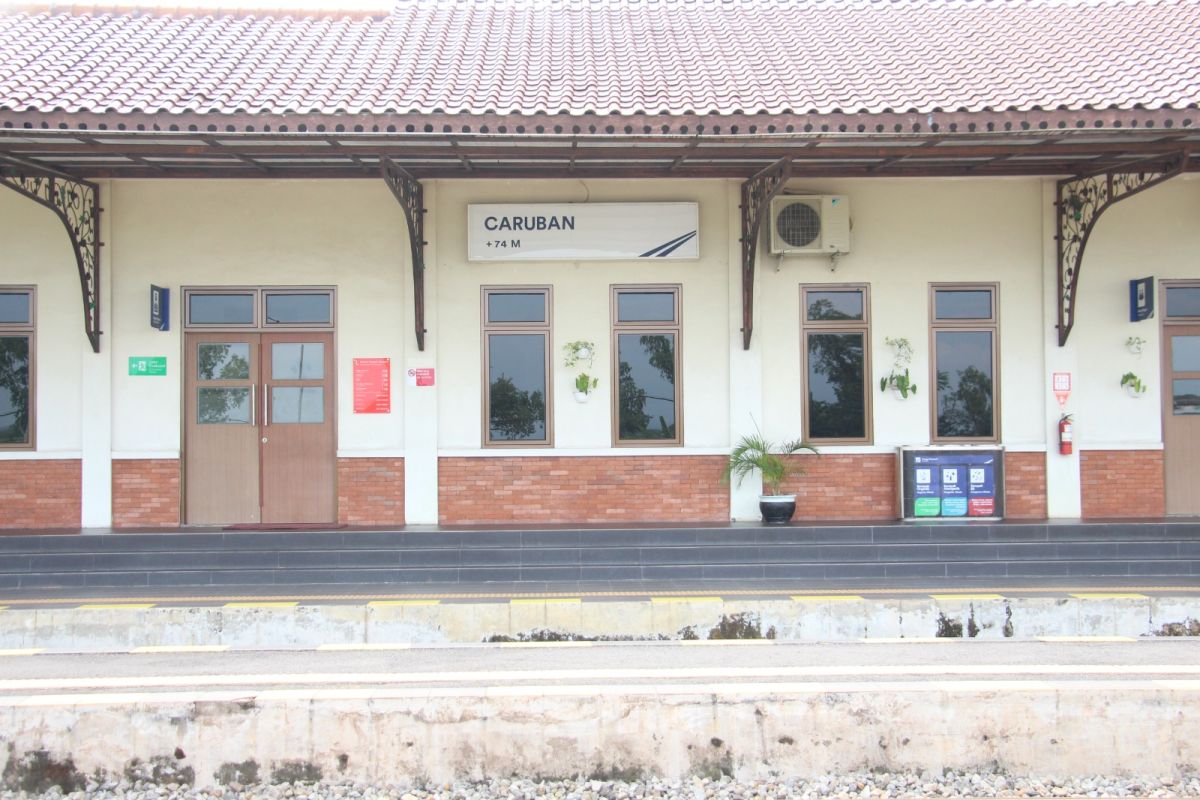
Madiun — The changing landscape of Madiun Regency in recent years is increasingly evident through the rising mobility of the population to and from Caruban, the regency’s developing administrative centre. This movement is reflected in the passenger activity at Caruban Station, which has shown positive growth during the early part of 2026.
From January to April 2026, Caruban Station served 45,341 passengers, comprising 24,394 departing passengers and 20,947 arriving passengers. These figures represent a significant increase compared to the same period in 2025, which recorded a total of 30,812 passengers (15,687 departing and 15,125 arriving). Consequently, the volume of departing passengers grew by 55.51%, while arriving passengers increased by 38.47%.
This increase in mobility coincides with the economic growth of Madiun Regency. According to data from the Madiun Regency Central Bureau of Statistics (BPS), the regency’s economy grew by 5.33% in 2025 compared to the previous year. In terms of expenditure, household consumption grew by 5.39%, acting as the primary driver of regional economic activity. This growth indicates heightened movement of people for work, education, business, and various social and economic needs.
Anne Purba, Vice President of Corporate Communication at KAI, stated that the development of Caruban as the new administrative centre of Madilar Regency has driven the need for reliable and scheduled transportation.
“Madiun Regency carries the identity of Indonesia’s ‘Kampung Pesilat’ (Martial Arts Village), with dozens of training centres spread across various regions. As Caruban develops as a centre for government services and community activity, mobility needs are also increasing. Railways have become a preferred travel choice that supports the movement of students, workers, government officials, entrepreneurs, and martial arts communities from various areas,” said Anne.
Caruban Station’s position on Java’s main lines makes it a vital transportation hub. On the southern line, the station serves the Sangkuriang, Sri Tanjung, Pasundan, and Kahuripan trains. On the central Java line, passengers can utilise the Kertanegara, Malioboro Ekspres, Bangunkarta, Logawa, Brantas, Jayakarta, Gaya Baru Malam Selatan, and Singasari trains. Caruban Station also serves as the terminus for the BIAS Airport Rail service, connecting the Madiun region with Adi Soemarmo International Airport in Surakarta.
This connectivity plays a crucial role in the economic structure of Madiun Regency, which relies on the agriculture, trade, and processing industries. BPS Madiun data noted that paddy production in 2025 reached 480,264 tons of dried milled grain (GKG). The regency is also known as a food processing hub in East Java, producing goods such as brem, sambal pecel, and the recently expanding porang (konjac) commodity.
Anne added that the passenger growth at Caruban Station demonstrates the strengthening link between public transport and community economic activity.
“Smooth mobility helps the community reach educational centres, government services, commercial areas, and various other travel destinations. At the same time, easier access also expands business opportunities and strengthens inter-regional economic ties,” she explained.
Improved access from Caruban Station also presents greater opportunities for tourists to visit various destinations in Madiun Regency, including the Waduk Bening Widas area, a popular recreational spot in the Madiun Raya region. KAI continues to enhance service quality at Caruban Station to meet evolving community needs and ensure safe and punctual railway travel.