
Cargo Transport Violations Remain High, Mostly Related to ODOL
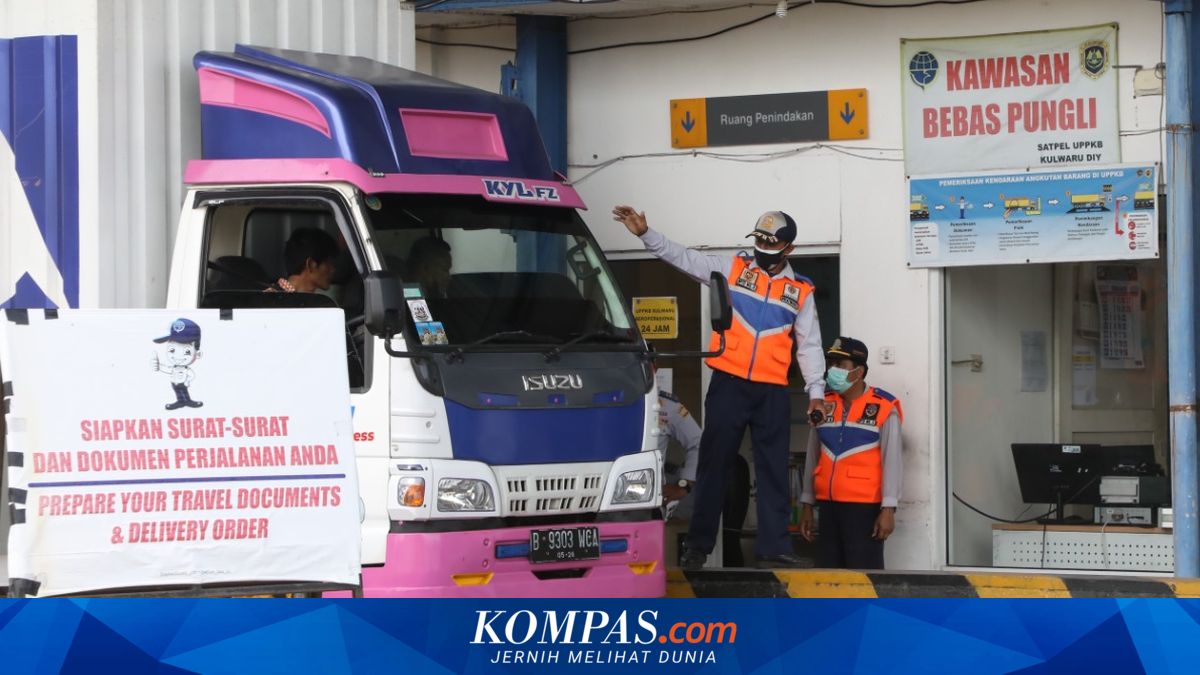
JAKARTA - The Directorate General of Land Transportation under the Ministry of Transportation (Kemenhub) has commended cargo transport operators for adhering to prevailing regulations.
“Kemenhub extends its thanks and appreciation to cargo transport operators who have supported and complied with the policy on operational regulation of logistics distribution,” stated Director General of Land Transportation, Aan Suhanan, in an official statement on Sunday (5/4/2026).
Aan noted that his agency has also disciplined vehicles committing violations. Oversight is conducted through 89 Motor Vehicle Weighing Implementation Units (UPPKB) distributed across Indonesia.
From 1 January to 3 April 2026, a total of 606,799 vehicles have undergone inspections.
Out of the total violations, 214,553 cases were recorded, comprising overload capacity violations in 104,043 vehicles (48.49 percent), dimension violations in 5,785 vehicles (2.70 percent), and documentation violations in 104,011 vehicles (48.48 percent).
Additionally, there were technical requirement violations in 4 vehicles and loading procedure violations in 710 vehicles (0.33 percent).
“During the socialisation period towards Zero Over Dimension Over Loading (ODOL) 2027, enforcement is carried out selectively. This includes warnings for 45,545 vehicles (92.94 percent), traffic fines for 1,924 vehicles (3.93 percent), police fines for 1 vehicle, and other UPPKB fines for 1,533 vehicles (3.13 percent),” he said.
Furthermore, the top five cargo commodities with the highest violations are mixed goods in 10,833 vehicles, sand in 9,760 vehicles, packaged goods in 8,702 vehicles, plantation products in 5,397 vehicles, and cement in 4,234 vehicles.
Aan added that the trend in cargo vehicle oversight shows an increase. However, the violation rate remains relatively high and is dominated by issues of carrying capacity and documentation.
“This indicates that the main problems lie in the low operational and administrative compliance of business actors,” Aan stated.
These steps are taken to improve oversight quality, strengthen data integration, and enhance administrative compliance through coordination with stakeholders.