
Carbon Trading Volume Remains Low, Government Deploys These Strategies
Jakarta, CNBC Indonesia - Carbon trading in Indonesia still faces several challenges even though the infrastructure and regulations are adequate. The government also acknowledges that currently, the volume of carbon trading transactions and the sectors actively trading carbon are still relatively limited.
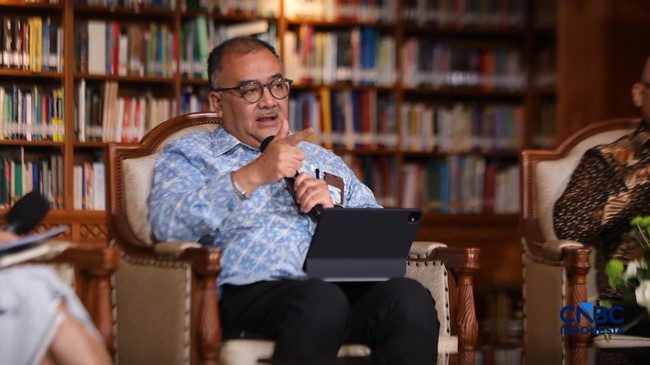
“If we look at it now, there are 3.1 million tonnes of CO2 equivalent recorded on the carbon exchange, which is mainly tech-based, we don’t have natural-based yet. So the main part is energy, both efficiency and new renewable energy (EBT),” said Ary Sudijanto, Deputy for Climate Change Control and Carbon Economic Value Governance at the Ministry of Environment, during the Ekoniklim Talkshow 2026 with the theme “Orientation of Indonesia’s Climate Policy from an Economic and Financial Perspective” at Wisma Habibie Ainun.
In terms of price, he continued, carbon credits from energy efficiency projects are still trading at around Rp58,000 per tonne of CO2 equivalent. Meanwhile, carbon credits from EBT projects are priced at Rp144,000 per tonne of CO2 equivalent. However, this value does not yet reflect the actual cost needed to boost decarbonisation.
“Meanwhile, in the pipeline, we are already running, so we cannot speculate on the potential. But what is already in the pipeline in our system, the SPEI, there are 47 projects with annual emissions of around 4.6 million tonnes of CO2 equivalent,” he explained.
He stated that Indonesian projects registered under international standards have an estimated potential of 48.8 million tonnes of CO2 equivalent. Furthermore, there are around 800,000 tonnes of CO2 equivalent under the Gold Standard and 26 projects from the former Clean Development Mechanism (CDM) scheme that will be transitioned to the Paris Agreement mechanism.
Seeing this condition, he admitted to being confident that the country’s carbon potential remains wide open. Indonesia has opportunities from various decarbonisation projects, including the development of carbon capture and storage (CCS) in the Abadi Masela Block with a potential of around 4 million tonnes of CO2 equivalent per year.
In addition, Indonesia also has potential from the implementation of B50 biodiesel. This project is projected to reduce carbon emissions by around 44 million to 47 million tonnes of CO2 equivalent per year. Meanwhile, in the renewable energy sector, the development of a 103 GW solar power plant (PLTS) is estimated to have an emission reduction potential of up to 140 million tonnes of CO2 equivalent.
Other opportunities come from waste management, reducing diesel use, forest rehabilitation, peatland restoration, and forest area management, which are considered capable of being sources of carbon unit supply for long-term needs.
Ary then mentioned that increasing carbon market liquidity is not solely determined by the addition of projects producing carbon units. Strengthening market liquidity also requires solid implementation of carbon trading, including through voluntary carbon market schemes and the Paris Agreement’s Article 6 mechanism, so that national demand and carbon prices can increase in line with rising transaction volumes.