
Carbon Credits: When Preserving Nature Becomes a Business Model
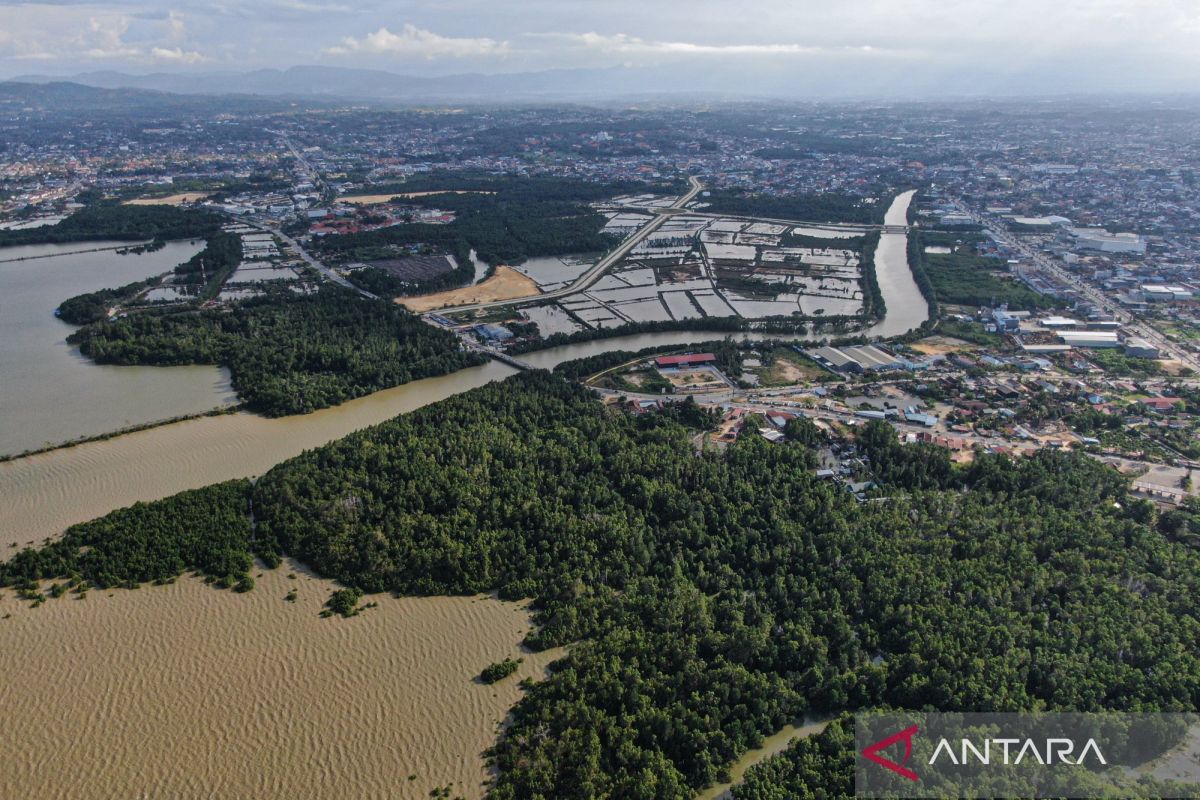
Carbon credits will only become a transformative instrument if three things proceed in tandem: ecological integrity proven through verified and valid data, regulatory certainty consistent with field practices, and proper communication.
There is a persistent misconception among some business actors and even academics that environmental sustainability and business profitability are at two opposite poles. The discourse on carbon credits as a business opportunity derived from nature conservation actually reverses this logic. Sustainable forests, preserved peatlands, and suppressed emissions are no as longer social costs, but rather financial assets that can be traded.
However, the more pertinent question from a current perspective is no longer simply whether carbon can be sold, but rather who truly controls the narrative of that success?
Borrowing Robert Entman’s concept of framing, when a financial instrument is predominantly framed as a success story—marked by rising transaction graphs and an increasing number of exchange participants—certain realities are highlighted while others are sidelined from attention. Market figures can easily transform into dazzling facts, while simultaneously obscuring a more fundamental question: who truly benefits at the end of the carbon value chain?
Blueprint for Banking and Green Energy
Since the Financial Services Authority (OJK) published the Roadmap for the Development and Strengthening of Indonesian Banking (RP2I) 2020–2025, four development directions have been emphasised: strengthening structure and competitiveness, accelerating digital transformation, strengthening the role of banking in the national economy, and enhancing regulation and supervision.
This document runs alongside the Sustainable Finance Roadmap Phase II 2021–2025, based on POJK 51/2017 regarding the Implementation of Sustainable Finance and POJK 14/2023, which regulates carbon units as securities instruments traded through the Indonesia Carbon Exchange, operating since 26 September 2023 under the Indonesia Stock Exchange.
Carbon credits reflect the ongoing energy transition through the Just Energy Transition Partnership (JETP) scheme, agreed upon at the 2022 G20 Summit in Bali, with targets to limit emissions in the electricity sector to 290 million tonnes of CO2 equivalent by 2030, a minimum renewable energy portion of 34 per cent, and the early retirement of 6.7 gigawatts of coal-fired power plants (PLTU).
At this point, academic honesty demands a firm stance: from the USD 20 billion JETP funding commitment, as of the end of 2025, the specific funds for the early retirement of coal plants worth approximately USD 6 billion have yet to be disbursed. Meanwhile, the capacity of captive coal plants in nickel downstreaming areas has actually surged from approximately 5.7 gigawatts in 2019 to 19.3 gigawatts by early 2026.
This disparity between policy narratives and the practices of extractive industries, within a Gramscian framework of hegemony, demonstrates how sustainability discourse can be used by dominant interest groups to maintain the status quo—where coal continues to grow under the guise of an energy transition.