
Capturing Umer Chapra's Ideas on the Welfare State
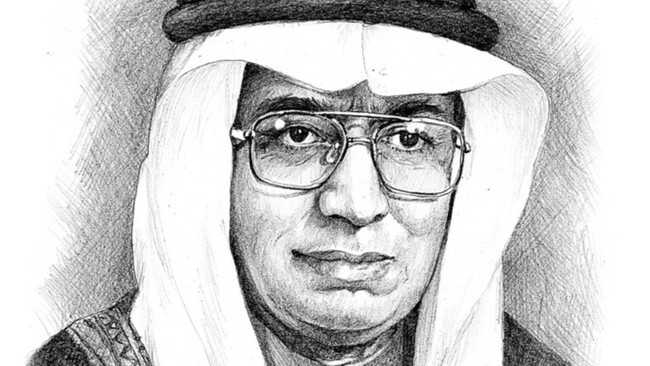
The Islamic world was recently shocked by the passing of Muhammad Umer Chapra on 13 June 2026 at the age of 93. A great thinker in the field of Islamic economics, he served as a reference point for nearly six decades, particularly after the publication of his first book, ‘The Economic System of Islam: A Discussion of Its Goals and Nature’, in 1970. Chapra, a recipient of the King Faisal International Prize for Islamic Studies—an award equivalent to a Nobel Prize in the Islamic world—laid the intellectual foundation for the discipline of Islamic economics that is now developing worldwide. One of Chapra’s central concerns in his books was how to build Islamic civilisation amidst debates about the future of the Islamic state.
The Pakistani-born Islamic economist, who spent much of his career at the Islamic Development Bank, did not merely offer a critique of capitalism and socialism. He also formulated a concept of the welfare state deeply rooted in the great thoughts of Ibn Khaldun. For Chapra, economic development cannot be separated from social justice, morality, and the quality of state institutions. Interestingly, this idea was born not solely from modern economic theory, but from a profound reading of Ibn Khaldun’s monumental 14th-century work, the Muqaddimah. In his various works and articles, Chapra repeatedly asserted that Ibn Khaldun’s development theory is more comprehensive than many modern development theories because it connects human aspects, morality, the state, law, justice, and economic development into a single, mutually influencing unity.
In the neoclassical economic paradigm, the state is often placed as a ‘night watchman’ whose main task is to ensure the market works efficiently. However, Chapra saw this approach as too narrow. According to him, the market does not automatically produce justice. Here, the influence of Ibn Khaldun is clearly visible: a strong state is not a dominant one, but one that is able to uphold justice and create an environment that allows society to flourish. Chapra then developed this idea through the framework of maqashid sharia. He argued that the goal of development is not only to increase national income but also to protect religion, life, intellect, progeny, and wealth. In other words, the welfare state must be oriented towards the holistic quality of human life, not just economic growth.
For Ibn Khaldun, justice is the foundation of civilisation. When justice weakens, the state loses its legitimacy and eventually declines. Chapra adopted this view and placed justice at the core of the welfare state. In many countries, wealth is increasingly concentrated in the hands of a small group, while access to quality education, health services, and economic opportunities remains unequal. According to Chapra, this condition shows that economic growth without justice only produces false prosperity. The state must ensure a fair distribution of opportunities and resources. Therefore, instruments such as zakat, waqf, social security, and fiscal policies that favour vulnerable groups become important parts of an Islamic welfare state. Chapra also noted Ibn Khaldun’s belief that the progress of civilisation depends on strong social solidarity or cohesion. When solidarity weakens and is replaced by excessive individualism, the state loses its resilience and easily declines. In Chapra’s view, economic development cannot rely solely on physical and financial capital; what is far more important is social capital in the form of trust, mutual cooperation, integrity, and collective responsibility.
The most striking difference between Ibn Khaldun’s concept of development and the Western welfare state model applied today, according to Chapra, lies in the moral and spiritual dimension. Western welfare states generally focus on income redistribution through taxes and social spending. Chapra did not reject this approach, but he assessed that welfare cannot be achieved by relying on fiscal policy alone. Development must begin with the formation of individuals with integrity, just institutions, and an economic system that respects the balance between rights and responsibilities. Therefore, welfare is not only measured by per capita income, but also by the quality of education, health, family stability, social security, and the moral quality of society. This concept aligns with the Pancasila economy and various recent studies showing that countries with good institutional quality and high levels of social trust tend to have better and more sustainable development.
Indonesia currently stands at a crossroads. On one hand, economic growth remains a priority. On the other, challenges of inequality, human resource quality, poverty, and social cohesion still loom. In this context, Umer Chapra’s ideas, sourced from Ibn Khaldun, offer valuable lessons. The state must not only be a market facilitator but also a guardian of justice. Economic growth cannot be separated from human development. And most importantly, welfare must be understood as a blend of material prosperity, social justice, and moral quality.