
Captured in Ukraine, North Korean Soldiers Refuse Repatriation, Choose South Korea
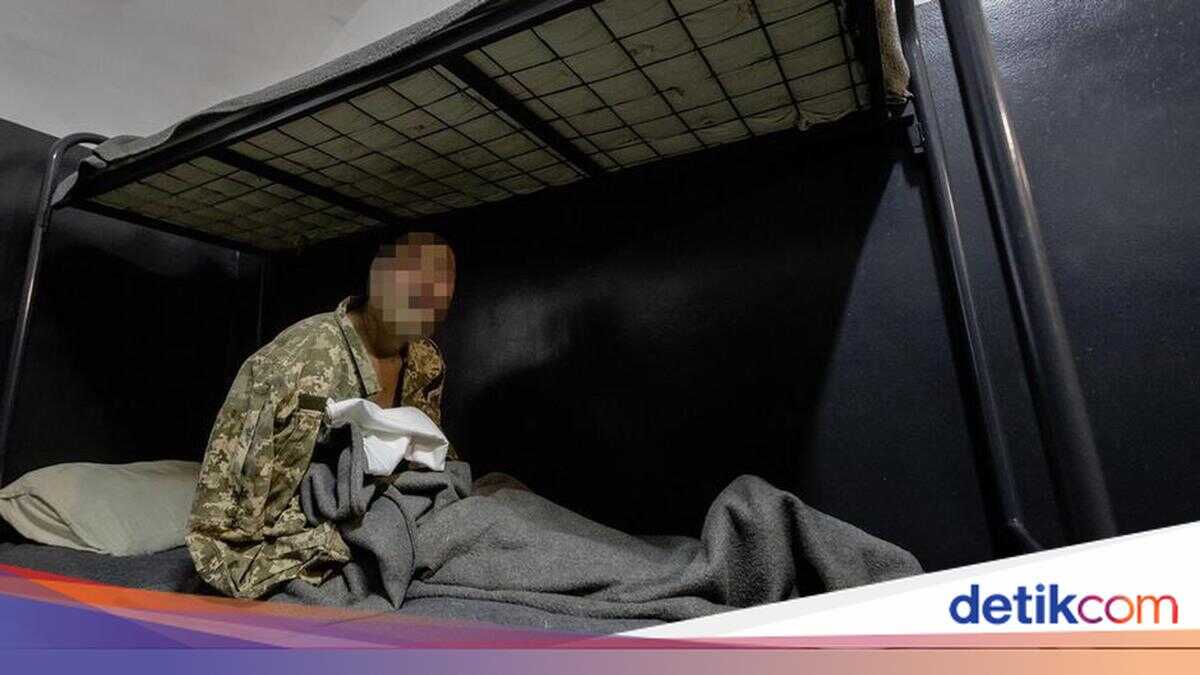
It has been more than a year since Ukrainian forces captured two North Korean soldiers in the Kursk region of Russia. Yet their fate remains unclear, whilst activists accuse the South Korean government of being slow to act.
Both men have requested relocation to South Korea. If returned to North Korea, they could face punishment for allowing themselves to be captured alive.
“I would not survive if I went back. Others who were captured blew themselves up. I failed,” one of the soldiers told the South Korean newspaper Hankook Ilbo.
The UN Weighs In
The United Nations has also drawn attention to the case. The UN Special Rapporteur on human rights in North Korea stated in February that Ukraine must follow international protocols and not repatriate prisoners of war to places where they risk being subjected to torture.
“I would be extremely grateful if they accepted me. If not, there is nothing I can do,” said one soldier, as quoted by the newspaper.
Prisoners of War Risk Being Branded Traitors
Activists and North Korean defectors told DW that North Korean military doctrine strictly prohibits soldiers from surrendering.
“The regime ordered its soldiers to kill themselves if they were about to be captured in Ukraine,” said Kim Eujin, who fled North Korea as a teenager in the 1990s.
“These two men did not follow that order, and they did not die — although they may have tried,” Kim said.
“We do not know how the regime would respond to soldiers who disobeyed the order to commit suicide rather than be captured, because this has never happened before,” she added.
“However, I suspect they would be regarded as traitors. And not just them — their families would also be punished.”
Punishment Can Span Generations
In interviews, both soldiers said they were not afraid to fight in Ukraine, but they knew that if captured, their families could suffer under the doctrine Pyongyang had instilled in them: “A defector brings punishment upon three generations.”
“Historically, during and after the Korean War, returning prisoners of war were reportedly subjected to forced labour and classified as hostile elements,” said Peter Oh of the Free Korean Association, an organisation that assists North Korean refugees in the United States.
“These prisoners are likely fearful of similar consequences if they return,” he said.
“Retaliation against their families is possible,” Oh added. “However, the North Korean government may avoid extreme measures to prevent international scrutiny.”
Is Seoul Reluctant to Anger Pyongyang?
Under Article 3 of the South Korean Constitution, North Korean citizens are still considered South Korean nationals and are entitled to reside in the South.
Yet more than a year after the two soldiers were captured, the South Korean government appears unenthusiastic about accepting them.
“The delay is due to the complex international legal and diplomatic issues involving Ukraine, Russia, North Korea, and South Korea,” said Oh.
“Although the South Korean government has expressed general interest, it has not taken direct steps, likely due to the sensitive geopolitical implications,” he added.
Currently, South Korean President Lee Jae Myung appears keen to improve relations with Pyongyang. The South Korean Constitution also contains Article 4, which emphasises “peaceful relations with the North,” Oh explained.
“Our position is that, regardless of constitutional interpretation, these soldiers have the right to seek asylum in South Korea or a third country based on their own free will,” said Oh.
“I Don’t Think They’re Trying Hard Enough”
Talks between Seoul and Kyiv regarding the fate of the two soldiers appear to have reached an impasse.
On 9 February, the Korea Institute for National Unification released a report stating that “direct communication between the leaders of South Korea and Ukraine is essential” to break the deadlock.
Without an agreement, Ukraine could be obligated to hand the two men over to Russia.
North Korea has thus far made no public comment regarding the two prisoners of war, although discussions are likely taking place behind the scenes.
Kim said there was nothing preventing Ukraine from releasing the two men, and “nothing in international law” that would prevent them from travelling to South Korea.
“They keep saying this is a ‘complicated issue,’ but I don’t feel they are truly trying hard enough,” she said of the South Korean government.
“President Lee, the Ministry of Unification, and the Ministry of Foreign Affairs seem more concerned about not angering Kim Jong Un than about bringing these two men to South Korea,” Kim said.
“If this were purely a human rights matter, they would already be here,” she concluded. “It is as though the government is searching for reasons to keep them from coming.”