
Capital Market Practitioner: S&P and Moody's Ratings Show DIM Remains Investment Grade
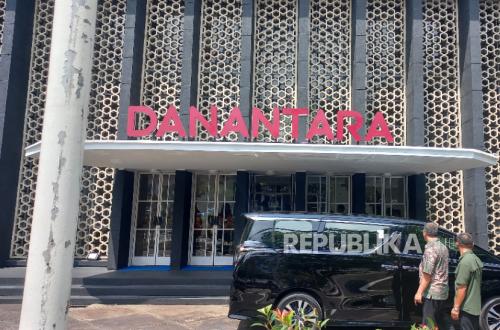
Capital market practitioner and Co-founder of PasarDana, Hans Kwee, assesses that the ratings provided by S&P Global and Moody’s to Danantara Investment Management (DIM) demonstrate that the institution remains within the investment grade category. According to Hans, these assessments do not necessarily reflect a deterioration in Indonesia’s economic conditions.
DIM recently obtained a long-term credit rating of BBB and a short-term rating of A-2 with a stable outlook from S&P Global. Meanwhile, Moody’s assigned a Baa2 rating with a negative outlook.
Hans stated that both global rating agencies still perceive DIM as having adequate capacity to meet its financial obligations. He noted that the negative outlook provided by Moody’s is more closely related to factors of governance and policy certainty rather than Indonesia’s fundamental economic conditions.
Hans explained that several aspects are currently under scrutiny, including the consistency of government policy communication, the governance of State-Owned Enterprises (BUMN), the strategic investment direction of Danantara, and the future management of the State Budget (APBN).
“The main issue highlighted is not Danantara’s current financial capability, but rather factors of governance and policy certainty. Moody’s and S&P see a very strong link between Danantara and the government, so the risks inherent in both are perceived similarly,” Hans said during a telephone interview on Wednesday (3/6/2026).
According to Hans, the alignment of DIM’s rating with the Government of Indonesia reflects confidence that the state will provide support should Danantara face pressure.
He assessed that Indonesia’s economic fundamentals currently remain on a relatively strong path. He noted that Indonesia is not in a recessionary state and economic growth remains maintained.
Furthermore, Hans stated that inflation remains controlled despite high global energy prices, while the government’s fiscal position is deemed to remain healthy. He added that Indonesia’s trade balance continues to record a surplus, despite a contraction due to increased energy imports. The performance of the commodities sector also continues to support the national economy while global commodity prices remain at favourable levels.
“From a fundamental perspective, the Indonesian economy is not as bad as the market fears. Growth is maintained, inflation is controlled, and fiscal conditions are relatively good. What investors are currently concerned about is more about governance and policy consistency,” Hans remarked.
Hans advised the government to continue strengthening policy communication, maintain prudent management of the State Budget, and clarify Danantara’s investment strategy to maintain investor confidence. “These steps are crucial to maintaining investor trust and opening opportunities for outlook improvements in the future,” he concluded.