
Capital Market Governance and Transparency Key to Investor Confidence
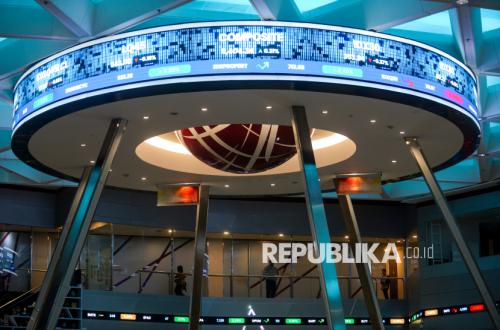
JAKARTA – Stronger governance and transparency are crucial to maintaining investor confidence in Indonesia’s capital market. Mirae Asset Sekuritas Senior Market Analyst Nafan Aji Gusta said continued capital market reform should be accompanied by measurable targets, particularly ahead of MSCI’s final decision on Indonesia’s market classification in June 2027.
According to Nafan, steps taken by the Financial Services Authority (OJK) and the Indonesia Stock Exchange (BEI) indicate that structural improvements are under way. These include greater disclosure of share ownership, a plan to raise the minimum free float to 15 per cent, improvements to the High Shareholding Concentration (HSC) methodology, and stronger supervision and enforcement.
“Global investors do not look only at the number of regulations issued, but also at the consistency of their implementation and the effectiveness of supervision,” Nafan said in Jakarta on Wednesday (11 November 2026).
He said stronger policy implementation should be a priority in the capital market reform agenda. The OJK previously said that 16 of MSCI’s 18 indicators had been met, while the remaining two concern law enforcement and the imposition of sanctions.
Nafan said both areas could be strengthened through structured investigations into suspected price manipulation, fictitious transactions and insider trading. Sanctioning standards should also be clearly defined, taking into account the severity of violations, the extent of losses and the parties involved.
Coordination between the OJK, BEI, the Financial Transaction Reports and Analysis Centre (PPATK), and law enforcement agencies is also important to ensure cases are handled in accordance with the rules, including when there are indications of criminal offences.
Nafan said the reform agenda should include a clear timetable and performance indicators. The next three to six months could be used to demonstrate progress, allowing global investors in the first and second quarters of 2027 to assess improvements in case handling, the application of sanctions and the quality of market supervision.
According to Nafan, investors are monitoring developments in cases involving suspected market violations and the imposition of sanctions. Administrative penalties already imposed can form part of efforts to strengthen supervision. Their effectiveness should also be assessed by the consistency with which rules are applied and the impact on market participants’ compliance.
To support transparency, he proposed publishing regular enforcement reports, either monthly or quarterly. These could include the number of cases handled and concluded, the types of violations, the legal basis for sanctions, the value of fines and their payment status.
Cases not referred for criminal proceedings could be accompanied by explanations based on objective legal criteria. This, he said, would help the public understand how cases are handled.
Nafan set out three groups of targets for measuring progress in capital market reform. The first is improving market transparency and liquidity, measured through the accuracy of free-float data, identification of beneficial owners, the number of listed companies meeting free-float requirements and trends in trading liquidity.
The second is improving the effectiveness of supervision and enforcement. Indicators would include the number of investigations and cases concluded, sanctions imposed, and follow-up on suspected violations with indications of criminal activity.
The third is the development of confidence among domestic and foreign investors. This could be tracked through net foreign flows, liquidity stability, institutional investor participation and the quality of price discovery.
Progress against the three groups of indicators could be communicated regularly through consistent public statements by the OJK, BEI and the government. Aligned information, Nafan said, would help investors understand the direction and progress of capital market reform.
In the short term, he also said real-time transaction monitoring using surveillance technology should continue to be developed. Market information transparency, proportionate sanctions and communication with global institutional investors and international index providers should also form part of the reform agenda.
“Investor confidence cannot be restored solely through interventions to support short-term movements in the IDX Composite. It must be built through market integrity, the quality of governance, transparency and legal certainty,” Nafan said.
Source: jawawa.id (https://jawawa.id/newsitem/capital-market-governance-and-transparency-key-to-investor-confidence-1794412288)
Originally published by Republika (https://ekonomi.republika.co.id/berita/tocehr416/tata-kelola-dan-transparansi-pasar-modal-jadi-penentu-kepercayaan-investor), translated from Indonesian