
CAPD Not Yet Equal to Hemodialysis, Reform of Dialysis Service System Deemed Urgent
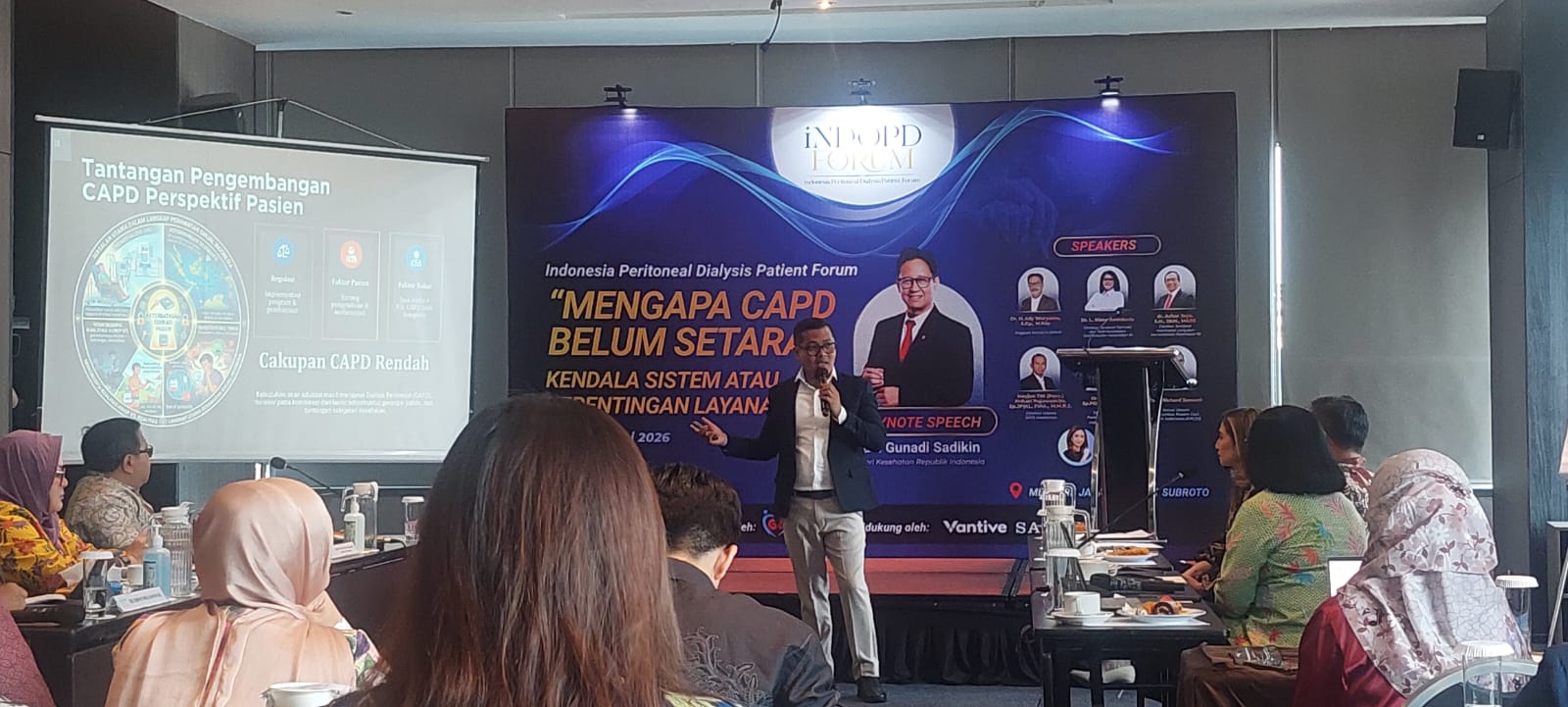
The low utilisation of Continuous Ambulatory Peritoneal Dialysis (CAPD), or self-administered dialysis via the abdominal cavity, is not attributed to low therapeutic effectiveness. Instead, it is caused by systemic obstacles, ranging from minimal patient education and limited service availability to incentive and financing schemes that favour haemodialysis (HD).
These issues were highlighted during the 2026 Indonesia Peritoneal Dialysis Patient Forum (IndoPD Forum) held in South Jakarta on Wednesday (10/6). The forum, themed “Why CAPD is Not Yet Equivalent: Systemic Constraints or Service Interests?”, addressed the growing disparity in kidney care.
Tony Richard Samosir, Chairman of the Indonesian Kidney Disease Patient Community (KPCDI), stated that the gap in dialysis access has become a matter of health rights for chronic kidney disease patients. Although regulations have encouraged the development of CAPD, implementation remains far below expectations.
According to Tony, globally, approximately 11% of the dialysis patient population uses CAPD, while 89% undergo haemodialysis. In Indonesia, the situation is far more disproportionate compared to global trends. More than 98% of patients in the country undergo HD, while CAPD users remain below 2%.
This persists despite Ministry of Health Regulation Number 812 of 2010, which encourages healthcare facilities to achieve a CAPD coverage of at least 10% of the total dialysis patients served.
“The regulation exists, but implementation remains low. There are even dialysis facilities that have no CAPD patients at all,” said Tony, who is also a kidney failure survivor.
He assessed that the low use of CAPD is influenced by a combination of regulatory factors, financing, patient education, and healthcare professional perceptions. Many patients do not receive adequate information regarding therapy options other than HD, leading them to be directed towards haemodialability from the outset.
A KPCDI survey of 340 patients showed that 70% of respondents felt CAPD provides greater flexibility, allowing them to continue working and performing normal activities. Approximately 90% of CAPD users stated they did not want to return to HD, while over 60% reported that their expenses were more economical due to reduced costs for transport, food, and companions during therapy.
However, Tony warned that access to dialysis services remains a serious issue. Based on data collected by KPCDI, approximately 48% of kidney failure patients in Indonesia have not received adequate dialysis services. Consequently, Tony noted, 60,000 to 90,000 patients die every year because they cannot secure a place for dialysis.
“CAPD is lagging behind not because it is ineffective, but because the system and service incentives still heavily favour HD,” he said.
Therefore, KPCDI is pushing for CAPD to be utilised as a solution to expand access to kidney failure therapy. The organisation is also requesting that the government conduct stricter monitoring and evaluation of CAPD coverage targets in hospitals and review financing schemes to prevent incentive disparities between HD and CAPD services.
Meanwhile, the Director General of Pharmaceuticals and Medical Devices at the Ministry of Health, L. Rizka Andalusia, acknowledged that CAPD utilisation is still very low. According to Ministry of Health data, CAPD services are only available in 119 out of 514 regencies/cities in Indonesia.
According to Rizka, chronic kidney disease is one of the catastrophic diseases that continues to burden the national health system. Spending on the National Health Insurance (JKN) for kidney failure increased from below Rp1 trillion in 2020 to Rp1.68 trillion in 2024.
To address this, she stated that the government is promoting four main steps: strengthening the prevention and early detection of kidney disease; expanding access to dialysis services through the strengthening of hospital networks and health human resources; ensuring all kidney replacement therapy modalities, including CAPD, are available equitably; and maintaining the sustainability of national health financing.
In addition to expanding training for healthcare workers, the government also highlighted challenges in the distribution of CAPD consumables, patient education, and the need for improved service governance. Rizka emphasised that strengthening CAPD can only succeed through collaboration between the government, BPJS Kesehatan, healthcare facilities, professional organisations, the health industry, and patient communities.
“Patients must be at the centre of every policy. The goal is to build a dialysis service that is more equitable, sustainable, and truly serves the needs of patients,” she concluded.
Source: jawawa.id (https://jawawa.id/newsitem/capd-not-yet-equal-to-hemodialysis-reform-of-dialysis-service-system-deemed-urgent-1781103051)
Originally published by Media Indonesia (https://mediaindonesia.com/jelita/899140/capd-belum-setara-dengan-hemodialisis-pembenahan-sistem-layanan-cuci-darah-dinilai-mendesak), translated from Indonesian