
Candlenut Downstreaming Increases Income Without Deforestation
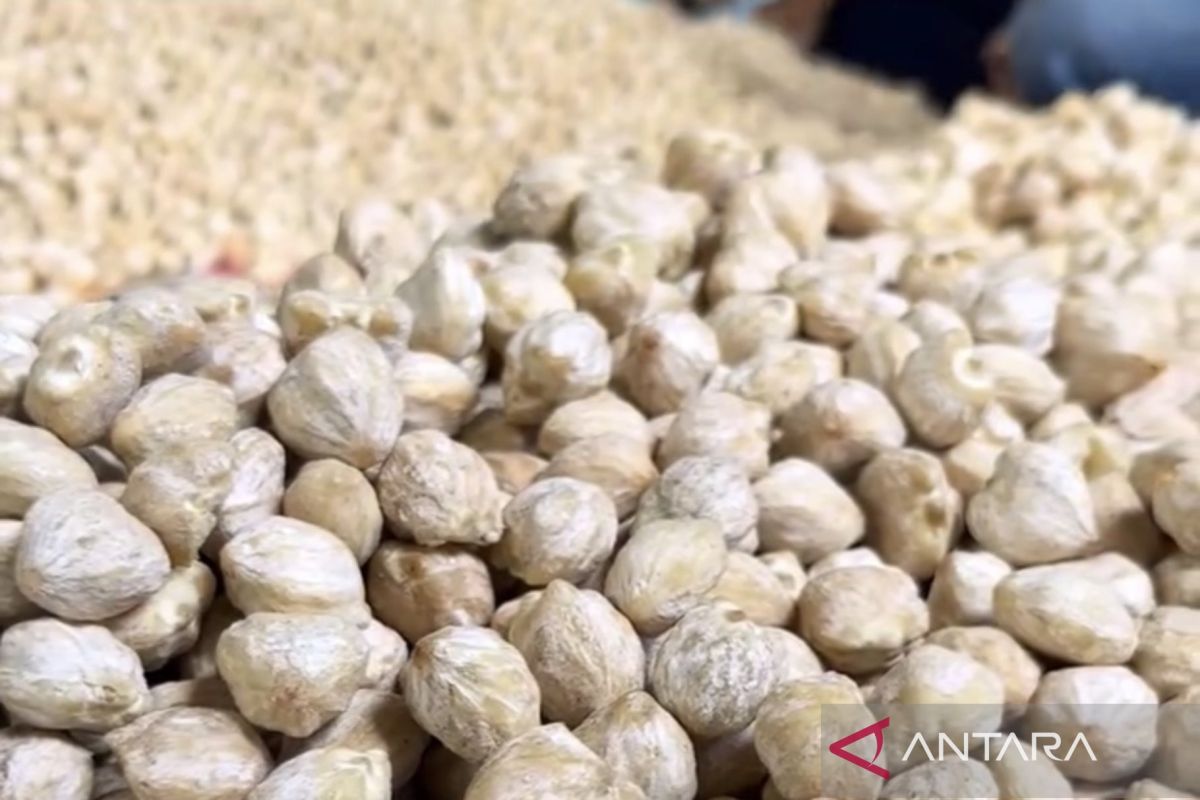
Under the candlenut trees in Galam Village, Bajuin District, Tanah Laut Regency, South Kalimantan, ripe fruit is left to fall before being collected by farmers for drying.
Previously, the community sold the fruit in its raw state. Now, they are gradually paving the way towards processing and wider markets.
This change did not happen overnight. The Chairman of the Batu Kura Forest Farmer Group (KTH), Mashudi, still remembers when candlenut was handled traditionally. After harvesting, the fruit was boiled to make it easier to process, and the shells were opened one by one because machinery was not yet available.
The price of bulk candlenut, ranging from Rp3,000 to Rp4,000 per kilogram, meant that harvests did not offer many options for farmers. During that period, some candlenut trees were quickly felled after fruiting, and the community still practised shifting cultivation.
Progress began after the Batu Kura KTH obtained legality in 2017 from the Ministry of Forestry and received support in 2019 through the Forest Investment Programme. This included a 6x6 metre production house, a candlenut cracking machine, a freezer, and other supporting facilities.
The production house has since doubled in size as the farmer group has progressed, while the cracking machine, which has a capacity of approximately one ton per hour, has drastically reduced labour that was once done manually and took weeks or even months to complete.
Candlenuts that fall from the trees are collected by farmers and then dried for about two days until completely dry before being stored in a warehouse, where they can last for about one year. Before processing, the candlenuts are frozen for eight to 12 hours to reduce the risk of the kernels cracking when the shells are opened.
The cracked results are then sorted by hand into whole candlenuts, chips, and fragments or ‘coral’, each of which has a different price. From approximately one ton of bulk candlenut, around 290 kilograms of processed candlenut is produced, with whole candlenuts priced at around Rp45,000 per kilogram, chips at Rp40,000, and fragments or coral at approximately Rp32,000 to Rp35,000 per kilogram.
For Mashudi, this change means that candlenut is no longer merely a garden product to be sold raw immediately after harvest. Processing provides the farmer group with the option to store raw materials, adjust sales timing, and produce products with higher value.
Raw candlenut is moving towards value-added processing.