
Candid Discussion with the Study Team Proposing to Rename West Java to Tatar Sunda
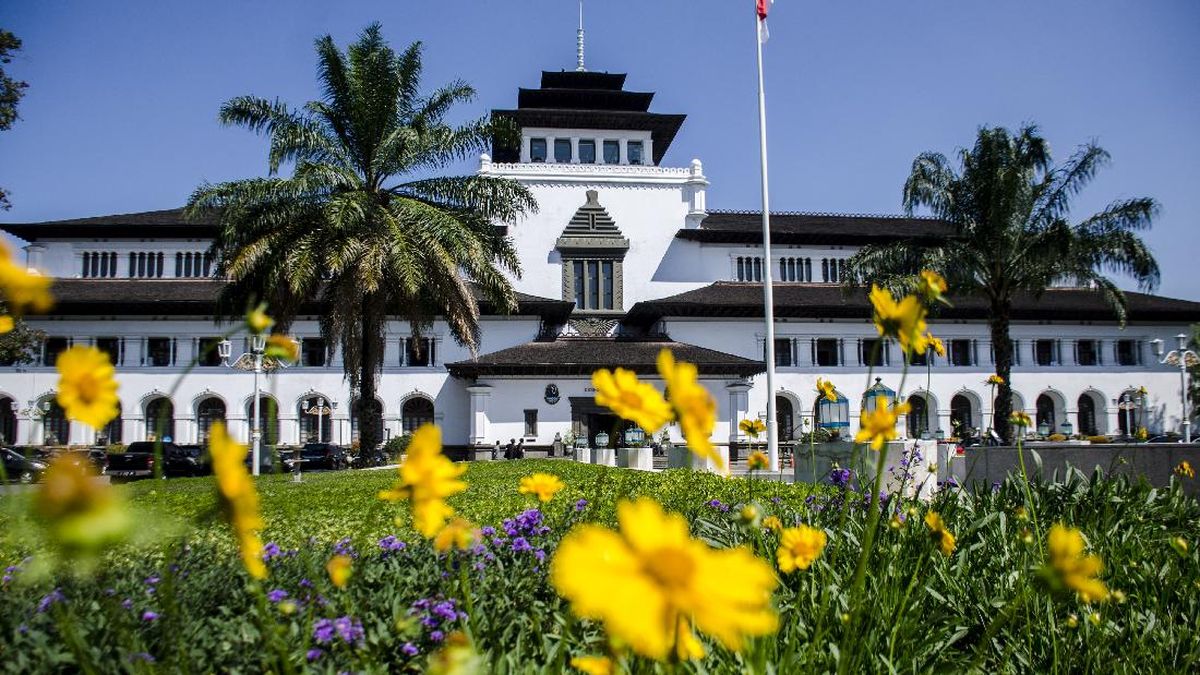
The discourse regarding the renaming of West Java Province to ‘Tatar Sunda’ has entered a new phase after all factions in the West Java DPRD gave the ‘green light’ to proceed with the proposal to the next legislative stage last Thursday (2/7).
The proposal to change the name of West Java Province to Tatar Sunda was initiated by several Sundanese figures, cultural experts, and academics, led by Professor Ganjar Kurnia of Padjadjaran University (Unpad).
Speaking to CNNIndonesia.com, Ganjar explained that the idea was first conceived during the Sundanese Congress held in Bandung in October 202/ and has gained momentum due to support from various community elements. The proposal has now gained the attention of the West Java DPRD and will proceed to the public testing stage.
Ganjar stated that the name change is an effort to assert a living space that possesses deep geological roots, history, diverse cultures, languages, and a long collective memory. According to his team, the proposal is not intended solely for those who are biologically of Sundanese descent.
On the contrary, the Province of Sunda can be interpreted as a name for a living space that has long extended to anyone who lives, works, creates, and contributes within this region. He noted that ‘West Java’ is an administrative name that serves merely as a positional marker, where the word ‘West’ only indicates a cardinal direction. However, he added, in reality, there is a territory even further west, namely Banten Province, which was originally part of West Java before its separation through regional expansion in October 2000.
Ganjar explained that this geographical location does not fully explain the regional roots, historical space, and the relationship between the community and the land they inhabit. In contrast, he argued, the word ‘Sunda’ carries a much deeper regional significance, as it is closely linked to a geological space that is much older.
In earth sciences, the term ‘Sunda Shelf’ is recognised, referring to the continental shelf of Southeast Asia that encompasses large areas including Sumatra, Java, Kalimantan, and surrounding regions. During periods when sea levels were lower, parts of this area formed a vast landmass connecting major islands in Southeast Asia.
“We have long recognised the geographical terms Greater Sunda and Lesser Sunda. The term ‘Sunda’ has a much older basis than administrative provincial boundaries and is deeper than a mere division based on cardinal directions,” he said on Wednesday (8/7).
He remarked that while ‘West Java’ answers administrative questions, ‘Sunda’ provides the answer regarding the living space of its inhabitants. Therefore, Ganjar argued, the idea of a Sunda Province should be placed within a framework of regional identity that is not always identical to genealogical identity.
“Genealogical identity relates to lineage, whereas regional identity relates to living space, historical place, landscape, local names, and community memory,” he said. He emphasised that ‘Sunda’ in a regional sense serves as a shared home, not a boundary fence, similar to how names like Sumatra, Kalimantan, Sulawesi, and Papua encompass various ethnicities.
“Regional identity is considered stronger than mere cultural identity. Culture can change, language can shift, and customs can transform. However, a territory as a living space possesses much greater continuity. Mountains, rivers, rice fields, soil, villages, cities, and place names serve as markers connecting past, present, and future generations,” he stated.
By using the name Sunda Province, the community can be reminded that they live in a space with long historical layers. Thus, the assertion of regional identity through the name ‘Sunda’ remains inclusive. “The change from West Java to Sunda Province must be read as a regional monument, not an ethnic monument. This step is an effort to strengthen the identity of a geological region already recognised by the world and science,” he added.
Citing detikJabar, concerns have been raised by some parties that the ‘Sunda Province’ name might fail to represent the diverse cultural identities within West Java, particularly among cultural groups in the northern coastal areas (Pantura) such as Cirebon and Indramayu.
The Chairman of Commission I of the West Java DPRD, Rahmat Hidayat Djati, ensured that the council will not discuss the proposal unilaterally. All elements of society, including those with differing views, will be involved in the process of drafting the academic paper and public consultations.
According to Rahmat, community involvement is crucial to ensure the proposal has a strong academic foundation and public aspiration before a decision is made. “The DPRD will carry out the refinement of the academic paper, hold public tests across all regencies and cities, and may even conduct a survey involving all 120 DPRD members,” he said.
Rahmat noted that the discussion process is still long. Following a working meeting between Commission I and the proposing team, the DPRD is currently drafting a discussion scheme that will serve as the basis for a decision by the DPRD leadership.
Meanwhile, the Chairman of the West Java DPRD, Buky Wibawa, clarified that the council’s current position is limited to performing its institutional function of receiving and discussing community aspirations. “The position of the DPRD is that we agree to discuss the aspirations presented by several figures or community elements regarding the desire to change the name of West Java Province,” the Gerindra politician stated earlier this week, while emphasising that the proposal has not yet been ‘approved’.