
Canada Wildfires Encircle Over 800 Blazes, US Air Quality Deteriorates
A severe forest fire crisis has once again struck Canada. According to the Canadian Wildland Fire Information System, as of Thursday, there were 858 active fire points burning across the country, including 30 new ignitions. The majority of these fires are reported to be out of control.
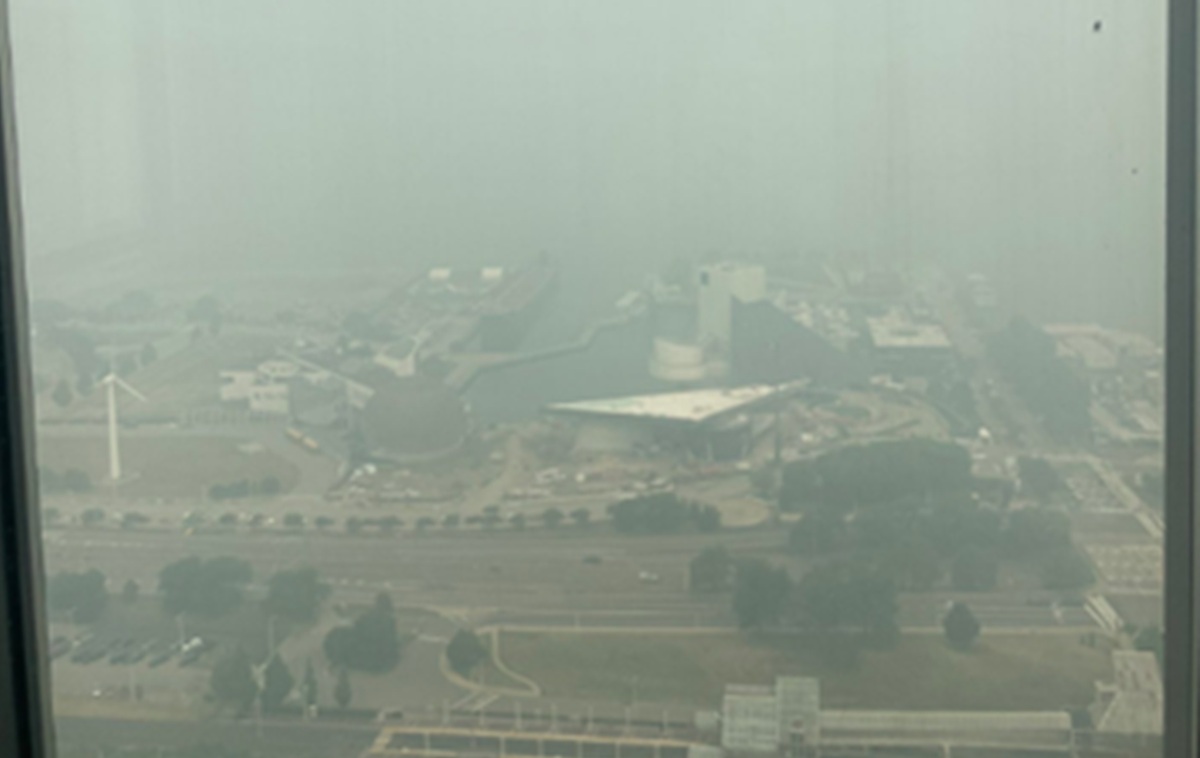
The massive blazes in northwestern Ontario have generated thick plumes of smoke that are moving southwards. This has triggered hazardous air quality alerts across several US states, including Michigan, Minnesota, the Midwest, and the Northeast.
The US National Oceanic and Atmospheric Administration (NOAA) stated that air quality in Michigan and Minnesota has reached dangerous levels, urging residents to remain indoors. According to the Swiss air quality tracker IQAir, the city of Detroit in the Midwest currently ranks as the worst in the world for air quality, followed by Minneapolis, Chicago, and Toronto.
Within Canada, the situation is critical. The fires in northern Ontario have forced the evacuation of First Nations communities. Video footage shows residents fleeing remote areas by boat. Chief Helen Paavola of the Namaygoosisagagun First Nation expressed her devastation after viewing the area from the air. “All the houses are gone. There is nothing left,” Paavola said in an interview with local media CityNews on Thursday, adding that her community has been “burned to ashes.”
Although thunderstorms are forecast for Ontario in the coming days, the expected rainfall intensity is not sufficient to significantly extinguish the flames. The recurring annual crisis has drawn sharp frustration from Republican lawmakers in Michigan, who sent an open letter to Canadian Prime Minister Mark Carney demanding better forest management. “A year has passed, another season is here, and nothing has changed except our patience has run out,” the letter stated, signed by four regional House representatives.
Responding to the criticism, Prime Minister Carney emphasised that both nations share a responsibility to combat climate change and confirmed his government is communicating closely with provincial governments and local communities. Ontario Premier Doug Ford stated that over 150 fire crews have been deployed, asserting, “We will spend whatever it takes.”
Geography and environment expert Professor Laura Chasmer from the University of Western Ontario explained that the fires are heavily influenced by extreme weather. “This is related to some of the extreme climate warming we are seeing, as well as the drying of the atmospheric surface,” Chasmer said. She noted that the trend of wildfires is shifting from western to eastern Canada, including Ontario, Quebec, and the Atlantic provinces, making the smoke impact more pronounced in densely populated cities like Toronto and New York. The sheer scale and intensity of the fires make total suppression extremely difficult, with crews currently focused on preventing the flames from spreading into nearby urban areas.