
Canada Seeks a New World, Indonesia Needs to Read the Direction
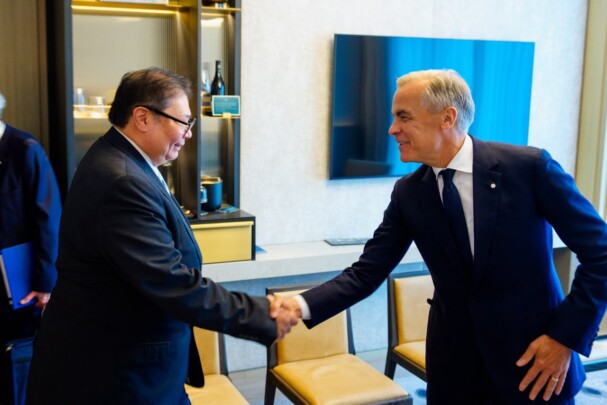
Toronto, Canada — Canada is undertaking something much larger than simply hosting an investment forum. As Prime Minister Mark Carney gathered global investors in Toronto through the first Canada Investment Summit (CIS) on 14–15 September 2026, the message was quite clear: Canada wants global capital to flow in, large-scale projects to move forward, and its economic relationships to expand to more corners of the world.
In a forum that brought together approximately 100 global investors with collective assets under management reaching around US$120 trillion, Carney offered an ambitious target: to catalyse up to US$1 trillion in investment over five years across the energy, transport, technology, defence, and infrastructure sectors.
However, the US$1 trillion figure is not the only story. The Canadian government stated that this first CIS has already generated nearly US$500 billion in new investment commitments in Canada. These include commitments from Canadian investment institutions and large corporations to increase capital in infrastructure, energy, digital technology, and other strategic sectors.
This is where Indonesia’s position becomes interesting. Coordinating Minister for Economic Affairs Airlangga Hartarto attended the forum representing Indonesia. For Jakarta, the CIS is not only an opportunity to understand how Canada is marketing itself to global investors, but also an opportunity to read the changing economic direction of this G7 nation.
Because Canada is looking outward.
For years, Canada’s economic proximity to the United States has been an inseparable fact of the nation’s trade map. Now, Ottawa is expanding its pathways.
At the CIS, Carney emphasised Canada’s trade diversification strategy by deepening relations with Asia, India, ASEAN, the Gulf nations, and Europe, while maintaining its relationship with the United States. The Canadian government noted that its current network of trade agreements provides preferential access to approximately 1.5 billion consumers and plans to expand market access through new agreements, including with ASEAN and India.
For Indonesia, this change is more than just news from the other side of the world. Indonesia is the largest economy in ASEAN. This position is one of the reasons Airlangga believes Indonesia can become a strategic partner for Canada in strengthening its engagement in the Indo-Pacific region.
This means that as Canada seeks diversification, Indonesia is not merely arriving as a spectator. A door has already been opened, namely the Indonesia-Canada Comprehensive Economic Partnership Agreement, or ICA-CEPA.
From Trade Agreements to Supply Chain Competition
ICA-CEPA has been ratified by both countries and is now entering the implementation preparation stage, including technical discussions such as rules of origin. The Indonesian government aims for the agreement to become effective by the end of 2026. The potential is significant.
Through ICA-CEPA, Canada will eliminate or reduce tariffs on more than 90 per cent of Indonesian product tariff lines. Indonesia will do the same for almost 86 per cent of Canadian product tariff lines. Key sectors of interest include critical minerals, battery materials, clean and renewable energy, agri-food, sustainable fisheries, infrastructure, as well as financial and digital services.
However, a trade agreement does not automatically create trade. Tariffs can be lowered, trade barriers can be slashed, and market access can be opened. The next question is: who is ready to fill it?
This question becomes increasingly relevant because, in a bilateral meeting with Canada’s Minister of International Trade Maninder Sidhu, Airlangga noted that trade between the two nations has grown by an average of 9.13 per cent annually since 2021. This growth rate shows a moving relationship, but the room for expansion remains much larger.
Indonesia Brings Minerals, Energy, and Markets
In the Canadian investor forum, Airlangga did not only speak about Indonesia as a market; he brought the narrative of supply chains. Indonesia presented its position as one of the world’s leading producers of copper and bauxite, and the owner of the world’s largest nickel reserves. The government also sees opportunities to expand Indonesian stainless steel exports to Canada, with national production potential for this commodity estimated at around US$30 billion per year.
There are also ongoing Indonesian investments in Canada. An LNG project in British Columbia valued at approximately US$5.1 billion, according to the Coordinating Ministry for Economic Affairs, has reached about 60 per cent of the construction stage. At the same time, there are explorations for new investments, such as a pulp and paper factory in Canada and the development of special economic zones for data centres in Indonesia.
In other words, this relationship is beginning to move from a simple pattern of “Canada investing in Indonesia” to the possibility of cross-investment. Indonesia possesses minerals and industrial capacity, while Canada possesses institutional capital, technology, financing, and market access. Between the two lies a shared need: to build more secure and diverse supply chains.
From Potash to Nuclear
Airlangga’s meeting with PM Mark Carney demonstrated the breadth of the agenda being built. Both parties discussed opportunities for potash cooperation to support Indonesia’s fertiliser needs, oil and gas, critical minerals, and the development of nuclear energy, including the Small Modular Reactor (SMR) ecosystem.
Meanwhile, during the CIS series, Indonesia also opened discussions regarding cooperation in nuclear energy, the financial sector, critical minerals, renewable energy, and the digital economy. Airlangga even mentioned the possibility of utilising support from Canadian financing institutions such as Export Development Canada (EDC), including for critical mineral and LNG projects.
Thus, the map of Indonesia-Canada relations is beginning to look different. It is no longer just about imports and exports, but rather about who supplies what, who finances what, and who provides the necessary technology.