
Canada Drifts Further from US, F-35 at Risk of Being Supplanted by Gripen?
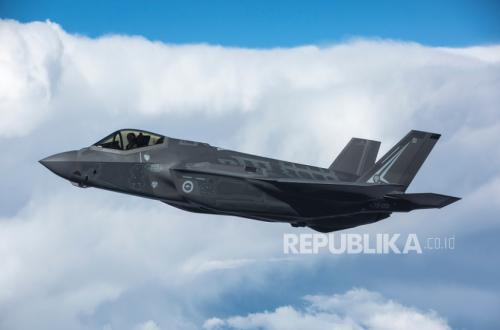
The Canadian government is increasingly signalling a move to reduce its dependence on the United States defence industry. Following the decision to select the German company ThyssenKrupp Marine Systems (TKMS) to build up to 12 new submarines, Ottawa is now also re-examining its plans to purchase Lockheed Martin’s F-35 stealth fighter jets, amidst a strengthening offer for the Gripen E from Sweden’s Saab.
The decision to choose TKMS is viewed not merely as a submarine procurement project, but as part of a shift in the defence strategy of Prime Minister Mark Carney’s administration, which emphasises diversifying weaponry suppliers while strengthening the domestic defence industry.
Speaking at a press conference in Halifax before departing for the NATO Summit in Turkey on Monday (6/7), Carney emphasised that strengthening defence capabilities is a priority amidst increasing geopolitical uncertainty.
“In an increasingly dangerous and fragmented world, Canada must do more to defend itself, maintain sovereignty, and support our allies,” Carney stated, as quoted by Reuters on Monday (6/7).
This policy direction is seen as directly linked to Canada’s fighter jet procurement project, which is currently under evaluation. Originally, Ottawa committed to purchasing 88 F-35A fighter jets, but the government is now considering reducing the number of purchases while also considering the Gripen E offered by Saab, which includes a full technology transfer scheme and production within Canada.
This shift in orientation became even more apparent after the Canadian government selected Saab’s GlobalEye early warning aircraft last May, defeating two proposals from the United States. Several analysts believe this decision serves as an initial step in building a Saab industrial ecosystem in Canada, which could pave the way for domestic Gripen production.
In the scenario currently being discussed, the Canadian government is evaluating not only the combat capabilities of the aircraft but also the long-term economic benefits. Saab is offering Gripen assembly in Canada, technology transfer, access to mission systems, and the rights for independent maintenance and development. In contrast, the F-35 remains produced in Fort Worth, Texas, with Canadian companies participating only as part of Lockheed Martin’s global supply chain.
Consequently, the competition between the F-35 and the Gripen is no longer determined solely by battlefield performance. The Carney administration is also considering the extent to which each proposal can strengthen industrial sovereignty, create jobs, and reduce Canada’s dependence on the US defence industry.
This perspective aligns with Carney’s previous statements during a visit to London in March 2025. In an interview quoted by Reuters, he asserted that Canada’s security relationship has historically been too dependent on the United States and therefore needs to be expanded.
Source: jawawa.id (https://jawawa.id/newsitem/canada-drifts-further-from-us-f-35-at-risk-of-being-supplanted-by-gripen-1783414407)
Originally published by Republika (https://news.republika.co.id/berita/thsq58451/kanada-makin-jauh-dari-as-f35-terancam-digeser-gripen), translated from Indonesian