
Canada Approaches EU Amid Threats of Trump's Tariff War
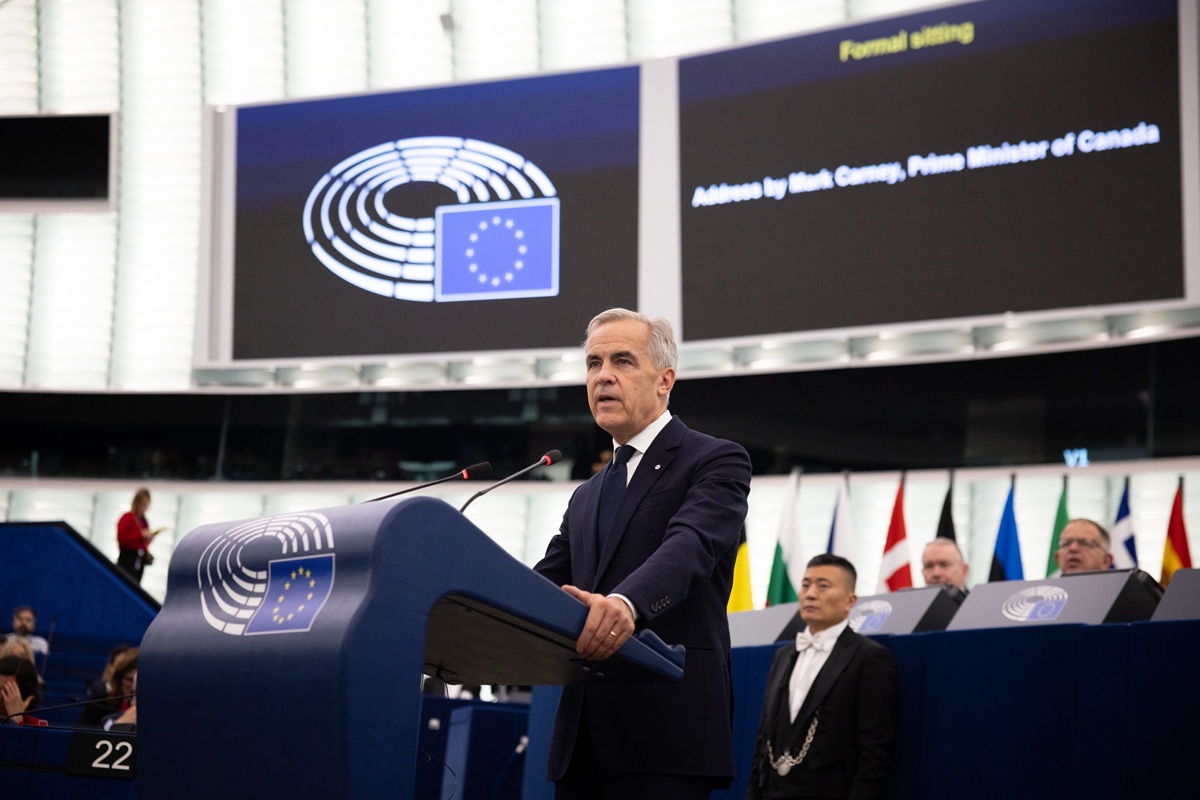
Canadian Prime Minister Mark Carney has taken a subtle jab at former US President Donald Trump regarding plans to strengthen economic relations between Canada and the European Union. Carney emphasised that this partnership does not aim to form a new opposing geopolitical bloc, but rather to build national economic resilience.
These remarks were made by Carney before members of the European Parliament in France, a day after European Commission President Ursula von der Dis Leyen proposed that Canada become the European Union’s first ‘associate member’. Although this status does not yet exist within the official EU structure, the discourse immediately triggered threats of new tariffs from the United States.
“I am not proposing a third bloc to rival great powers, only with better ethics,” said Carney.
Carney emphasised that closer cooperation with Europe is intended to safeguard Canada’s sovereignty and economic freedom from external pressures. “We are not seeking power to dominate others. Instead, we are pursuing resilience so that no one can control our open markets, disrupt our sovereignty, threaten our territorial integrity, or undermine our freedom, democracy, and the rule of law,” he asserted.
Canada is currently facing trade war pressures from the United States, its primary trading partner. This situation has prompted Ottawa to accelerate steps towards closer ties with the European Union, which has also repeatedly experienced trade tensions with Washington.
Addressing the discourse on cooperation, Donald Trump sent a strong signal that the United States could impose heavy tariffs on the European Union if new agreements with Canada are viewed as a form of resistance. “If the intention is good, that is not a problem. However, if the intention is bad, we will impose very heavy tariffs on Europe, and that is very possible,” Trump told reporters.
In his speech, Carney noted that Canada and the European Union would be “stronger together” in facing global uncertainties, ranging from climate change and the weaponisation of trade to the decline of democratic norms. He encouraged cooperation in critical minerals, energy security—such as liquefied natural gas (LNG) and hydrogen supplies—defence industries, payment systems, and the development of Artificial Intelligence (AI).
Furthermore, Carney proposed that Canadian citizens be allowed to join the EU’s Erasmus+ and Horizon programmes to expand access to education and scientific research, as well as to ease residency and work permits for the youth in both regions.
Public support within Canada remains divided. Matthew Arnot, a resident of Toronto, supports the move, believing that excessive dependence on the United States makes Canada vulnerable. Meanwhile, other residents, such as Hari Lamisane, argue from a practical standpoint that trade with the US remains more profitable than bearing the high logistics costs of exporting to Europe.
Within the European Union, the idea of ‘associate member’ status has also sparked doubt. A spokesperson for the German government, Stefan Kornelius, welcomed closer partnership but noted that the term ‘associate member’ needs to be reviewed as it lacks a formal legal basis in the EU.
Nevertheless, symbolic support came from Spanish Prime Minister Pedro Sanchez, who posted an image of the EU flag alongside the Canadian maple leaf symbol on X. Further details regarding the framework of this cooperation are planned to be discussed at the EU-Canada Investment Summit in Montreal next month.