
Can volcanic eruptions really make the Earth colder? Here are the facts
Jakarta (ANTARA) - The eruption of Mount Anak Krakatau in the Sunda Strait in early September 2026 has once again come to attention after its volcanic activity increased, with volcanic ash affecting several regions in Indonesia. The eruption even disrupted flight activities at several airports due to the distribution of volcanic ash.
This phenomenon has raised another question: can volcanic eruptions also affect the Earth’s temperature?
The answer is yes. However, not all eruptions automatically cause Earth’s temperature to drop. The impact on global temperature depends heavily on the scale of the eruption, the amount of gas released, and how high the volcanic material reaches in the atmosphere.
When discussing eruptions and changes in Earth’s temperature, many people might immediately imagine volcanic ash. However, the material that has the greatest influence on global cooling is sulphur dioxide gas, or SO2.
During large eruptions, sulphur dioxide can be pushed into the stratosphere. There, the gas reacts with water vapour to form very small sulphate aerosol particles.
These particles can persist for months to several years and reflect some sunlight back into space. As a result, less solar energy reaches the Earth’s surface, which can lead to a decrease in average global temperatures.
Meanwhile, volcanic ash generally falls back to the surface relatively quickly, so its influence on global temperature is not as significant as sulphate aerosols in the stratosphere.
One of the clearest examples is the eruption of Mount Pinatubo in the Philippines in 1991. That eruption released approximately 18.5 million tonnes of sulphur dioxide into the stratosphere. The gas then formed sulphate aerosols that spread through the atmosphere, causing average Earth surface temperatures to drop by about 0.5 degrees Celsius for several years.
The US Geological Survey (USGS) also noted that the large-scale eruption of Pinatubo caused global surface cooling. Similar phenomena show that volcanoes can indeed affect the climate, especially following explosive eruptions capable of sending large amounts of sulphur dioxide into the stratosphere.
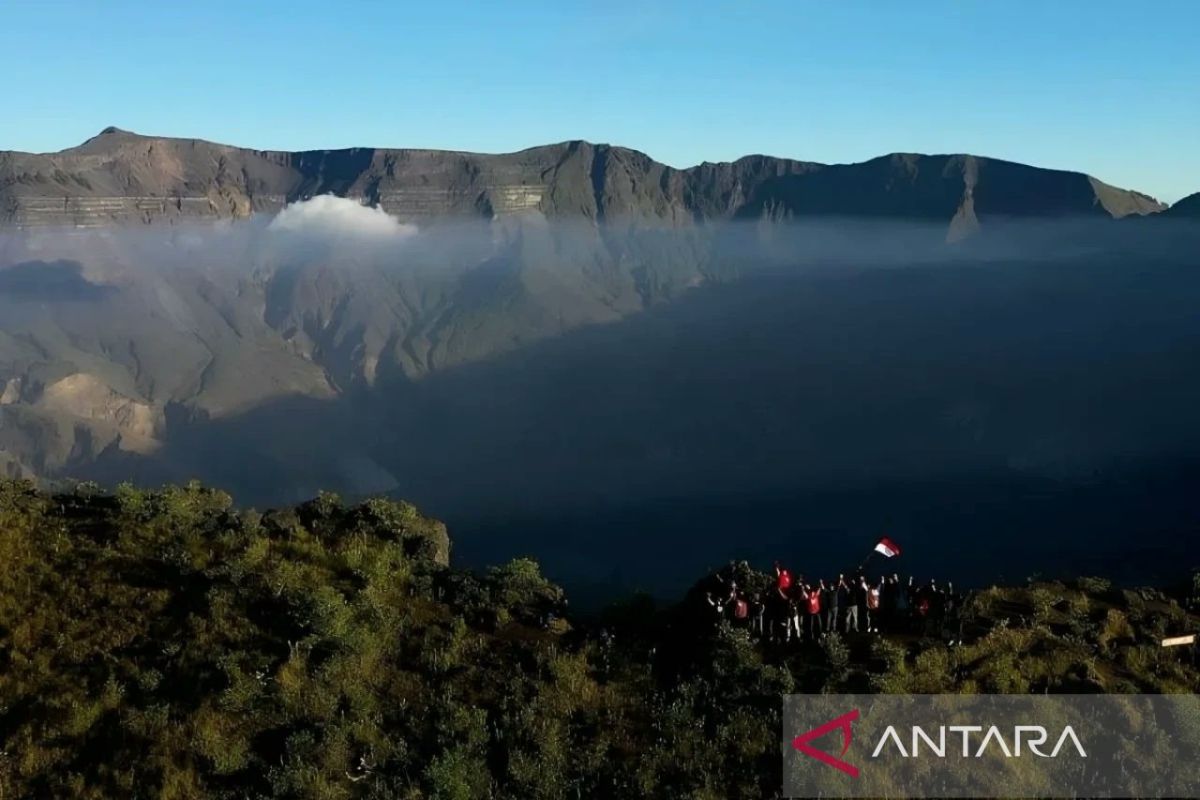
Indonesia also has a major example. Indonesia itself once experienced one of the eruptions with a massive impact on the climate, namely the eruption of Mount Tambora in West Nusa Tenggara in 1815. The USGS notes that the Tambora eruption was one of the largest recorded in history. The volcanic material entering the atmosphere caused global temperatures to drop significantly. The following year, 1816, became known as the “Year Without a Summer” because several regions in the Northern Hemisphere experienced much colder conditions than usual.
This event demonstrates that the effects of volcanic eruptions do not always remain near the volcano’s location. If the eruption is large enough, the impact can spread through the atmosphere and affect climatic conditions in very distant regions.
The answer to whether small eruptions matter is no. Small eruptions that only release limited amounts of ash and gas usually have no significant impact on Earth’s average temperature. The key is how much sulphur dioxide reaches the stratosphere. The larger the eruption and the higher the gas enters the atmosphere, the greater the chance of a climatic impact.
Furthermore, volcanoes also emit carbon dioxide (CO2), which is a greenhouse gas. In theory, volcanic CO2 can provide a warming effect. However, for modern eruptions, the cooling effect from sulphate aerosols following large eruptions is usually much more visible in the short term.
There is one important point that also needs to be clarified. Although volcanoes can affect Earth’s temperature, volcanic eruptions are not the primary cause of the global warming occurring today. Large eruptions can indeed cause temporary cooling for several months to several years. Once the volcanic aerosols diminish and settle, the cooling effect also weakens.
In other words, the influence of eruptions on the climate is more like a “temporary disturbance” rather than a permanent change to Earth’s temperature.
So, is it true that eruptions can affect Earth’s temperature? It is true, but primarily if the eruption is very large and capable of injecting large amounts of sulphur dioxide into the stratosphere. This gas then forms aerosols that reflect sunlight, causing the Earth to experience temporary cooling.
Source: jawawa.id (https://jawawa.id/newsitem/can-volcanic-eruptions-really-make-the-earth-colder-here-are-the-facts-1789103353)
Originally published by Antara (Indonesian) (https://www.antaranews.com/berita/5736051/benarkah-erupsi-gunung-bisa-bikin-bumi-lebih-dingin-ini-faktanya), translated from Indonesian